Mobile Home Crew of Florida, USA states that, “The process of mobile modular container transport entails the meticulous relocation of mobile modular houses, from one site to another, which often requires the use of specialized equipment and the expertise of skilled personnel”.
Mobile modular containers are a creative solution for everything from offices and temporary housing to disaster aide and remote site accommodations. They are ideal for businesses and individuals seeking fast, flexible living and working space options due to their unmatched flexibility, durability, and ease of movement. On the other hand, the successful use of mobile modular container space requires proper planning, especially regarding site setup and transportation.
The right means of transporting your modular mobile container will be a big part of how safe it will arrive, and the installation on the site will be a big part of how securely the mobile modular container is fixed and thus how ready it is for use. It is a vital point, in particular, to shield the length of the mobile modular container’s life and its functionality. Moreover, it is more convenient to plan and execute the whole process of arranging a trouble-free and successful setup with the help of a mobile modular container transport checklist, which includes permits, equipment, and site preparation, among other things.
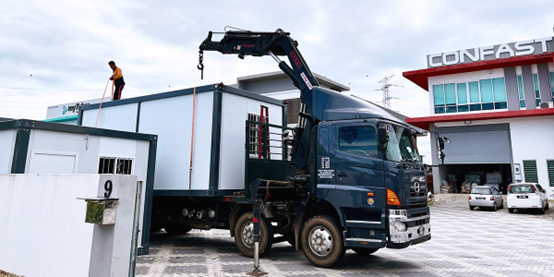
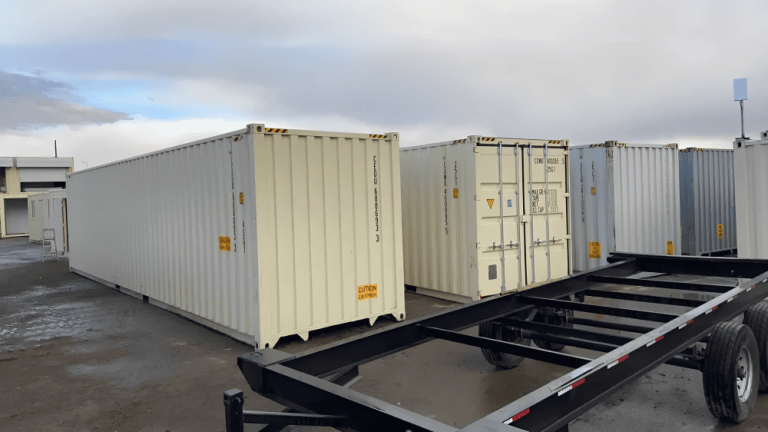
Fig-1: A logistical operation involving the transport of a mobile modular container
Planning for Transport of Mobile Modular Containers
Transportation design for mobile modular containers essentially involves figuring out which transport method would be most efficient, given the dimensions, the weight of the containers, and the distance to be covered. In addition, it is required to ensure that all the permits needed are secured and that the local regulations are complied with in order to be free from delays or inconveniences.
Selecting the Right Transport Method
The very first thing to consider while you are figuring out how to move mobile modular containers is the right way to get them to arrive nicely at their final destination, that is, by road, rail, or sea. The advantages of each mode of transport differ based on where the consignee is, how accessible the consignee is, and also on the goods’ specifications. An instance of this is that road transport is usually the means chosen in the case of local or short-distance deliveries; on the contrary, rail or sea transport is the most economical method for longer distances or international shipments.
Moreover, the matter of size and weight should also be the most important factors when deciding on the right method. Mobile modular containers are available in different sizes, and each means of transport has its own set of limitations. It is possible that overloading a transport vehicle will cause the transport to be held up, increasing expenses, and if the mobile modular container is damaged, this damage will be quite serious.
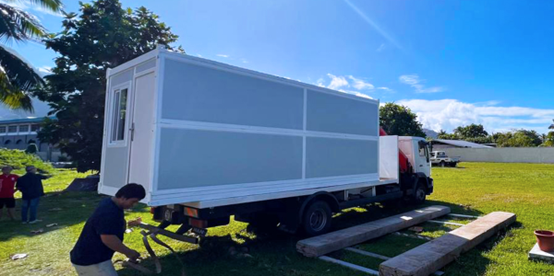
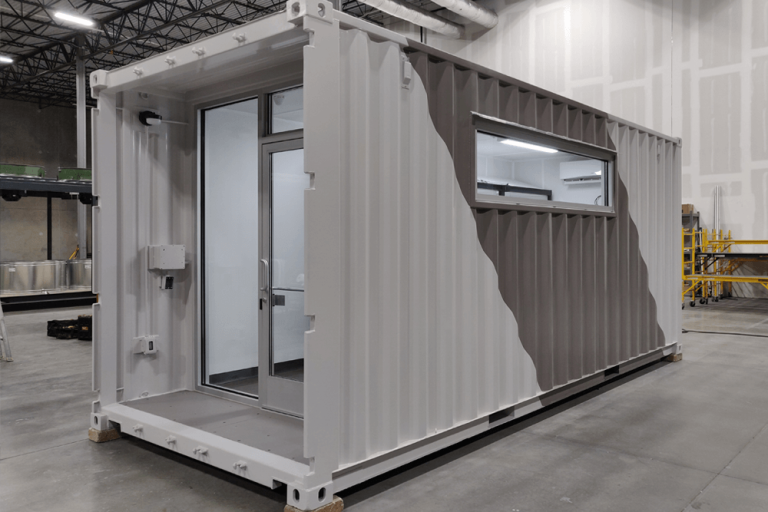
Fig-2: Selecting the right transport method is important
Documentation and Permits
The movement of mobile modular containers necessitates detailed preparation of paperwork and authorization as well. The laws differ in each area and country; hence, it is very important to be well acquainted with the local rules in case of the transportation of that which is oversized or too heavy. For example, the USA has a “Container Program Guidebook’ which was enacted in February 2024 to regulate and guide the necessary paperwork for transporting a mobile modular house.
The mobile modular container transport checklist must have support for the acquisition of the road permits, the consideration of the transport laws, and the obtaining of the special transport certifications if that is the case.
Having the right documentation ensures that your mobile modular container arrives at the site on time, without legal or logistical issues.
Pre-Transport Checklist
In case you are planning to relocate mobile modular containers, it is a must that the first personnel checking these containers ensure they are firmly fixed and not damaged. Examine the locating parts of the structure, which could be broken, dented, or cracked, or even slightly compromised in sealing, as these defects will definitely become worse during transport. Besides that, it is also your responsibility to check that all doors, windows, and any other openings of the mobile modular container are not only closed but also tightly fastened so as to prevent unloading or getting them damaged.
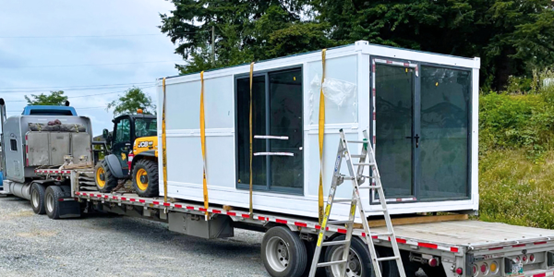
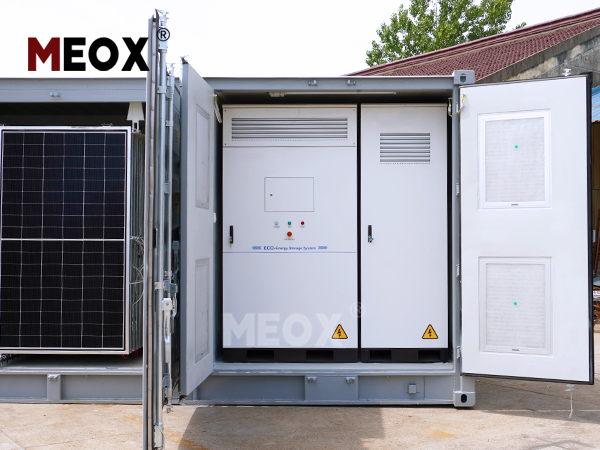
Fig-3: Securing a modern mobile modular house for delivery
Also, the correct choice of the machinery for loading and securing the mobile modular container is of paramount importance. To hoist the container of the crane or forklift can be an option. Generally, a flatbed truck is used for shipping; however, the vehicle must be adequately sized to carry the mobile modular container. The right securing equipment, such as straps, chains, and corner protectors, ensures that the container is fixed during road transport. Such steps lessen the chances of the mobile modular containers being damaged during their transport and, therefore, ensure safe delivery at the destination.
| Item | Requirement/Action | Checkpoints |
| Container Inspection | Ensure no structural damage or leaks | Visual check |
| Transportation Method | Choose road, rail, or sea transport | Weight limit |
| Equipment Needed | Crane, flatbed truck, forklift | Availability |
Table-1: A snapshot of the pre-transport checklist of the mobile modular containers.
Site Setup for Mobile Modular Containers
The first step when organizing the place for mobile modular containers is to figure out the best location. In addition to accessibility, one should check if the ground is firm and if the area is close to the necessary utilities. Make sure the place is comfortable for the trucks that will deliver the modules and the staff who will perform maintenance work. Besides that, the soil must have enough strength to bear the mobile modular containers’ load. The place needs to be near the essentials like water, electricity, and sewer to make the installation easy and convenient.
Setting up the area is another very important step. Firstly, make the surface even so that the mobile modular container can be placed firmly without it moving. Water running off should also be taken care of so that no water stays around the container. A firm base – be it a concrete slab, gravel bed, or some other material – should be set up to give the container stability and to make it durable for a long time. All these measures are the guarantee of a safe and working installation of your mobile modular container.
| Task | Description | Tools Needed |
| Ground Leveling | Ensure the site is level for stability | Laser level |
| Utility Connections | Access to water, electricity, sewage | Plumbing tools |
| Foundation Installation | Concrete or gravel base | Concrete mixer |
Table-2: Task-based tools and their description at a glance.
Transporting and Positioning the Mobile Modular Containers
As per an article published on the Tri-Town Construction, it is stated that regional sourcing is a smarter choice for transportation. Whether your home travels 50 miles or 2,000, distance directly affects the budget. Thus, understanding how far you want to ship your home is the first step in estimating costs.
Relocating mobile modular containers is a job that should be done cautiously and progressively; otherwise, they may suffer damage while being loaded or transported. Firstly, make sure that the portable modular containers are fixed with the help of straps, chains, or corner protectors so that they do not change their position during transport. Using a crane or a forklift, lift the mobile modular container smoothly and put it on the vehicle that will transport it, making sure that the load is balanced and that it does not move. Besides that, it is equally good to inspect the machine in detail for any loose parts and even check if there are any risky situations before the transport.
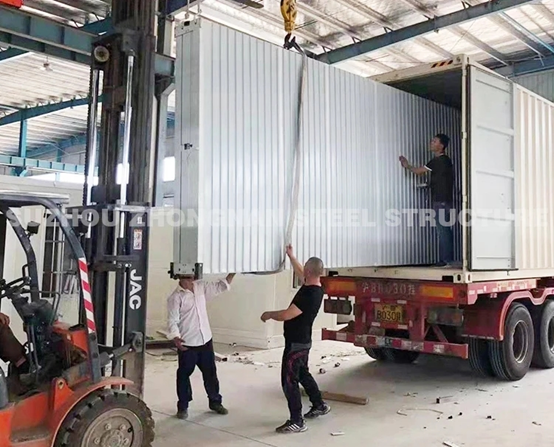
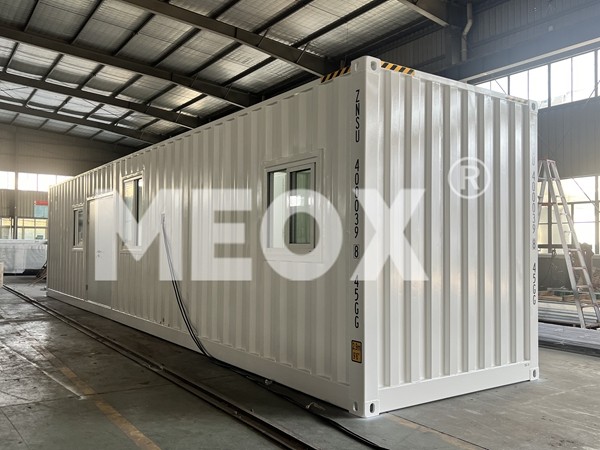
Fig-4: Efficient loading of flat-pack modular units
After the containers have been delivered to the site, it is very necessary to place them in the correct position. Check that the container is not tilted and is placed firmly on the ground, and that there is enough space left around the container for access and air circulation. Look at the access points, like doors and windows, to see if they are getting easy reaches. The right clearance makes it possible for the container to stay safe and can be used for maintenance or in case of the need for some changes later on.
| Stage | Action Required | Equipment Used |
| Loading Containers | Secure containers with straps/ropes | Forklift |
| Positioning on Site | Align with the foundation and clearances | Crane |
Table-3: Stage, equipment, and action required details of transporting and positioning the mobile modular container
Here is a video on transporting container houses to customers by land transportation, intended to improve your comprehension:
Final Checks and Installation
Just before installing, it is advisable that you carry out a detailed final check to be sure that there are no damages or misalignments of the mobile modular containers due to transport. Besides that, make sure that everything is tightly secured and that no parts have been tampered with during the transport.
So, after the container is already secured, it is a matter of connecting it with the needed utilities, for example, electricity, water, and waste disposal pipes. Do not forget that these connections should also be properly installed and checked to confirm that they are working. This stage is about the container being ready for immediate use; it is fully functional, and it is safe for its intended purpose.
From the preceding discussion, we have acquired significant insights regarding the secure transportation and effective setup guidelines for mobile modular containers. Let us examine a workflow diagram for enhanced comprehension:
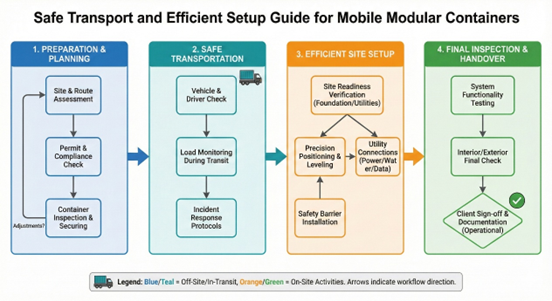
Fig-5: Safe transport and efficient setup guide for mobile modular containers: workflow diagram
Conclusion
Proper transport and site setup for mobile modular containers are crucial steps in ensuring a smooth and successful installation. The right transport and establishment of the site for mobile modular homes are the most important steps in making sure that the installation is done in a smooth way and is successful. The mobile modular containers will be able to come in a safe manner and be put in the right position for instant use if the transport process is planned well and the site is solid and well, prepared.
We, at MEOX, are committed to the creation of long-lasting, easily customizable mobile modular containers that are efficient and can be installed quickly and without any difficulties. Your storage unit endeavor will definitely be a smooth one under the direction of our professionals. ZN House is the place to be if you want to find out more about our sturdy, top-notch solution offerings for your mobile modular container needs. So, connect with us without any further delay!