Are you tired of the fixed location and sky-high rent of traditional coffee shops? Shipping Container Cafe is rewriting the rules of the game in the catering industry. According to Statista data, since 2020, global container transformation catering projects have surged by 43%, spawning more than 2,300 new stores in North America alone.
Imagine: today your cafe is still serving office workers at the San Francisco docks, and tomorrow it can move to Santa Monica Beach to capture the consumer demand of surfers. This business model that breaks through geographical restrictions is the core competitiveness of Shipping Container Cafe American Restaurant Association report shows that the average daily customer flow of mobile container stores is 27% higher than that of fixed stores.
Even more amazing is the ecological benefit. Each 40-foot container reuse can reduce 8 tons of steel waste (data source: World Steel Association), and the modular design reduces the construction cost to 1/3 of that of traditional stores. From the carbon-neutral coffee laboratory on the banks of the Thames in London to the detachable coffee station in the desert of Dubai, this green revolution is subverting all your perceptions of “cafes”.
While 73% of restaurant entrepreneurs give up their dreams due to rent pressure, Shipping Container Cafe is reshaping the industry with an average annual profit of $125,000 – this is the business model you must understand in 2025.

Why have container cafes become the new favorite of urban commerce?
1. Low cost and high return rate: redefining the threshold of entrepreneurship
Traditional cafes are often overwhelmed by high rent and decoration costs, while Shipping Container Cafe provides a completely different solution. By transforming existing containers, entrepreneurs can control the initial investment to less than 1/3 of traditional stores. Taking the North American market as an example, a fully functional 20-foot container cafe usually has an overall cost of 20,000 to 30,000 US dollars, but can achieve efficient turnover within 90 days.
Boxcar Coffee in Austin is a typical case – through streamlined space design and focusing on take-out services, its daily sales can reach 1.8 times that of traditional cafes. More importantly, this Low-Cost Mobile Cafe Business model gives you the ability to “guerrilla warfare”: deploy the cafe at the music festival site on weekends and move it to the business district on weekdays, reducing the monthly revenue volatility of a single point by 45%.
2. The infinite possibilities of modular design: space is strategy
Modular Coffee Shop Design completely breaks the rigid thinking of commercial space. A standard 40-foot container can be expanded into a complex space that can accommodate 25 people by raising the mezzanine and folding furniture. Cargo Collective in London uses a stacking design to create a seasonal limited store – the top open-air observation deck is open in summer and closed as a greenhouse cafe in winter, with an annual customer flow increase of 62%.
This design also solves the “trial and error cost” problem that is the most troublesome in the catering industry. You can first use a single container to test the market response of a new community, and then quickly expand the capacity through horizontal connection or vertical stacking. The startup team in Berlin has even developed a “Lego-style” splicing system that can assemble a complete commercial unit, including a roasting workshop, coffee bar, and retail area, within 2 days.
3. Environmental compliance: From cost item to profit engine
When 67% of consumers are willing to pay a premium for environmentally friendly brands, Eco-Friendly Coffee Shop Conversion has become a core competitiveness. Container cafes naturally have green genes – 85% of the materials in each box are recyclable, and the solar panel roof can reduce energy consumption by 30%.
Even smarter is to turn environmental certification into a marketing tool. Coffee shops that have obtained LEED certification have seen a 40% increase in click-through rates for keywords related to “sustainable coffee shops” in Google searches. Green Can Coffee in Seattle has even designed a “carbon footprint visualization menu” where customers can scan a code to see the environmental contribution of each cup of coffee, which has led to a 58% surge in its repurchase rate.
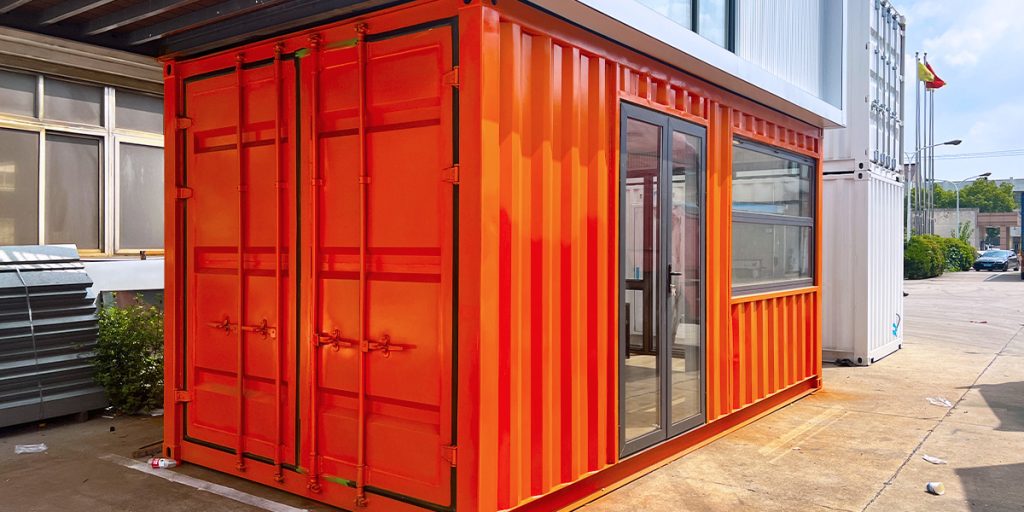
Technical practice: A guide to transforming from a container to a cafe
1. Core steps of structural transformation: the transformation from industrial products to commercial space
The transformation of the Shipping Container Cafe is far more than cutting and welding, but a precise engineering calculation. The following are three core transformation dimensions:
(1) Thermodynamic optimization system
Insulation solution: Polyurethane foam spraying (high cost but durability of 10 years+) vs. fiberglass filling (low cost but needs to be replaced every 3-5 years), the initial investment difference between the two can reach 30%-50%, but the long-term operating energy consumption difference is 40%-60% (International Energy Agency data).
Temperature control linkage design: Nordic cases show that the combination of double-glazed windows (U value ≤1.1 W/m²K) and floor heating systems can maintain a room temperature of 20℃ in a -20℃ environment, and the energy consumption is only 1/3 of that of traditional cafes.
(2) Aerodynamics and olfactory marketing
Ventilation system: OSHA standard HVAC equipment must meet the full space ventilation rate of 6-8 times per hour, and integrate a coffee aroma diffusion module. A coffee shop in Chicago uses directional exhaust design to increase the concentration of coffee aroma within 5 meters outside the store by 70% and increase the conversion rate of customers entering the store by 25%.
Humidity control: The relative humidity inside the container must be stable at 45%-55% (ASHRAE standard) to prevent the coffee beans from getting damp and deteriorating.
(3) Structural safety redundancy
The total weight of the 40-foot container after modification must be controlled in the range of 28-32 tons, and the center of gravity offset must not exceed 5% (ISO 1496 standard).
It is recommended to add an X-shaped steel frame support in seismically active areas, and the seismic level can reach 7 (verified by the Kobe case in Japan).
2. Legal and site selection compliance: the invisible battlefield of global operations
The compliance risk of Shipping Container Cafe is proportional to the business value, and strategies need to be formulated by region.
(1) North American market
Mobile catering license: divided into Class I (fixed point) to Class IV (fully mobile), with an annual fee range of 800−5,000. California requires a quarterly health review, while Texas allows a two-year review.
Land use nature: The approval rate for industrial land transformation is about 65%, while the period for obtaining temporary permits for park green land is 90-120 days.
(2) EU standards
EN 1090 certification requires that after the container is transformed:
Wind pressure resistance ≥1.5 kN/m² (2.0 kN/m² is required in coastal areas)
Floor live load ≥4.0 kPa (5.0 kPa is required in catering areas)
A transformation project in Berlin was fined 12% of its quarterly profit for failing to meet the noise standard (≤55 dB during the day).
(3) Emerging market opportunities
Southeast Asian industrial zones allow “operation first and then renewing the license”, but 20%-30% of the compliance budget must be reserved.
Dubai Free Trade Zone provides a “green fast-track review channel”, and the approval of LEED certification projects has been accelerated by 50%.
3. Brand vision and space aesthetics: business conversion driven by psychology
Eco-Friendly Coffee Shop Conversion is not only a technical proposition, but also a practice of consumer behavior:
(1) Style selection and customer group targeting
| Style type | Target customer group | Efficiency per square meter | Social media interaction rate |
| Industrial punk style | 18-30 years old male | $120/㎡ | 4.2 times/post |
| Natural minimalist style | 25-40 years old female | $180/㎡ | 6.8 times/post |
| Cyberfuture style | Gen Z | $150/㎡ | 9.1 times/post |
(2). Light environment design formula
Basic lighting: 3000K LED (150-200 lux) ensures visibility of latte art
Ambient lighting: 2700K point light source (≤50 lux) projects coffee bean origin map on the wall
Dynamic interaction: A store in Milan uses an AI lighting system to automatically switch between morning/night mode according to customer flow, increasing customer unit price by $1.2
(3) Olfactory-visual cross stimulation
Original wood interior + citrus fragrance: Customer stay time extended by 18%-25%
Metallic texture + roasted coffee aroma: Take-out conversion rate increased by 30%-40%
Green wall + rosemary essential oil: Instagram check-in rate increased by 3-5 times
Cost range: 20-foot container full renovation cost 18,000-35,000 (including compliance approval)
Energy consumption comparison:
| Project | Traditional cafe | Container cafe |
| Air conditioning energy consumption | $3,800/year | $1,200-1,800/year |
| Lighting energy consumption | $1,200/year | $400-600/year |
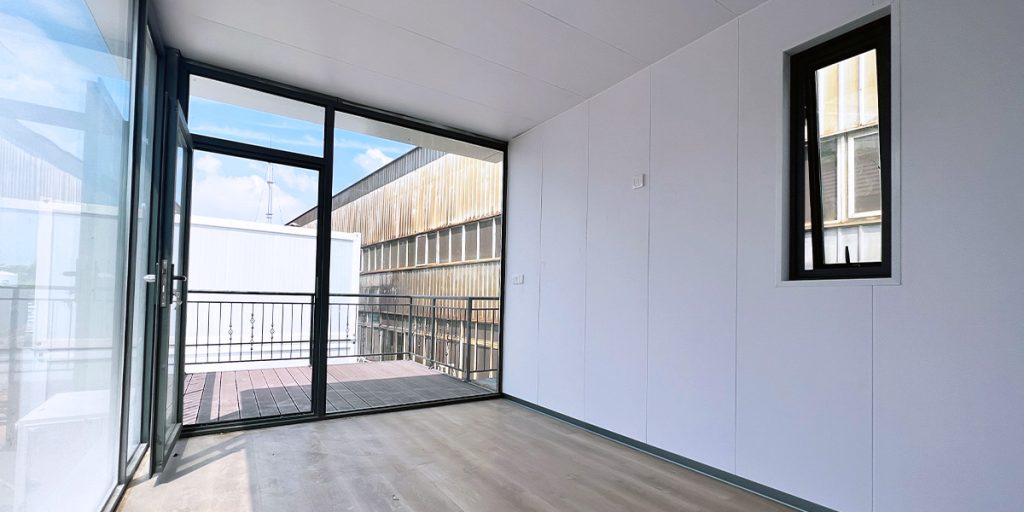
Profit model and real case analysis
1. High-traffic urban area model: accurately captures the pulse of the city
The essence of the low-cost mobile cafe business is “traffic catcher”. Portable Grind in New York is well aware of this – they deployed 20-foot container cafes within 500 meters of construction sites, targeting two prime periods of 7-9 am and 12-24 pm during lunch break, and achieved five-digit monthly revenue through three strategies:
Menu revolution:
80% of the products are pre-packaged cold brew coffee and sandwiches, and the average serving time is only 45 seconds, which is 3 times faster than traditional cafes. Introduced “Exclusive Package for Construction Workers” (coffee + energy bar + wet wipes), with a repurchase rate of 68%.
Traffic line design:
Using the rotatable characteristics of the container, the food pick-up port is aimed at the subway station in the morning and turned to the office building entrance at noon, reducing the daily passenger flow fluctuation rate by 40%.
Contactless upgrade:
Access to NFC induction payment, customers can complete the order by sticking their mobile phones, and can serve 120 people/hour during peak hours (Starbucks averages 90 people/hour).
Data comparison:
| Indicators | Traditional urban cafes | Container mobile model |
| Efficiency per square meter | $80/㎡/month | $210/㎡/month |
| Labor cost ratio | 32% | 18% |
| Customer price | $6.5 | $4.8 |
2. Tourism destination model: the ultimate harvest of seasonal dividends
The explosive power of the Shipping Container Cafe in the tourism scene is amazing. The operating strategy of ReefBox Cafe in Bali is worth analyzing:
Time and space arbitrage:
During the rainy season (October-March), the cafe is moved to the Ubud Art Market, focusing on
1.5 Indonesian traditional coffee; in the dry season (April-September), it is moved to Kuta Beach, the price is increased to 4.5, and the main target is European and American tourists.
Resource exchange:
Cooperate with high-end Airbnb villas, guests can enjoy 20% off coffee with room cards, and the landlord will get 15% of the turnover.
Pre-sale of “coffee + surfing class” packages through the landlord community in the off-season, and the pre-sale amount accounts for 35% of the total revenue.
Scene value-added:
Pulleys are installed at the bottom of the box, and the sea view seat position is adjusted according to the tide time every day. The Google map score is 4.9 stars.
Benefit amplification formula:
Monthly revenue during tourist peak season = average daily passenger flow × length of stay coefficient × scene premium rate
(Bali case: 200 people/day × 1.7 (beach scene) × 4.5 = monthly revenue 45,900)
3. Event Flash Model: The Ultimate Form of Explosive Profits
Short-term events such as music festivals and art exhibitions are the money-making moments for Shipping Container Cafe. The three container bar cases at the Coachella Music Festival reveal the following rules:
Product Matrix Design:
| period | Main product | Pricing strategy | Revenue share |
| 12:00-17:00 | Cold brew coffee | 6 (cost 1.2) | 40% |
| 17:00-22:00 | Alcoholic coffee | 12 (cost 2.8) | 55% |
| 22:00-02:00 | Hangover cocktail | 8 (cost 1.5) | 5% |
Logistics revolution:
Use standardized container modules to achieve fast construction in 2 hours, 4 times faster than traditional tents.
Integrate water storage/power supply/sewage drainage system to avoid 12% time loss of daily supply.
Hidden profit point:
Share the joint ticketing with the organizer of the music festival and obtain 10% of the ticket turnover.
Collect consumer email addresses (average acquisition cost 0.3 vs conventional channels 2.1).
Global expansion case library
European version: Munich Oktoberfest container beer house, daily sales of 4,000 liters (traditional stalls average 1,200 liters)
Asian version: Tokyo Shibuya Halloween pop-up coffee, AR interactive menu to increase customer unit price to $9.5
Polar special case: Tromsø Aurora Observation Point Container Cafe, winter peak season average daily revenue of $2,800
Risk hedging strategy
Urban model: Sign a 3-month evacuation site agreement to avoid the risk of traffic decline in the business district
Tourism model: Purchase weather insurance to hedge against rainy season passenger flow fluctuations
Pop-up model: Use revenue-sharing rent (15%-25% turnover) to reduce fixed cost pressure
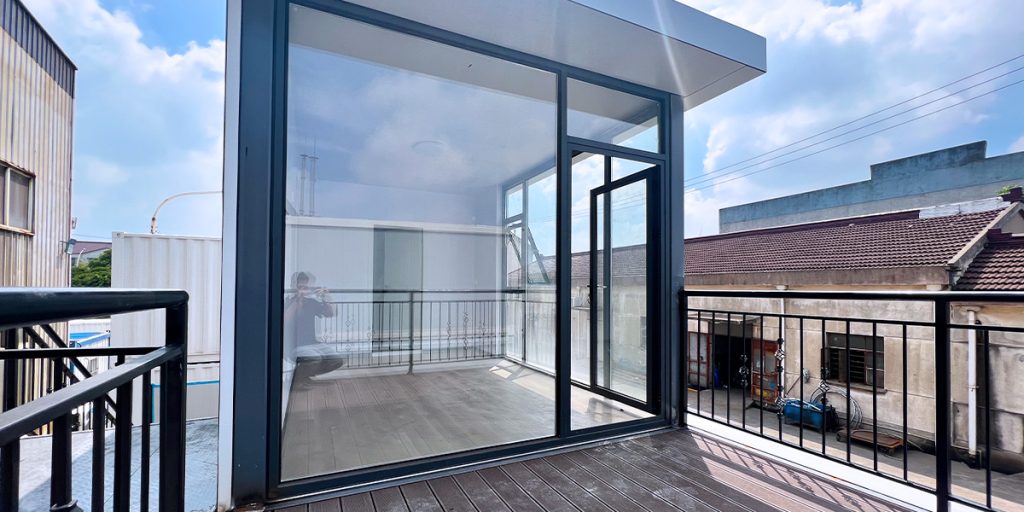
Start your business transformation journey
When traditional coffee shops are still struggling with site selection and costs, Shipping Container Cafe has opened the door to a new world for global pioneer entrepreneurs. Whether it is a minimalist space on a city street corner or a flash inspiration between mountains and seas, the modular genes of containers can allow your brand to land quickly and grow flexibly.
Now, it’s time to act!
We have been focusing on the transformation of container commercial spaces for ten years, serving more than 50+ local brands, and escorting them from design to implementation. Send an email now to get the following exclusive resources:
“Container Cafe Startup Plan”
Contains: Compliance transformation flow chart, localized design case library, cost control list
1 to 1 consultation channel
Senior engineers will customize the transformation roadmap for you within 48 hours