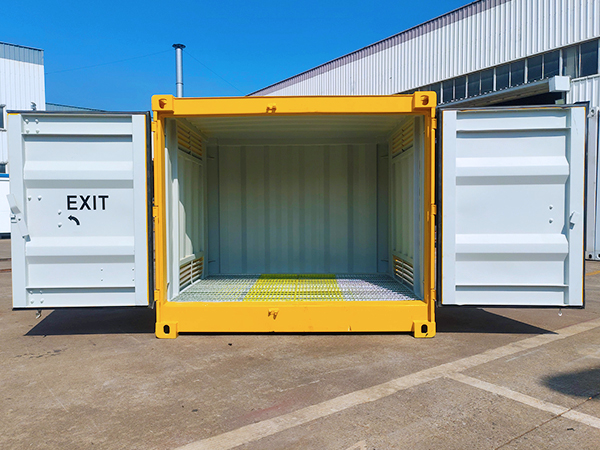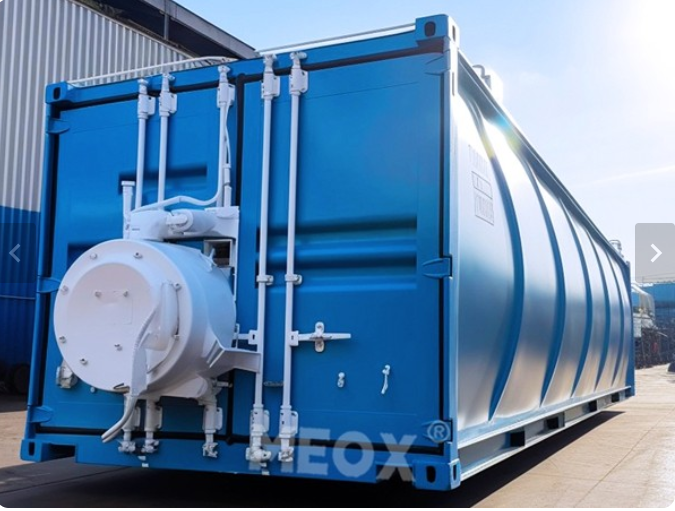
In offshore industries such as oil and gas exploration, renewable energy (offshore wind farms), and marine logistics—where equipment and goods face extreme conditions (harsh weather, high impact during transfers, and corrosive saltwater)—dnv 2.7 1 offshore container, dnv offshore containers, and dnv containers have become indispensable. These certified containers meet rigorous DNV (Det Norske Veritas) standards, ensuring safety, durability, and compliance with global offshore regulations. Suzhou Zhongnan Intelligent Equipment Co, Ltd., a leading manufacturer of specialized containers, produces certified DNV containers that adhere to DNV 2.7-1 and ISO 10855 standards, addressing the unique challenges of offshore operations.
DNV Container Product & Feature Table
| Aspect | Details |
| Product Alias | Offshore containers are commonly referred to as dnv containers—named for their mandatory DNV certification, which distinguishes them from ordinary sea freight containers and validates their suitability for offshore use. |
| Structural Requirements | Higher structural standards than standard sea freight containers—engineered to withstand impact forces during transfers (e.g., crane lifts, vessel-to-vessel transfers) and resist deformation under heavy loads, critical for offshore safety. |
| Certification Standards | Complies with DNV 2.7-1 (the core standard for offshore containers) and ISO 10855 (for container dimensions and design)—ensures global acceptance and compliance with offshore industry regulations in regions like the North Sea, Gulf of Mexico. |
| Surface Treatment | Two options: Painted (provides corrosion resistance for mild offshore environments, e.g., coastal wind farms) and hot-dip galvanized (offers superior protection against saltwater corrosion for deep-sea oil/gas operations, extending container lifespan). |
| Optional Accessories | Available with DNV-approved slings (for safe lifting), racks (for organized storage of small parts/tools), and cargo nets (to secure loose items)—all designed to meet DNV safety standards and enhance operational efficiency. |
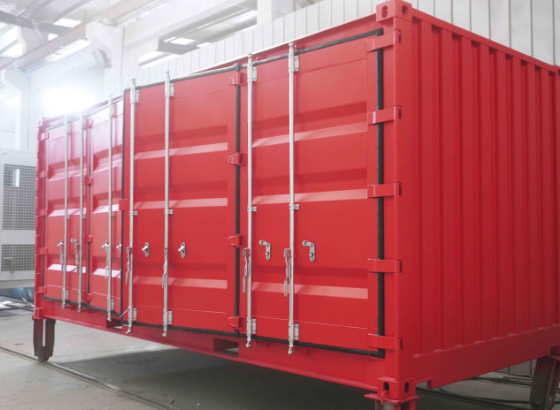
| Sidewall Designs | Flat panels (ideal for storing large, flat equipment like offshore wind turbine components) and corrugated panels (offer extra structural strength for heavy cargo like oilfield machinery)—both engineered to withstand offshore impact and pressure. |
| Design Temperature | Two temperature ratings: –20℃ (suitable for temperate offshore regions, e.g., East Asian coasts) and -40℃ (for extreme cold environments, e.g., Arctic offshore oil operations)—ensures containers remain functional in frigid conditions without material failure. |
| Core Applications | Primary use in offshore oil/gas (storing drilling equipment, tools, and supplies), offshore wind farms (housing electrical components, maintenance gear), and marine logistics (transporting sensitive offshore cargo between vessels and platforms). |
Safety Benefits of Dnv 2.7 1 Offshore Container for Offshore Operations
- Dnv 2.7 1 offshore container from Suzhou Zhongnan offers superior structural safety, a critical advantage in high-risk offshore environments. Unlike ordinary sea freight containers, which are designed for stable warehouse or shiphold storage, dnv 2.7 1 offshore container is engineered to withstand the intense impact forces of offshore transfers—such as crane lifts onto moving vessels or platform-to-vessel cargo shifts. The container’s reinforced steel frame and high-strength panels meet DNV 2.7-1’s strict impact resistance requirements, reducing the risk of structural failure (e.g., bending, cracking) that could lead to equipment damage or safety hazards. For example, an offshore oil company using dnv 2.7 1 offshore container to transport drilling tools reported zero container-related accidents over two years, even during rough sea transfers, as the container’s structure absorbed impact forces without deformation. The container’s certification also includes load-testing verification, ensuring it can safely carry rated weights (often 5-10x higher than standard containers) without overloading risks. For wholesalers, this safety benefit is a top selling point—offshore clients prioritize equipment that minimizes accident risks, as even small container failures can lead to costly downtime or injuries.
- Dnv 2.7 1 offshore container’s compliance with global safety regulations eliminates regulatory penalties and operational delays. Offshore industries are governed by strict regional and international rules (e.g., OSHA in the U.S., HSE in the UK), which mandate the use of DNV-certified containers for offshore cargo. Using non-certified containers can result in fines, project shutdowns, or even loss of operating licenses. Suzhou Zhongnan’s dnv 2.7 1 offshore container comes with full DNV certification documentation, including test reports and compliance certificates, ensuring clients can easily pass regulatory inspections. A European offshore wind farm developer avoided a 6-week project delay by using these certified containers—non-certified alternatives would have required additional testing and approval, pushing back the wind farm’s commissioning date. For wholesalers, supplying compliant dnv 2.7 1 offshore container helps clients avoid regulatory headaches, positioning the wholesaler as a reliable partner in maintaining smooth operations.
Durability Benefits of Dnv Offshore Containers in Harsh Offshore Conditions
- Dnv offshore containers from Suzhou Zhongnan feature corrosion-resistant surface treatments, extending their lifespan in saltwater-rich offshore environments. The hot-dip galvanized surface treatment creates a thick, zinc-based coating that acts as a barrier against saltwater, humidity, and marine air—preventing rust and corrosion that would degrade ordinary containers within 1-2 years. Testing shows that hot-dip galvanized dnv offshore containers maintain structural integrity and appearance for 5-7 years in deep-sea operations, compared to 2-3 years for standard painted containers. The painted option, while suitable for milder coastal environments, uses marine-grade paint that resists fading and chipping from salt spray. An offshore logistics company reported that Suzhou Zhongnan’s hot-dip galvanized dnv offshore containers required 70% less maintenance (e.g., repainting, rust repairs) than non-certified containers, reducing long-term operational costs. For wholesalers, this durability translates to lower replacement rates for clients, increasing customer loyalty and repeat orders.
- Dnv offshore containers’ ability to withstand extreme temperatures ensures reliable performance in diverse offshore regions. With design temperatures ranging from –20℃ to -40℃, the containers are engineered to resist material brittleness in frigid Arctic conditions and maintain structural stability in warmer tropical offshore areas. The steel used in Suzhou Zhongnan’s dnv offshore containers is treated to withstand temperature-induced expansion and contraction, preventing cracks or leaks that could damage cargo (e.g., sensitive electrical equipment for offshore wind farms). A Russian offshore oil company used dnv offshore containers rated for -40℃ to store drilling fluids and tools in the Arctic, reporting no container failures or cargo damage even during winter months with average temperatures of -35℃. For wholesalers, this temperature versatility allows the containers to serve global offshore markets—from cold Arctic regions to warm Southeast Asian coasts—expanding the client base significantly.
Operational Efficiency Benefits of Dnv Containers for Offshore Industries
- Dnv containers from Suzhou Zhongnan come with customizable accessories that enhance operational efficiency for offshore tasks. The optional DNV-approved slings, racks, and cargo nets are designed to integrate seamlessly with the containers, reducing loading/unloading time and improving cargo organization. DNV slings are rated for the container’s weight capacity, ensuring safe and fast crane lifts—critical for offshore platforms where every minute of crane time is valuable. Racks inside the containers allow for organized storage of small tools, spare parts, or electrical components, eliminating the need for separate storage units and reducing time spent searching for items. Cargo nets secure loose cargo (e.g., pipes, valves) during transfers, preventing shifting that could damage the container or cargo. An offshore wind farm maintenance team reported a 30% reduction in equipment retrieval time after switching to dnv containers with internal racks, as tools were neatly organized and easy to access. For wholesalers, these accessories add value to the containers, making them more than just storage units—they become efficient workflow tools for clients.
- Dnv containers’ compliance with ISO 10855 standards ensures compatibility with global offshore equipment and logistics systems, reducing operational friction. The containers’ dimensions and lifting points align with standard offshore cranes, vessels, and platform storage areas, eliminating the need for custom adapters or modifications. For example, a global marine logistics company can use dnv containers to transport cargo between offshore platforms in the North Sea, Gulf of Mexico, and Southeast Asia—without adjusting their lifting equipment or storage layouts. This compatibility also simplifies cross-border operations, as DNV certification is recognized by regulatory bodies worldwide, avoiding delays due to regional certification mismatches. A multinational oil company reported that using dnv containers reduced cross-region cargo transfer time by 25%, as the containers met all local regulatory requirements and equipment compatibility standards. For wholesalers, this global compatibility makes the dnv containers a versatile product that can serve clients operating in multiple offshore regions, increasing market demand.
Dnv Containers FAQS
What makes dnv 2.7 1 offshore container safer than ordinary sea freight containers for offshore use?
Dnv 2.7 1 offshore container is safer due to two key factors: 1. Higher structural standards: Engineered to withstand impact forces during offshore transfers (crane lifts, vessel shifts) and resist deformation under heavy loads, unlike ordinary containers designed for stable storage. 2. Rigorous certification: Meets DNV 2.7-1 standards, which include load testing, impact resistance checks, and material durability verification—ensuring it can handle offshore risks (e.g., rough seas, saltwater corrosion) that ordinary containers cannot. Suzhou Zhongnan’s dnv 2.7 1 offshore container undergoes additional quality checks to ensure these safety features are consistent, reducing accident risks for clients.
Why is surface treatment important for dnv offshore containers, and what options does Suzhou Zhongnan offer?
Surface treatment is critical for dnv offshore containers to resist saltwater corrosion, a major threat to offshore equipment. Suzhou Zhongnan offers two options: 1. Hot-dip galvanized: Creates a zinc barrier that withstands deep-sea saltwater, ideal for oil/gas operations, with a lifespan of 5-7 years. 2. Marine-grade painted: Suitable for mild coastal environments (e.g., offshore wind farms near temperate coasts), resisting salt spray and fading. A client in the North Sea reported that hot-dip galvanized dnv offshore containers had no rust after 4 years, while painted containers in a coastal wind farm remained intact for 3 years—both outperforming ordinary containers.
Can dnv containers be customized for specific offshore cargo needs, and what options are available?
Yes, dnv containers from Suzhou Zhongnan can be customized with DNV-approved accessories: 1. Slings: For safe lifting with standard offshore cranes. 2. Racks: Internal shelves for organizing small tools/parts. 3. Cargo nets: To secure loose cargo during transfers. Sidewalls can also be flat (for large flat equipment) or corrugated (for heavy machinery). For example, an offshore oil client customized dnv containers with corrugated sidewalls and cargo nets to transport drilling pipes, ensuring safe and organized transfers. These customizations meet DNV standards, so clients don’t compromise safety for functionality.
What temperature ranges can dnv containers handle, and how does this benefit offshore operations?
Dnv containers from Suzhou Zhongnan have two design temperature options: –20℃ (temperate regions, e.g., East Asia) and -40℃ (extreme cold, e.g., Arctic). This benefits operations by ensuring the container’s material doesn’t become brittle in frigid conditions or fail in temperature fluctuations, protecting sensitive cargo (e.g., electrical components, drilling fluids). A Russian Arctic offshore client used -40℃ rated dnv containers to store tools all winter, with no container damage or cargo loss—something ordinary containers (which typically handle only 0℃ and above) couldn’t achieve.
Why do offshore companies prefer dnv containers over non-certified alternatives, from a wholesaler’s perspective?
Offshore companies prefer dnv containers for three reasons that matter to wholesalers: 1. Safety compliance: Avoids regulatory fines and accidents, reducing client liability. 2. Durability: Lowers maintenance and replacement costs, increasing client loyalty. 3. Global compatibility: Works with international equipment and regulations, expanding client market reach. For wholesalers, supplying dnv containers means offering a product that solves clients’ core pain points (safety, cost, efficiency), leading to higher demand and long-term partnerships—unlike non-certified containers that often cause client issues (failures, fines) and damage the wholesaler’s reputation.