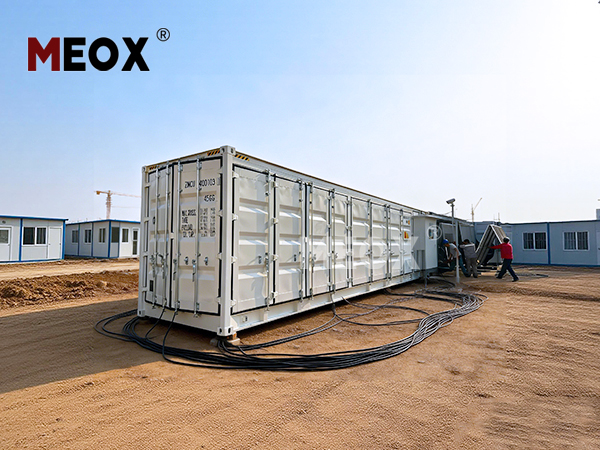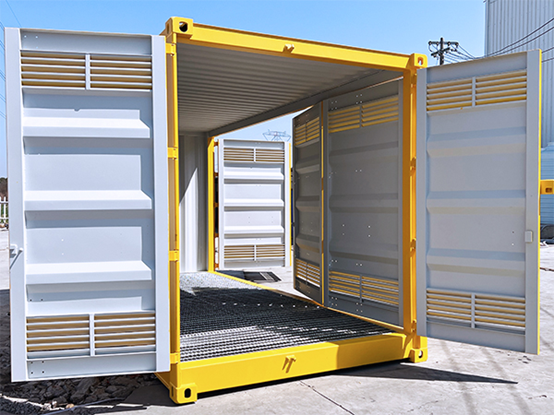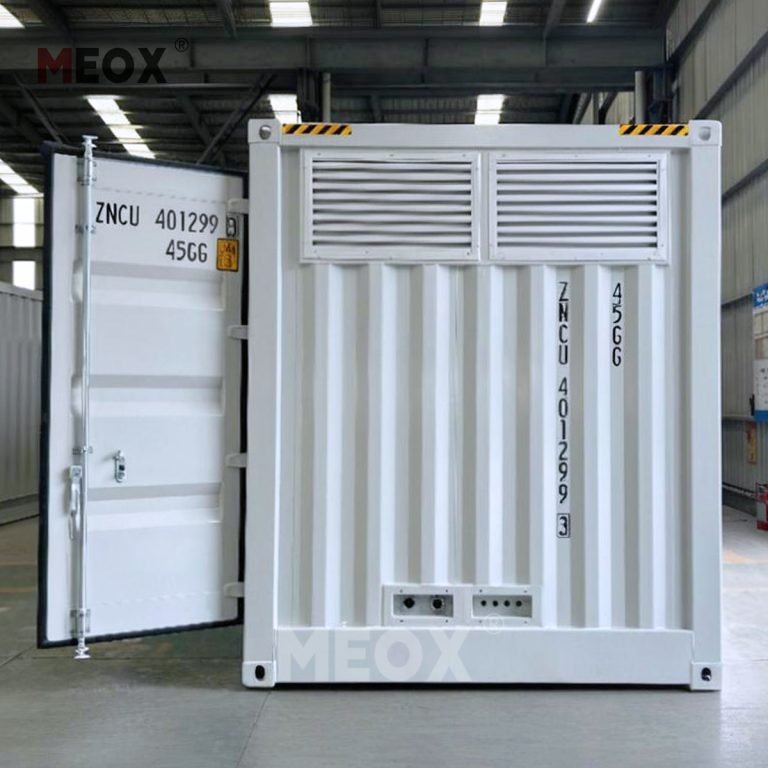
Zero errors are compulsory in industrial sectors handling hazardous materials. Regular shipping containers, while strong enough for logistics, lack the specialized engineering required to control risks in explosive atmospheres. This is where Explosion-proof Container Solutions become essential — combining the rugged structure of a shipping container with advanced safety systems to protect both personnel and property in volatile environments.
Introduction: Why Explosion-proof Container Solutions Matter
A hazardous “zone” is any area where flammable gases, vapours, or combustible dusts are present in the environment. It is very dangerous to keep such substances traditionally, as a spark igniting a very volatile atmosphere may cause an explosion. Explosion-proof containers are far from being only “reinforced boxes”. Such boxes are, in fact, complete systems, made of spark-resistant materials, equipped with specially designed ventilation, and fitted with pressure relief devices.
Core Technical Specifications of Explosion-proof Container Solutions
The efficiency of any explosion-proof unit relies on its physical makeup and the accuracy of the safety elements used in it. These units usually conform to international norms like ATEX or IECEx.
Material Integrity in Explosion-proof Container Solutions
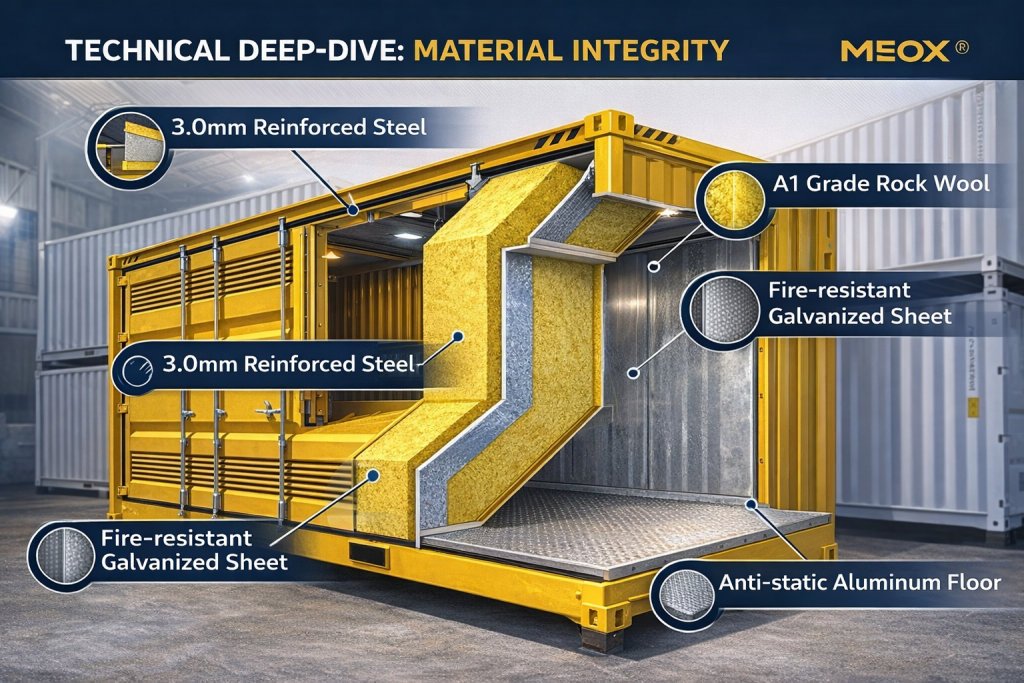
Standard units employ high-tensile Corten steel; however, in the case of explosion-proof applications, it is the internal lining and insulation that play a very significant role. Fire-rated rock wool insulation and non-sparking materials prevent the internal temperatures from rising.
| Component | Standard Specification | Explosion-Proof Feature |
| Wall Structure | 2.0mm Corten Steel | 3.0mm+ Reinforced Steel |
| Internal Lining | Plywood/PVC | Fire-resistant Galvanized Sheet |
| Flooring | Standard Bamboo | Anti-static Aluminum or Steel |
| Insulation | Optional | High-density Rock Wool (A1 Grade) |
Key Safety Systems in Dangerous Goods Containers
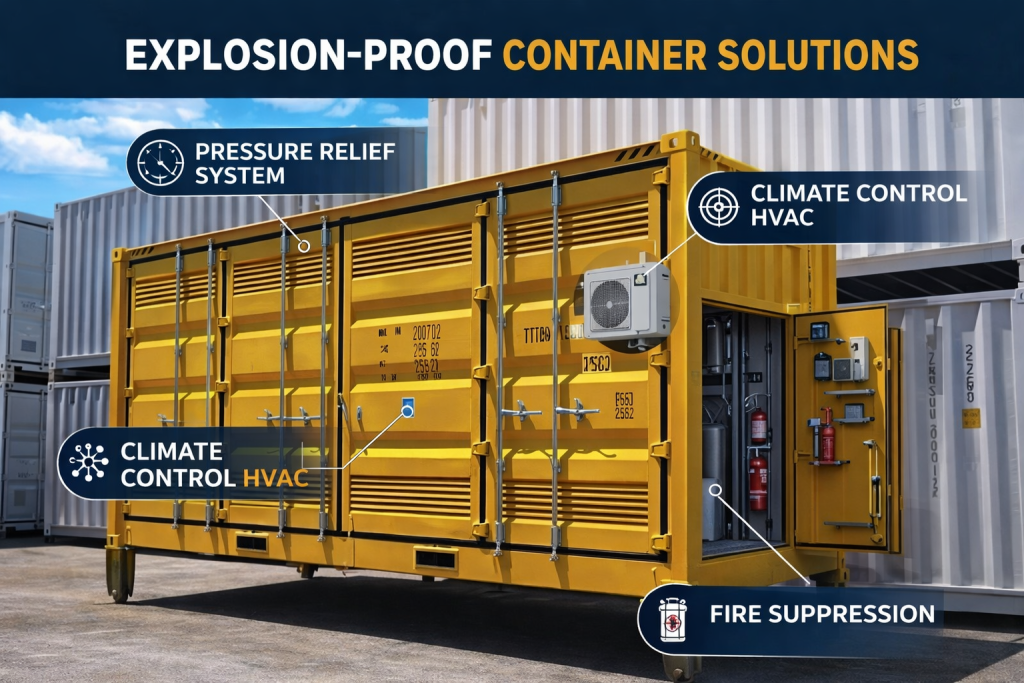
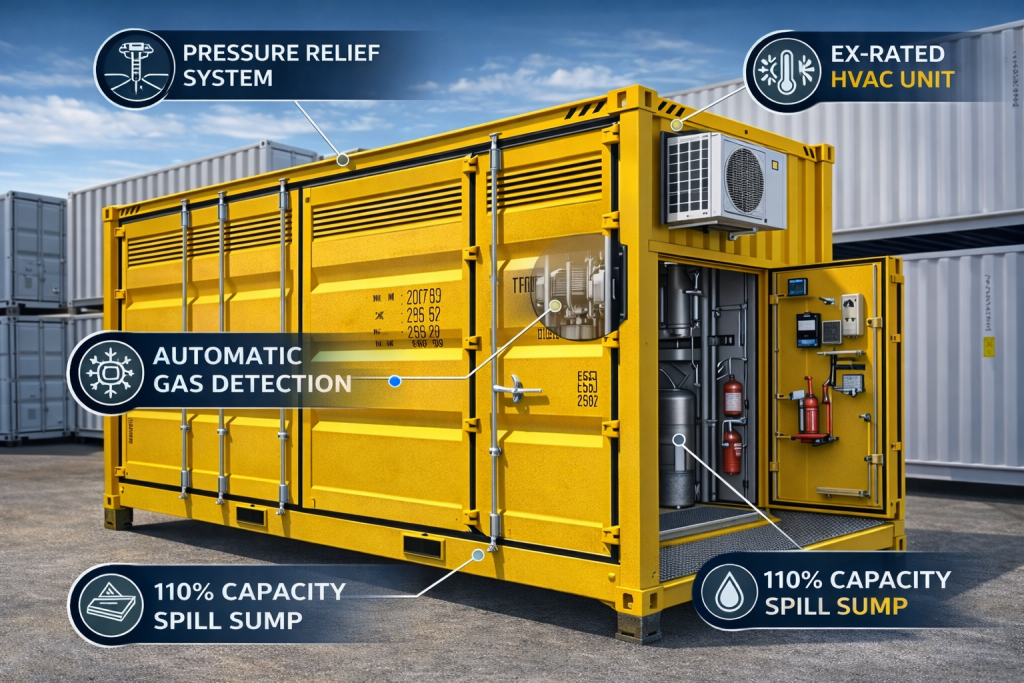
Such containers serve as an initial barrier by means of three major mechanisms:
Pressure Relief: During an internal explosion, special panels release pressure so that the whole structure does not break into fragments.
Climate Control: HVAC systems have to be explosion-proof (Ex-rated) to avoid internal ignition.
Automatic Detection: Extra-sensitive gas and smoke detectors give the alarm immediately and start fire suppression.
Technical Comparison: Storage Types
Choosing an appropriate solution is conditional on the chemical properties of the materials being stored.
| Feature | Flammable Liquid Storage | Chemical Waste Storage | Laboratory Containers |
| Ventilation | Natural & Forced | Forced (High Exchange) | HEPA Filtered |
| Sump Capacity | 25% of Total Volume | 110% of Largest Drum | Integrated Drainage |
| Fire Rating | 60 – 120 Minutes | 90 – 120 Minutes | 60 Minutes |
Long-Tail Insight: Off-Grid Explosion-Proof Solutions
Notably, a key development in the industry is the growing demand for portable explosion-proof storage that can be deployed at remote sites. In most cases, these facilities are designed for mining or oil and gas exploration projects where permanent infrastructure is not feasible. Moreover, they are typically equipped with solar-ready electrical systems, while still meeting stringent safety standards.
Case Studies: Real-World Applications
Case Study 1: Offshore Petrochemical Support
Location: North Sea Oil Rig Support Base
Time: August 2023
Participants: Mr. David Sterling, Operations Manager at PetroLink Solutions.
The Problem: The client had to keep Class 3 flammable liquids in a place with a lot of salt in the air and strong winds, where the usual containers got rusty and did not pass safety checks anymore.
The Solution: To address these requirements, I drove the project to craft a bespoke 20ft unit with C5-M marine-grade coating and a built-in ATEX-certified cooling system.
Mr. Sterling added, “Our optimized drainage sump and the simplicity of transport combined to save us 15% of operational downtime.”
Case Study 2: Chemical Research Expansion
Location: Singapore Science Park
Time: January 2024
Participants: Dr. Elena Vance, Lead Researcher at BioChem Global.
The Problem: The rapid expansion of the company necessitated an additional laboratory space, which had to be temporarily available. However, this was a challenging task as the new lab had to meet very strict explosion-proof standards for the testing of highly volatile solvents.
The Solution: We sent out a 40ft modular, explosion-proof container that has anti-static flooring and an automatic fire suppression system.
Dr. Vance said, “Thanks to the rugged structure the team provided, we were able to restart testing a few months earlier than the permanent building schedule.”
To know more about Dangerous Goods containers, please visit our Product Page here.
Conclusion
Explosion-proof container solutions are a must-have safety commitment for all those industries whose operations are deemed extremely risky. These containers are a combination of ruggedness and state-of-the-art monitoring and pressure technology that together allow safety to come first, always, and not just as a rule. In the report of the Health and Safety Executive (HSE), it states that adequate containment is one of the most effective ways to avert incidents of accidents involving toxic substances. Moreover, the International Organization for Standardization (ISO) points out that modular steel units provide an excellent level of protection, whereas traditional brick-and-mortar sheds are vulnerable, especially in seismic or high-impact zones.
Safety assurance in hazardous environments is a matter of precision engineering. MEOX is the company for you if you are looking for high-performance explosion-proof container solutions specific to your technical requirements. If you want an off-the-shelf dangerous goods unit or a tailor-made laboratory, our team will be happy to help.
Frequently Asked Questions (FAQs)
What is the difference between fire-rated and explosion-proof containers?
A fire-rated container refers to a container that has the capability to endure an external fire for a specified period. In contrast, an explosion-proof container is a type of building capable of containing an internal explosion and also preventing the ignition of the surrounding gases in a hazardous environment.
Can explosion-proof containers be customized for specific chemicals?
Yes. Among the variations are acid-resistant coatings, specially designed sump volumes, and gas detection sensors that have been tailored to the material’s MSDS (Material Safety Data Sheet).
Do explosion-proof containers require special maintenance?
In order to continuously remain compliant with regulations, one should regularly inspect the condition of the explosion-proof seals, HVAC filters, and the functionality of the pressure-relief panels.
Disclaimer: The technical inputs and resources mentioned in this write-up are extracts from the container line that MEOX has produced in-house. Specs, components, and technical details might vary depending on particular project needs and local laws.
Watch the following video on the Dangerous Goods Containers Introduction: