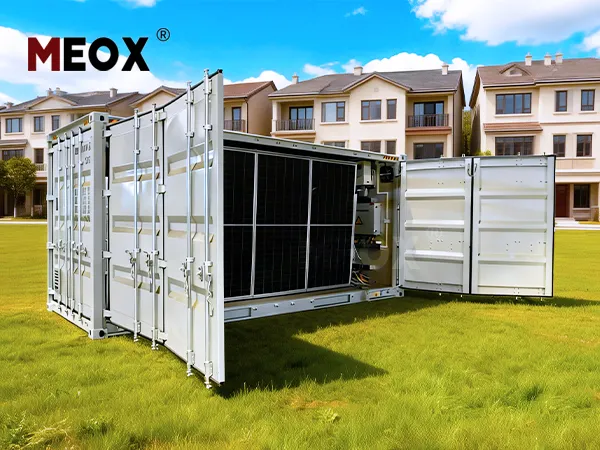
Water treatment has historically been associated with large treatment plants and large capital investment, long-term construction timelines, and major facilities. With the advent of modern technologies and containerized prefabricated water treatment systems, water treatment is being redefined for urban communities, rural communities and remote communities across all industries. These compact systems that can be quickly installed have the ability to be easily expanded, providing solutions that traditional water treatment facilities are incapable of producing results.
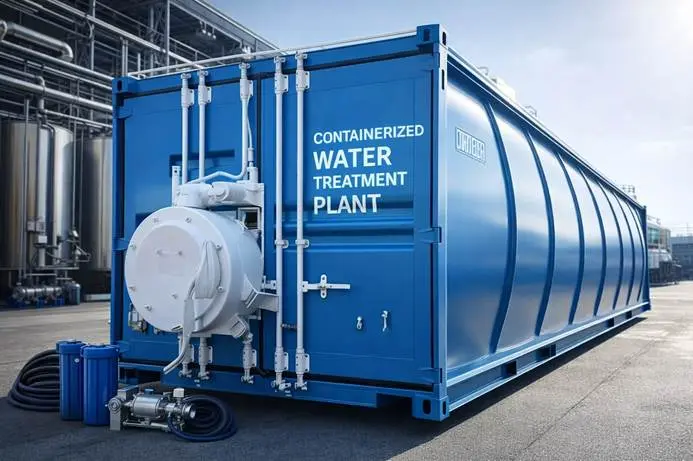
It has been reported that the lack of safe water is one of the biggest problems in the world today. The pursuit of fresh water is taking place in every corner of the world. The World Health Organization (WHO) states in a report that billions of people have difficulties in getting enough water and many health risks come from drinking unsafe water. Various sectors, such as industries, government bodies and humanitarian organizations are in search of rapid and dependable fresh water management solutions. Therefore, containerized water treatment systems have emerged as a viable alternative to conventional water treatment plants.
What Is a Containerized Water Treatment Plant?
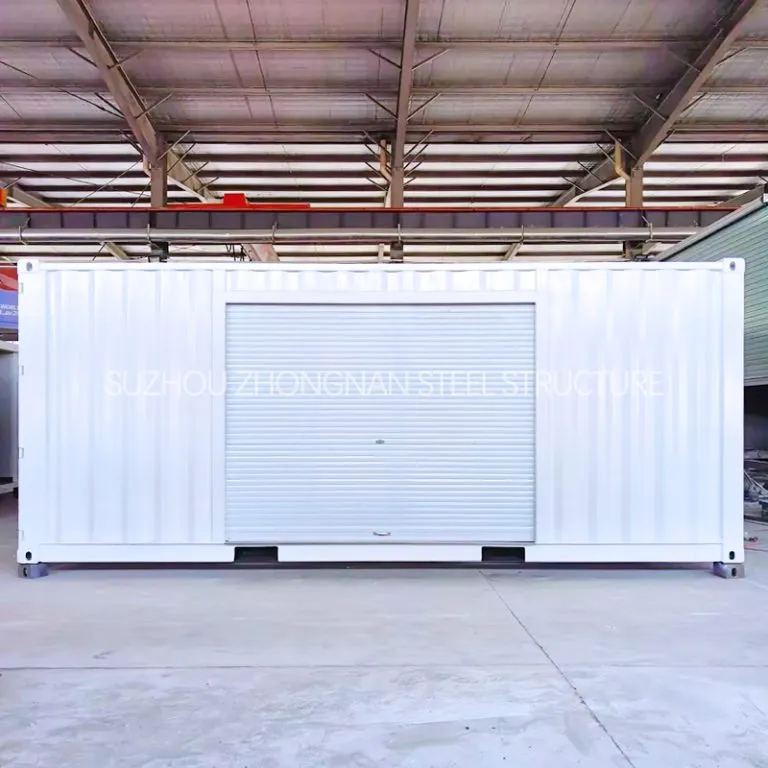
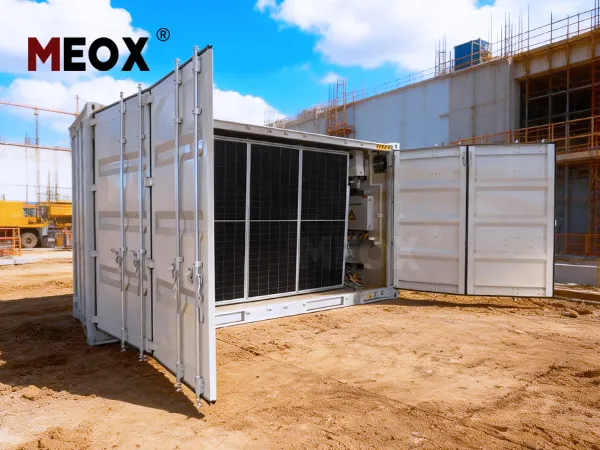
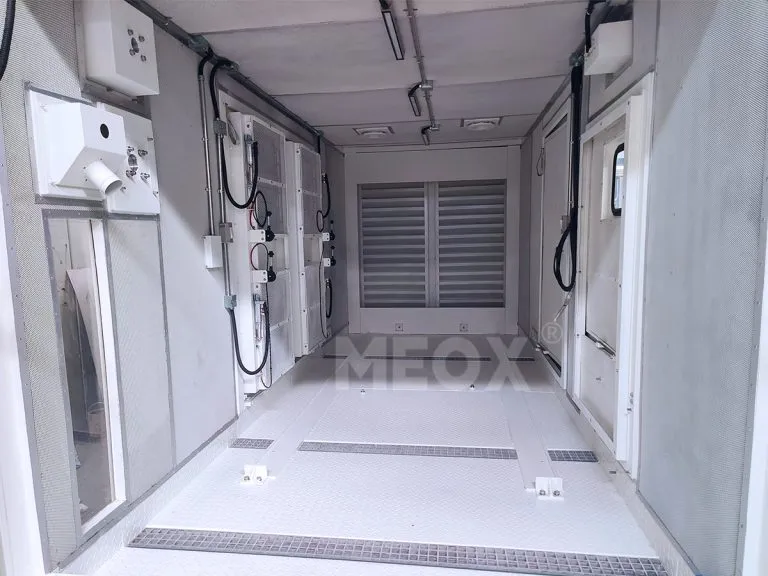
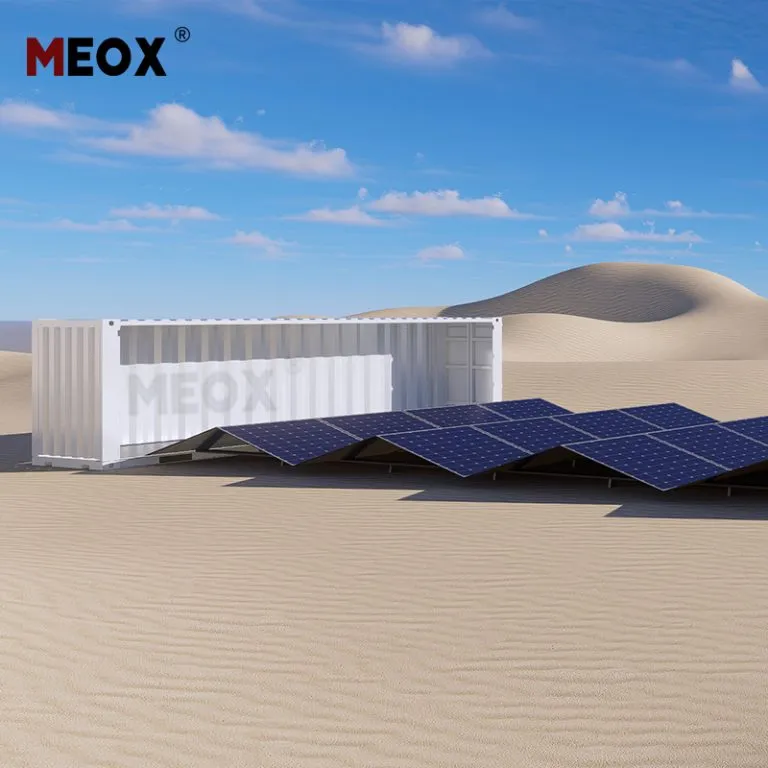
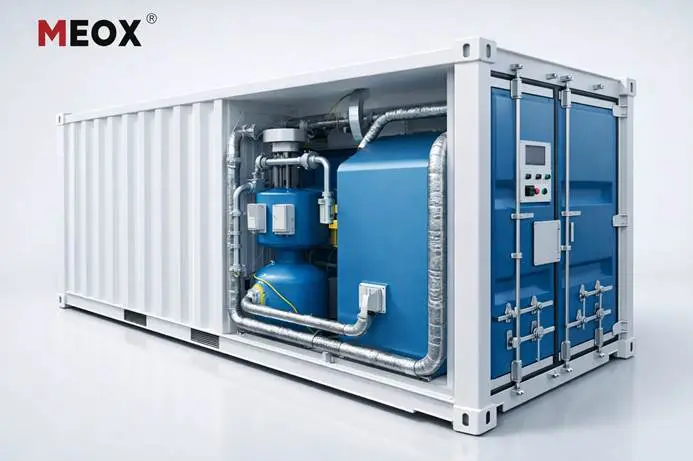
A containerized water treatment plant is a packaged water or wastewater treatment system inside standard ISO containers. Typically, the containers in question typically contain multiple types of equipment, with pumps, biological reactors, filtration systems, and control systems serving as key components of a fully contained, portable processing unit that makes the overall water treatment process much more effective and done more compactly. Moreover, each compact configuration has been designed as a self-contained, plug-and-play system (treatment plant), which can quickly be moved from one location to another via truck, rail, or ship. The treatment sequence usually involves these main steps:
- Screening: Removal of large solids and debris from incoming water.
- Biological Treatment: Aerobic or anaerobic processes (often using MBBR technology) to break down organic matter.
- Clarification & Filtration: Polishing the effluent to meet discharge or reuse standards.
- Disinfection: Final treatment to eliminate pathogens before release or reuse.
Using this kind of modular sewage treatment system, a 100-ton-per-day plant can be slowly increased to a 10,000 ton per day plant just by adding container modules, without any new civil engineering being required.
Key Advantages at a Glance
| Advantage | Traditional Plant | Containerized System |
| Construction time | 1–3 years | Weeks |
| Civil works required | Extensive | Minimal (hardened ground only) |
| Scalability | Difficult, costly | Add modules as needed |
| Portability | Fixed | Fully transportable |
| Upfront capital cost | Very high | Significantly lower |
| Automation capability | Varies | Full PLC control available |
The figures tell a very convincing story. Drastically slashing the construction cost by more than half and the time taken for the work by over two-third at the same time, making containerized water treatment plants a very attractive option for only time-limited or money-limited projects.
Where Are Containerized Water Treatment Systems Used?
This technology is so versatile that it is capable of serving different applications. Frequent deployment scenarios are:
- Urban Wastewater Treatment: Augmentation of municipal systems at peak loads or during infrastructure upgrades.
- Remote Industrial Sites: Mining camps, oil and gas operations, construction sites where permanent infrastructure is not feasible.
- Scenic and Tourist Areas: National parks, resorts and service areas where environmental compliance is important but permanent construction is not allowed.
- Disaster Response: Rapid deployment to areas with damaged water infrastructure.
- Seawater Desalination: Compact desalination solutions needed in coastal and island communities.
The modular nature of the portable water purification system gives it great flexibility to adapt to almost any water quality problem.
Technical Specifications Overview
Understanding the technical parameters helps choose the right system configuration. Here is a general reference for typical containerized treatment plants:
| Parameter | Specification Range |
| Treatment capacity | 100 – 10,000 tons/day |
| Container base | Standard ISO or custom-built |
| Structural material | Stainless steel (treatment sections) |
| Biological process | MBBR (Moving Bed Biofilm Reactor) |
| Control system | Manual or fully automatic PLC |
| Power supply | Grid or generator-compatible |
| Certifications | ISO standard compliance |
| Customization | Insulation, noise reduction, load optimization available |
The stainless-steel material choice for the water treatment part is excellent. This metal will sustain the architect’s intention for corrosion resistance, will not lose its structure under the water pressure, and the operation duration will be higher than that of mild steel ones.
Case Study: Emergency Water Supply for a Remote Mining Camp
A company operating a remote mining site in Central Asia faced frequent water shortages, primarily due to inconsistent groundwater quality and a lack of local infrastructure.
Challenges
- High sediment content in source water
- Remote project location
- Tight deployment schedule
- Limited construction resources
Solution
MEOX provided a tailor-made Containerized Water Treatment Plant equipped with multi-stage filtration, reverse osmosis, and a monitoring system. The unit was supplied as a fully factory-assembled unit ready for installation.
Results
- Installation completed within days rather than months
- Significant reduction in water transportation costs
- Stable supply of treated water for workers
- Reduced operational downtime
The project was a perfect example of how modular treatment systems can provide solutions to complex water issues in combination with the flexibility of deployment.
Environmental and Sustainability Considerations
Access to clean water is being identified as a top global issue more and more. The United Nations World Water Development Report reports that around 2.2 billion people lack water from safely managed services. On the other hand, over 40% of the world population suffers from water stress. These two statistics highlight the need for scalable and deployed water treatment solutions.
Sustainable goals can be achieved with containerized systems. These systems allow for the recirculation of treated effluent from these plants to be used for irrigation and/or industrial processes, thus reducing the use of fresh water. The compactness of these systems reduces land disturbance. Furthermore, by being factory-built, there is less waste generated on-site than with traditional civil works.
The U.S. Environmental Protection Agency (EPA) has also recognized modular water treatment systems as a good option for communities that have been left behind as well as emergency response situations. They pointed out that these systems can achieve Safe Drinking Water Act standards if they are correctly designed and managed.
To know more about modular infrastructure facilities, read the Modular Office Building product page from ZN House.
Maintenance: What to Expect
One concern that buyers frequently express is long-term maintenance. Containerized systems, in general, are engineered for ease of maintenance.
Routine tasks include:
- Regular inspection and cleaning of membranes and filters
- Chemical dosing replenishment
- Calibration of monitoring instruments
- Pump and valve servicing
- Periodic replacement of consumable components
Most systems have accessible panels and modular sub-components so that downtime is kept at a minimum. Choosing the fully automatic PLC further goes a step in decreasing the need for operators on the premises; this way, such systems can be used in remote or minimally staffed locations. If you want, you can check the whole range of equipment containers to see what integration options are available.
Frequently Asked Questions
What is the typical capacity of a containerized water treatment system?
The capacity of the systems is variable and depends on the feasibility of a given project. Systems can be configured for small villages, industrial sites, rescue work, and big municipalities.
Can a containerized water treatment plant treat seawater?
Yes. The system is designed to be capable of converting seawater to potable water for drinking and operational use when fitted with reverse osmosis desalination technology.
How long does installation take?
In most cases, the containerized systems are provided complete and factory tested. Installation time will depend upon conditions at the site but should typically take only a matter of a few days.
Conclusion
Containerized Water Treatment systems are a simple and expandable way to bring safe water in places where regular plumbing is not available or is very difficult. Because they can be moved, can be set up very quickly, and their design can be changed, they will be really useful for industrial construction, work done to help the survivors of a disaster, remote small towns, and government operations.
Organizations looking for reliable water treatment facilities can take advantage of modular solutions that are state-of-the-art, which not only simplify the installation process quite a bit but also do not compromise on treatment performance.
The MEOX containerized water treatment system is suitable for the production of water in the range of 100 to 10,000 tons of water per day and allows customers to make their own insulated designs, layout, and automation systems.
Contact MEOX today to discuss your project requirements and request a free quote.
Disclaimer: This article has quoted a few technical data, material specs, and design criteria which all relate to the custom container products manufactured by MEOX. Given your local implementation requirements, environmental laws, and your particular needs, the specifications of the actual equipment, the materials of the piping inside, and the exact engineering dimensions can and probably will be different.