As the world’s food demand increases and arable land decreases, container farming solutions seem to be one of the most feasible ways of modern agriculture. Essentially, by turning ordinary steel containers into fully functioning growing facilities with controlled climate, growers could have fresh crops practically anywhere – urban rooftops or even desert settlements.
Here is an article to highlight what is involved in the container farming solution, how it operates, the main advantages it brings, and the instances for deployment where it is the most effective. Commercial growers, facility managers, urban development planners – whichever you are, this guide will provide you with the necessary facts to assess container farming as a feasible food production method.
What Is a Shipping Container Farm?
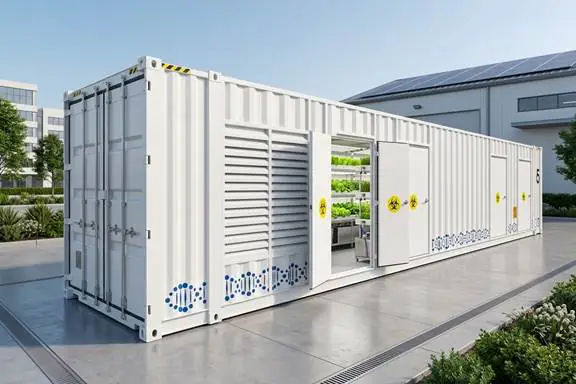
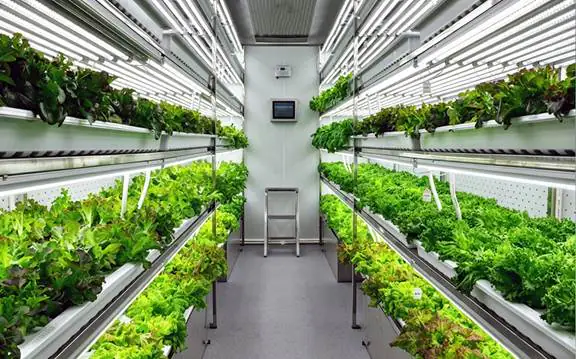
A shipping container farm is a concept where a typical shipping container or one that is specifically made for farming is converted into a totally sealed and self-sufficient environment that is capable of producing crops. Such farms typically feature full-spectrum LED lamps, hydroponic or aeroponic growing racks, climate control units, irrigation management systems, and smart sensors for automation and monitoring.
Unlike a greenhouse, a container farm is sealed, fully portable and does not depend on outdoor weather. It works as a self-contained Controlled Environment Agriculture (CEA) unit. The regulated conditions inside enable production year-round, without reliance on seasons or soil quality.
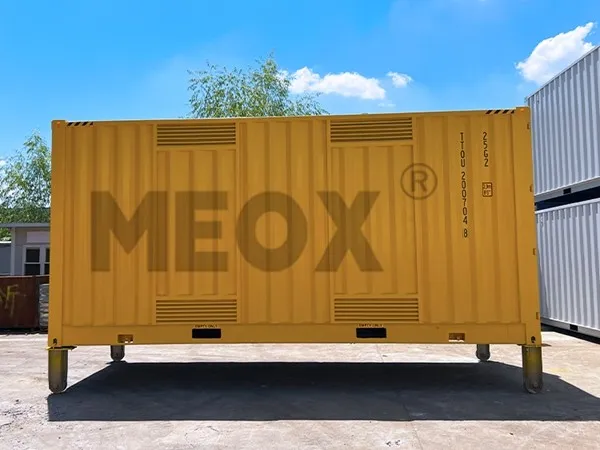
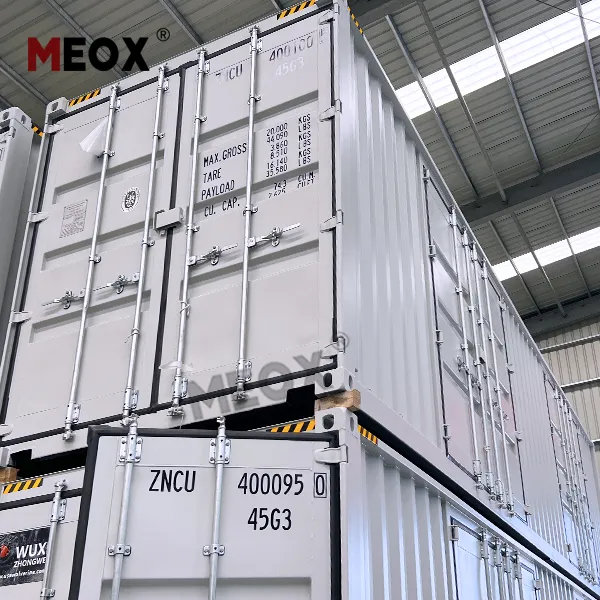
Container farming units are generally standard 20ft containers, though multiple container layouts could be combined to form even bigger modular container farming operations. They can be set up on a prepared area, on rooftops, or can even be moved to other locations per project requirements.
Container Farm vs. Conventional Farming: A Direct Comparison
To track growth in food production in the future, we need to establish a way of comparing the two scenarios based on the most important factors of production: resource use, flexibility and predictability.
| Factor | Shipping Container Farm | Conventional Farming |
| Water Consumption | Up to 90% less water used per crop cycle | High; depends on rainfall and irrigation |
| Growing Area Required | Minimal footprint; vertical stacking maximizes yield per m² | Large land area required |
| Climate Dependency | None — fully climate-controlled environment | High; seasonal and weather-dependent |
| Growing Cycles per Year | Year-round continuous production | 1–2 cycles per year (seasonal) |
| Deployment Location | Urban rooftops, remote sites, arid zones | Arable land required |
| Pesticide Use | Minimal to none in sealed environment | Regular application often required |
A study released in Technology in Horticulture (2024) revealed that hydroponic production systems are capable of diminishing water usage by over 90% and fertilizer consumption by up to 60% relative to conventional soil-based agriculture, the figures varying with the type of crop and the system design.1 Such increases in efficiency are the main reasons behind the rapid adoption of container farming globally.
Core Systems and Features
Knowing how a container farm operates technologically is an important step in helping buyers make thoughtful purchasing decisions. See the table below for the main systems and what they do.
| System / Feature | Description |
| Controlled Environment Agriculture (CEA) | Sensors and climate-control systems maintain ideal temperature, humidity, and CO₂ levels year-round. |
| Hydroponic & Aeroponic Growing | Soil-free cultivation methods deliver nutrients directly to roots, cutting water use dramatically. |
| Vertical Farming | Multi-layer growing racks multiply crop output per square meter, ideal for compact containers. |
| Smart Automation | Real-time sensor networks monitor and adjust growing conditions automatically, reducing labor costs. |
| Modular & Scalable Design | Additional containers can be added as demand grows, enabling flexible capacity expansion. |
| Certifications | ABS, BV, GL, and CCS certified units; custom branding and color options available. |
Each of these systems contributes Really towards making a perfect setting for efficient plant growth. In particular, the integration of vertical container farming racks and smart automation is the factor behind achieving high production in a small area, which is basically a crucial benefit for urban locations and areas with limited space.
Key Benefits of Container Farming
Advantages of shipping container farms are not limited to saving water. In fact, with water saving, here are some of the most commercially relevant benefits of shipping container farms:
- Year-round production: Climate control eliminates seasonal dependency, enabling consistent harvest schedules.
- Location flexibility: Farms can operate on rooftops, brownfield sites, remote areas, or desert zones — anywhere a container can be placed.
- Food security: Local production reduces reliance on long-distance supply chains, improving access to fresh produce in underserved areas.
- Scalability: Modular designs allow operators to start small and add capacity as demand grows.
- Reduced pesticide use: The sealed environment limits pest access, reducing or eliminating the need for chemical treatments.
- Lower land costs: No need for expensive agricultural land; any flat surface with utility access can serve as a deployment site.
Where Container Farms Work Best
Types of farming can’t be matched to every farmer, of course. The table below matches common use cases with the particular challenges that a container farm addresses and the best setup for each situation.
| Use Case | Challenge Solved | Recommended Setup |
| Urban Rooftop Farm | No arable land; fresh produce demand nearby | 20ft container with vertical racks and LED lighting |
| Remote / Off-Grid Community | No reliable supply chain; arid climate | Container farm + mobile solar container for power |
| Commercial Grocery Supplier | Year-round leafy greens demand; quality consistency | Multi-container hydroponic setup with automation |
| School or Campus | Educational programming; limited outdoor space | Single 20ft container as living classroom |
| Disaster Relief / Humanitarian | Rapid food production in crisis zones | Deployable container farm with pre-installed systems |
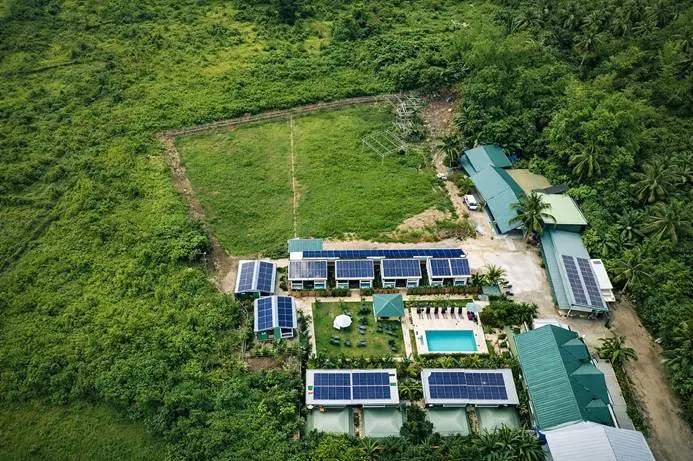
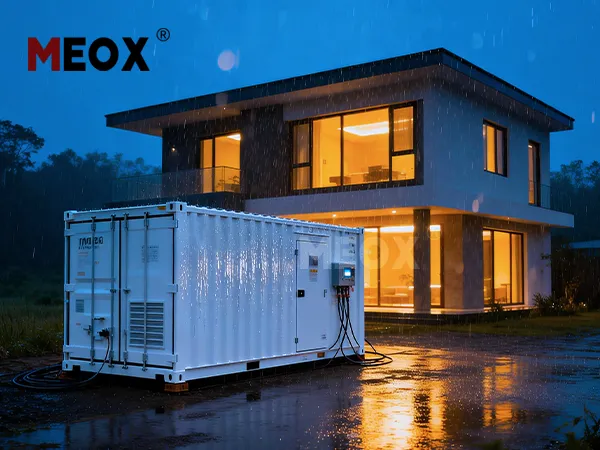
When it comes to off-grid applications, a container farm could be coupled with a mobile solar container to be self-sufficient with energy for lighting, climate and automation of the farm, making a food production system completely independent.
Real-World Case Study: Urban Container Farm Deployment in Southeast Asia
Challenge
One of the food distributors of Southeast Asia was looking for a reliable supply of leafy vegetables for its customers in the cities. The local weather was very difficult because of the very hot temperatures, heavy monsoon rains, and high humidity making outdoor growing very unreliable. Also, the operator was not able to get cheap farmland near the city.
Solution
The operator installed a 20ft shipping container farm with a multi-tier hydroponic system, full-spectrum LED grow lighting and a self-operating circuit for feeding nutrients. The internal temperatures were kept at the ideal levels thanks to climate-control units incorporated into the farm, despite the outside conditions. Pesticides were also unnecessary thanks to the sealed environment.
Outcome
It took the farm only a few weeks to start generating regular outputs of lettuce, basil, and other leafy greens after the installation. The operator managed to supply a local grocery chain throughout the entire year and didn’t have to rely on imports. Due to the container’s portability, it could also be moved to a second location during business expansion later on, this way safeguarding the initial capital investment.
Researchers at the Golisano Institute for Sustainability of Rochester Institute of Technology have released a qualitative study in 2024 on the installation of hydroponic container farms in the U.S. The study revealed that successful operators always did market research before deployment and diversified their income by creating educational programs beyond their farming activities. So, the finding implies that container farms are most profitable when the owner plans not only for production but also the complete commercial model surrounding the farm.
Frequently Asked Questions
What crops can be grown in a shipping container farm?
Container farms are well suited to fast-growing, high-value crops. Leafy greens such as lettuce, spinach, and arugula are the most typical selections; herbs like basil, coriander, and mint do well as well. Microgreens, strawberries, and fruiting crops like cherry tomatoes can be produced with the right lighting and nutrition, whereas root vegetables and large fruiting crops are usually less suitable due to space and light intensity constraints.
How much does a shipping container farm cost to operate?
Operating costs differ by container size, crop type, energy source, and the degree of automation. The main recurring costs are electricity (for LED lighting and climate control), water, and nutrient solutions. Since container farm solutions use as much as 90% less water than soil farming and do not require pesticides, variable input costs are generally lower than those of conventional methods. Matching the farm with solar energy can also help to reduce electricity costs for off-grid locations.
Can a shipping container farm operate in extreme climates?
Yes. A shipping container farm’s tightly closed and insulated building is what makes it capable of operating in both hot and cold climates. The internal temperature is adjusted to the best growing stage by a climate-control system, no matter what the external situation is. It is possible to locate these farming systems in desert areas, arctic zones, and even tropical regions with high humidity if the right HVAC is set up. Being independent of the climate is an important reason why container farming is popular in areas where traditional farming is challenging or uncertain.
Ready to Deploy a Container Farm?
MEOX is a leading manufacturer of container farms equipped with various growing systems such as hydroponics, aeroponics, and vertical farming. All container farms are fully customizable to your crop needs, climatic zone, and geographical location.
If you need your farm to be powered independently, we have battery energy storage and mobile solar container units that can supply you with a consistent source of clean energy.
We also suggest that you check our planting containers if you are looking for additional growing spaces.
Contact MEOX today to talk about your container farm project specifications, customization choices, and delivery schedules.
Disclaimer: Technical information, system description, and specifications mentioned in this article are derived from MEOX’s in-house fabricated container products. Changing specifications, materials, growing system arrangements, and technical aspects are possible per project requirements, extent of customization, and latest manufacturing updates. So, all data discussed here are considered indicative only. For detailed technical confirmation of the project, you need to interact with MEOX.