Modern outdoor dining has evolved into more than just a simple picnic table and grill for cooking outdoors. From festivals and resorts to campsite locations to construction sites, outdoor kitchen shipping containers are starting to play a major role. These containers offer businesses a faster and better way to implement a commercial cooking space. The shipping container outdoor kitchens are mostly made from dismantled steel freight units. These container kitchens have the toughness of marine-grade construction with the organization of a professional galley. Let us now take a short tour of shipping container outdoor kitchens. This article brings you up to speed on what a container kitchen actually means and how one can make the right decision about the size of a container kitchen.
What Is a Shipping Container Outdoor Kitchen?
The outdoor kitchen shipped in a container is simply a 20- or 40-foot cargo shipping container that has been modified to include all the required cooking equipment, plumbing, electricity, and ventilation needed for cooking outdoors, unlike a fully enclosed outdoor kitchen which is required to deal with the sun, rain, winds, or even salt spray in some cases. That’s why the condition of the container’s shell, the paint, and door seals are as crucial as the interior fittings. Converted cargo container kitchens usually keep the original steel structure for strength, put on insulation, bore holes for service windows, and add flooring capable of bearing the weight of heavy appliances. The outcome is a ready-to-use cooking area that is lifted at a location, connected to the power supply, and ready for operation in a very short time instead of ground-based construction which normally takes months.
20ft vs. 40ft Outdoor Container Kitchen at a Glance
| Specification | 20ft Container Kitchen | 40ft Container Kitchen |
| External Dimensions | 6096 x 2438 x 2896mm (approx.) | 12192 x 2438 x 2896mm |
| Typical Use | Food trucks, pop-ups, small cafés | Catering hubs, resort kitchens, central prep |
| Cooking Stations | 1–2 | 2–4+ |
| Material | SPA-H weathering steel | SPA-H weathering steel |
| Certification | CSC | CSC |
Note: CSC plates are issued for a container’s original structural configuration. Once a unit is modified with cutouts for windows, doors, or ducting, CSC status should be reassessed and reissued by a qualified surveyor — buyers should confirm current CSC status on any converted unit rather than assuming it carries over automatically
Design Features That Matter Outdoors
Kitchen units designed for outdoor usage are outside the restaurant premises. A few design points of differentiation may result in one being more durable than another which requires regular repair. The temperature of the working environment inside the units can be maintained through insulated wall panels during periods of cold and hot weather, such as summer and winter. Exterior paint must be marine-grade and highly corrosion-resistant. This paint protects the surface of the metal from getting affected by UV radiation and moisture, and at the same time prevents it by being oxidized and corroded. Steel with stainless alloy is the favorite countertop or cabinet surface material since it is less likely to rust and stain compared with the painted ones. Proper ventilation is very essential for a container kitchen. A kitchen unit that emits smoke or vapor rich with grease must be provided with the right exhaust hood and duct system that will contain any potential fire hazards. In the United States, this work is guided by NFPA 96, the national fire protection standard covering hood, duct, and fire-suppression design for commercial cooking operations; jurisdictions typically fold it into local fire code, so it shapes how a compliant kitchen container should be built from the start. A water-resistant equipment unit that is also used outdoors should have its doors and windows’ opening holes tightly covered, have the right type of drains for a wash-down cleaning, and be wired for the outdoors or semi-exposed conditions.
Core Components of an Outdoor Kitchen Container
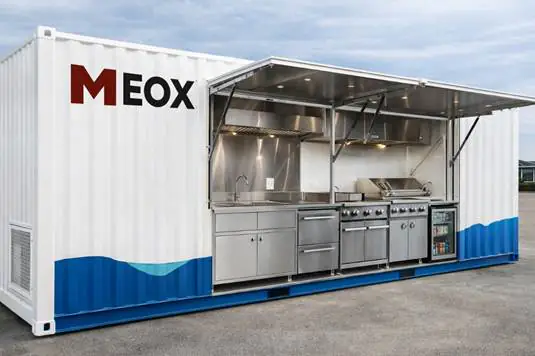
| Component | Function |
| Insulated wall & roof panels | Temperature control in hot or cold climates |
| Stainless steel countertops/cabinets | Corrosion resistance, easy sanitation |
| Exhaust hood & duct system | Smoke/grease removal, fire-code compliance |
| Water supply & drainage | Sink, wash-down, and waste handling |
| Reinforced flooring | Supports heavy cooking equipment |
| Weatherproof doors & windows | Protects interior from rain, dust, salt spray |
Where These Kitchens Get Used
Outdoor container kitchens show up wherever a business needs commercial cooking capacity without a permanent structure — festival grounds, ski resorts, farmers markets, construction and mining camps, and glamping and adventure hospitality sites among them. This mirrors a broader shift toward mobile food operations. Industry watchdog IBISWorld is stating that the count of businesses in the US food truck industry has risen at a compound rate of nearly 23.8% per year, a rate much higher than for traditional restaurants, because operators benefit from lower costs and more mobility to change location. A container-based kitchen follows the same logic: it can be built off-site, shipped, and installed wherever demand is strongest, whether that is a seasonal resort or a permanent installation attached to a larger property, such as a shipping container house with a courtyard kitchen feature.
Case Study: A Beachfront Resort Kitchen Under Time Pressure
A holiday seaside hotel in Asia got the idea of having one more dining spot at their seaside pool area. A new permanent structure could not get planning permission before the high season. The task was a two-piece puzzle: the module had to endure both salty air and heavy seasonal rain; and on the other side, it was necessary to have a complete commercial kitchen facility without months of building on-site. MEOX designed and delivered the container kitchen in 40 ft, made of weathering steel SPA-H with CX-grade powder painting. All stainless-steel workstations, together with waterproof drainage and an enclosed drainage system, were pre-installed. The entire kitchen came with a seaworthy ventilation setup before shipping. The module was lifted into place, connected to the utility grid, and passed all the health and fire inspections after about two weeks of arrival. The hotel thus saved itself from waiting for a license to build a real new permanent structure and, at the same time, it gained a perfect outdoor kitchen setup to open season right after a few months.
Frequently Asked Questions
Can a shipping container outdoor kitchen operate year-round in different climates?
Yes, by making the right alterations, such as using insulated panels, HVAC or ventilation systems, and weatherproof flooring, the container kitchen will be able to withstand the hot summer heat as well as the winter cold. The doors and windows should be sealed, and good drainage will prevent the inside of the container from being exposed to rain, dust, and drastic temperature changes.
How long does it take to get a container kitchen running on site?
Most of the modular units come fitted with plumbing, electrical, and kitchen equipment pre-installed, meaning the main work on the site will be limited to connecting utilities and performing checks. Many development works proceed from the arrival of goods to the functioning stage within ten to twenty days based on the permits and the site conditions.
Is a 20ft or 40ft container kitchen better for a food business?
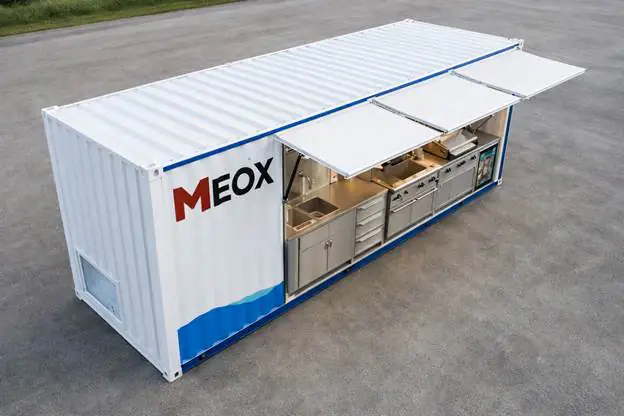
It all depends on scale. A unit that’s 20 feet long is typically a perfect match if you are running a food truck, small cafe, or are doing pop-ups, and your menu is quite limited. However, when you have a much larger, 40-foot unit, it allows enough space for different cooking areas as well as equipment for chilling and keeping food cold, plus a large place for food preparation – that will be more ideal for catering businesses, resort kitchens or kitchen commissaries where they prepare food in advance which will be sold at different selling points (retail/wholesale or both).
Ready to Plan Your Outdoor Kitchen?
Planning a mobile or outdoor food-service project? MEOX designs and manufactures customized shipping container kitchens, from compact 20ft units to full-scale 40ft commercial builds, engineered for outdoor and marine environments. Explore the full equipment container range or get in touch with your project specifications for a tailored quote.
Disclaimer: Technical details, materials, and the specifications mentioned in this article refer to the container product lines manufactured by MEOX. Different projects may require different sets of specifications, materials, and technical elements, and they may also change. So, make sure to contact MEOX directly for the up-to-date specifications before deciding on the project plan.