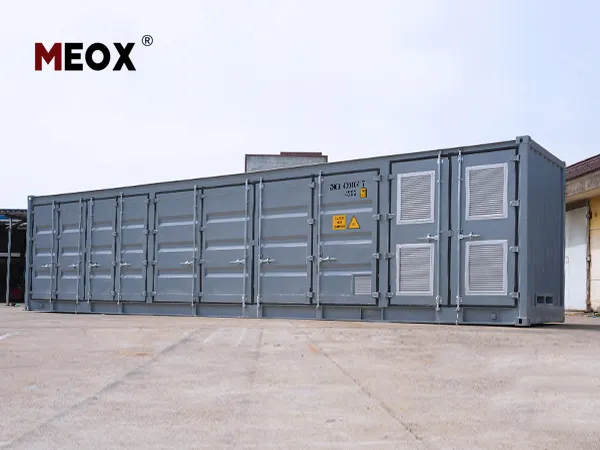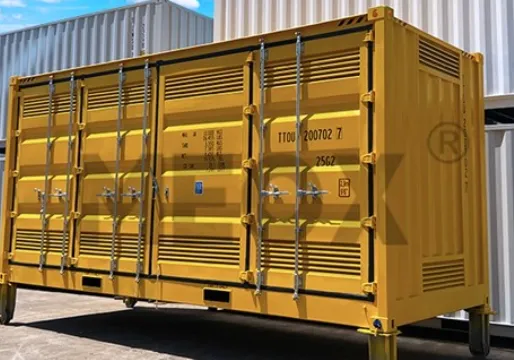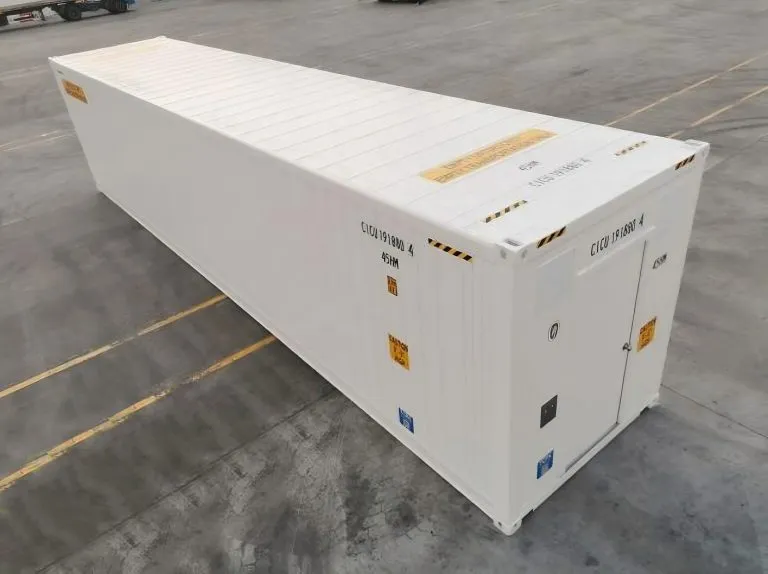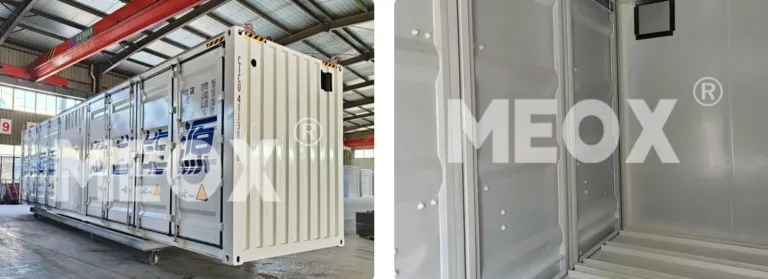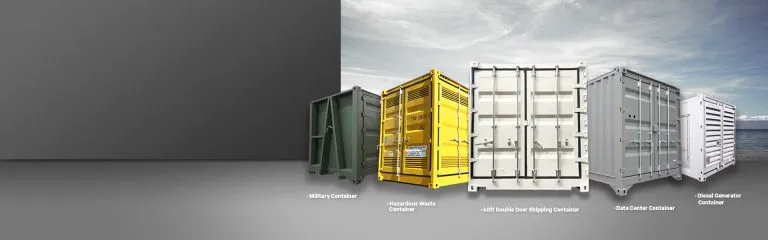
The shipping container restaurant kitchen can take an empty steel container and turn it into a kitchen that is equipped and meets all regulations. This kind of container kitchen can be assembled and delivered within weeks instead of months. For restaurant owners, caterers, and food truck operators, this is important. An old-fashioned kitchen construction done ordinarily can take from six months to a year, and until then, the money is tied up. In a container kitchen, the time is reduced, but all of the necessary equipment such as stainless-steel counters, ventilation systems, and utilities is provided.
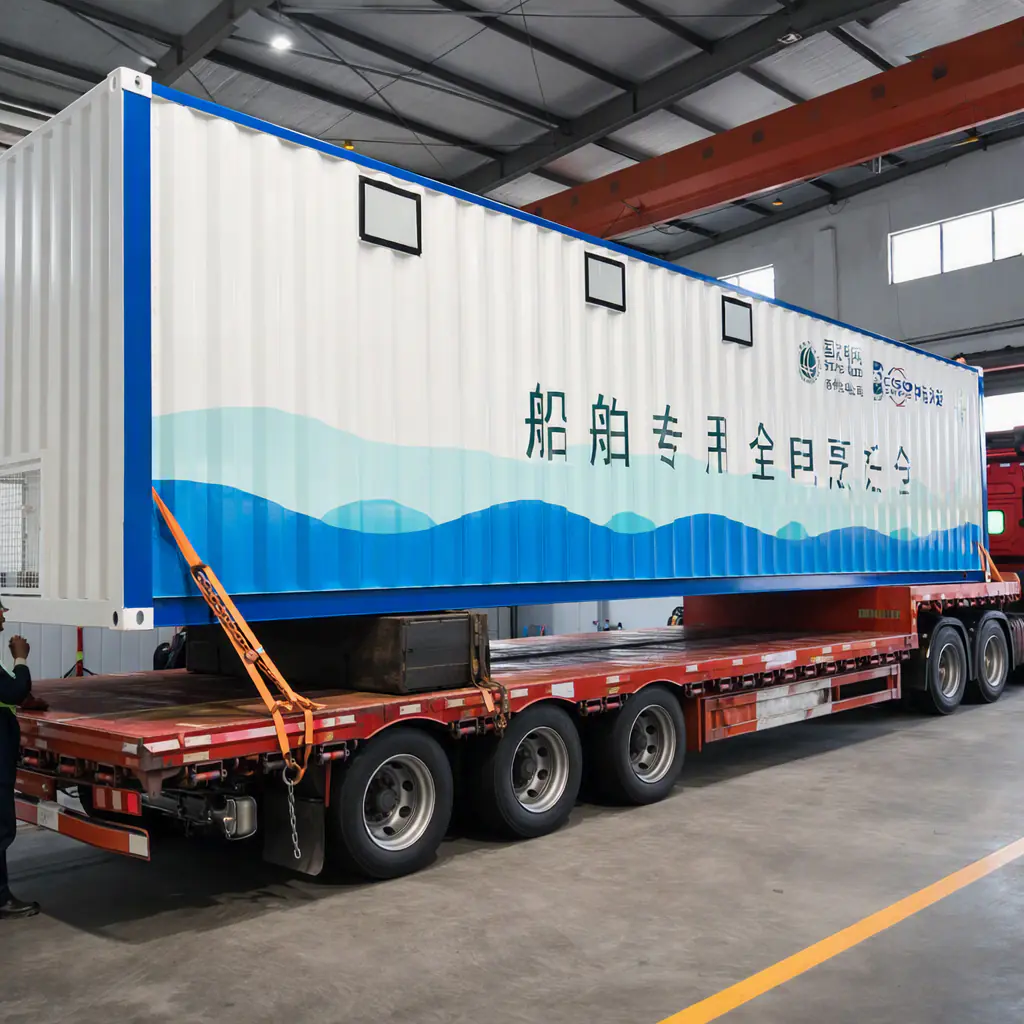
This guide covers what a shipping container commercial kitchen actually includes, how the 20ft and 40ft options compare, which regulations typically apply, and how one operator used a shipping container kitchen for sale to solve a real permitting and staffing challenge. We also look at two related options worth knowing: the shipping container outdoor kitchen and container kitchens built for food truck businesses.
Since many operators are unfamiliar with this format, it can be helpful to consider a shipping container kitchen less as a trend and more as an alternative construction technique. Once assembled and hooked up, the finished product performs in the same way as any other commercial kitchen—the only difference is the way it was constructed and the speed of delivery.
What Is a Commercial Kitchen in a Shipping Container?
The main thought of the idea of a container kitchen is that an ISO shipping container that was refurbished with insulation, electricity, plumbing, ventilation, and kitchen fixtures is converted into a fully-functional facility. The metallic walls of the container enable it to provide sturdiness unlike that of a wooden building, at the same time acting as an element of modularity, which allows the container’s easy movement without damaging it.
Most units are created from a 20-foot or 40-foot high-cube container, followed by the cutting of windows and doors, the installation of protective panels, and the wiring of ovens, fryers, and refrigeration systems. Marine-grade products take things a step further by using corrosion-resistant stainless steel piping and work surfaces so that a cooking facility can be used on a ship or in a coastal area without risking premature corrosion. The table below outlines the baseline specifications used across MEOX’s standard equipment container kitchen builds.
| Specification | 20ft Container Kitchen | 40ft Container Kitchen |
| External Dimensions | 6058 x 2438 x 2896 mm (or customized) | 12192 x 2438 x 2896 mm (or customized) |
| Structural Material | SPA-H weathering steel | SPA-H weathering steel |
| Paint Grade | CX-grade, corrosion-resistant | CX-grade, corrosion-resistant |
| Certification | CSC | CSC |
| Best Suited For | Food trucks, pop-ups, single-line service | Full-service catering, multi-station kitchens |
Why Operators Are Choosing Container-Based Commercial Kitchens
For a number of years, the food service industry has been transitioning to the leaner and delivery-based formats, with container kitchens right in the heart of the transition. The emergence of ghost kitchens and virtual dining, which are largely based on compact prefabricated facilities, has emerged into a very lucrative business with an estimated worth of 113 billion dollars by 2026, and stable growth at rates exceeding 10 percent (Research and Markets, Ghost Kitchens Global Market Report 2026). That growth reflects a broader appetite for kitchen formats that launch fast and scale without a traditional lease.
A handful of practical advantages explain why container kitchens keep gaining ground:
- Speed to opening — because the core kitchen is pre-fabricated off-site, on-site work is limited to placement, utility connection, and final inspection.
- Lower upfront cost — skipping a ground-up build cuts spending on foundations, framing, and long-term leases.
- Full customization — layouts can be tailored around a specific menu, whether that means a pizza-focused line, a raw bar, or a full-service galley.
- Mobility and reuse — a container kitchen can relocate with the business, following foot traffic, seasonal demand, or a change of address.
- Durability — Corten or SPA-H steel construction shrugs off weather that would damage a lighter prefabricated structure.
These advantages compound for operators entering food service for the first time. A first-time restaurateur weighing a shipping container commercial kitchen against a conventional buildout is often comparing a matter of weeks against a matter of quarters, and a fixed manufacturing cost against a construction budget that tends to grow once permitting and change orders begin.
Regulatory and Design Considerations
Container kitchens also have to meet similar health, fire and building codes as any commercial kitchen. In the United States of America, this means complying with the FDA Food Code regarding food-contact surfaces and hot-holding and cold-holding temperatures, as well as NFPA 96 regarding exhaust hoods and fire suppression of the cooking area (National Restaurant Authority, Commercial Kitchen Design Standards for Restaurants). Additionally, equipment should bear proper certification labels as missing certification will slow down a health department review process. Because the layout is pre-set before dispatching the equipment, the necessity of confirming those requirements should be addressed during the design stage rather than after the equipment was installed.
The need for ventilation needs to be highlighted in a container format, due to the small space making every miscalculation crucial. Ventilation hood measurements, air supply and grease disposal still require the same calculations as for an ordinary kitchen; the only difference being the way they are installed in this case. Employing the same manufacturer with an established history of using these systems speeds the inspection process up significantly.
| Regulatory Area | Governing Standard | What It Covers |
| Food-contact surfaces | FDA Food Code | Smooth, non-absorbent, cleanable materials; hot/cold holding temperatures |
| Ventilation & fire suppression | NFPA 96 | Exhaust hood sizing, grease management, suppression systems |
| Equipment certification | NSF / UL / ETL | Sanitation and electrical safety marks required for plan review |
Types of Shipping Container Kitchens
Different food businesses require different sizes. A single brick-and-mortar location can be used to replace a food truck or be a small catering base. A container kitchen is a great option for events, resorts, or camps that require long-lasting cooking setups due to their exposure to the elements and constant transportation. Multi-container systems link several units into prep, cooking, storage, and service zones for higher-volume operations such as ghost kitchen hubs or stadium and event venue concessions. A hybrid layout, combining indoor prep with an outdoor service window, tends to suit coffee bars, juice counters, and other formats where customer interaction happens right at the container.
| Kitchen Type | Typical Use Case | Key Feature |
| Standalone container kitchen | Food trucks, pop-ups, single-brand catering | Compact, fully self-contained |
| Shipping container outdoor kitchen | Festivals, resorts, glamping, ski slopes | Weatherproof, quick relocation |
| Multi-container kitchen system | Ghost kitchens, stadiums, large-scale catering | Zoned prep, cooking, and service |
Case Study: Turning a Food Truck Into a Permanent Container Kitchen
A certain catering business was finding it tough to cope with its earlier food truck. However, it did not want to put itself in a situation where it would have to sign a long lease for a restaurant. In this situation, they required a kitchen, which was code compliant and could be put to use pretty soon with prior construction approval.
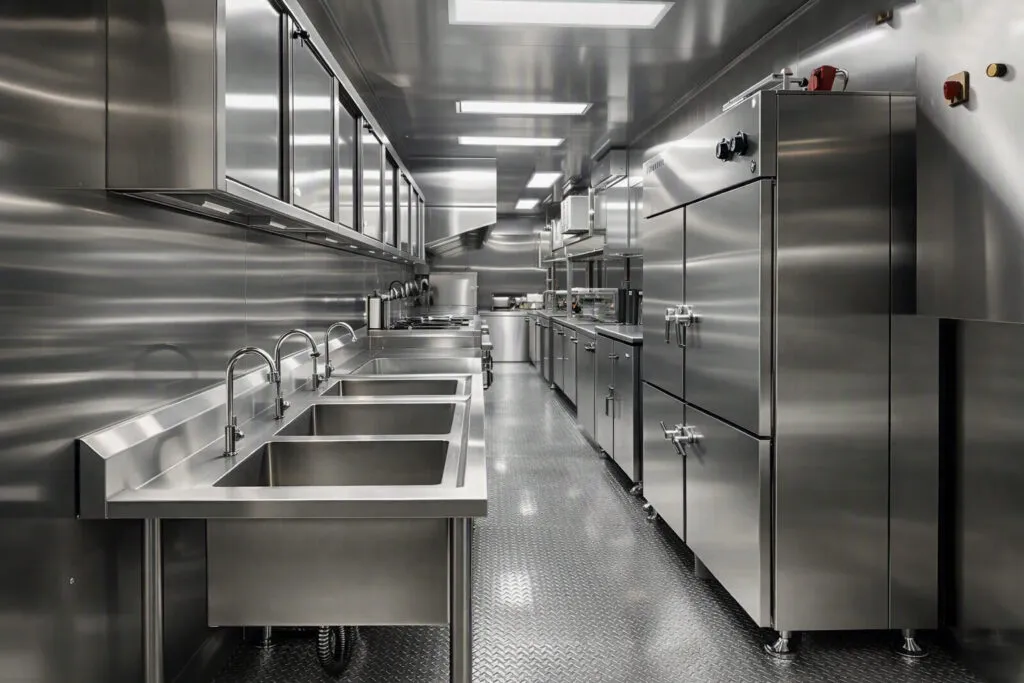
The main challenge was coordination. Health inspectors, electricians, and the local fire marshal all needed to sign off before the operator could legally cook a single order, and previous vendors had struggled to keep those approvals moving in parallel. Working from a 40ft container, the build team pre-installed stainless steel prep counters, a ventilated hood system, three-compartment sinks, and dedicated circuits for high-draw equipment before the unit ever left the factory. Because the layout and documentation were prepared in advance, the operator’s team was able to walk local inspectors through a kitchen that already matched the submitted plans, rather than requesting changes after installation.
The result was an adequately certified, and highly productive kitchen that attained operational status in a fraction of the time it would take to complete an equivalent brick-and-mortar kitchen buildout allowing for the business to maintain its current clients and scale simultaneously towards a permanent establishment.
Frequently Asked Questions
How long does it take to get a container kitchen up and running?
The majority of standard constructions happen within a matter of weeks, and installation itself takes a few days more since the time required for connecting the utilities has to be taken into account. Actual timelines do depend on local permitting and inspection processes.
Can a container kitchen handle full commercial-scale cooking?
Yes. A well-equipped 40-foot container is capable of accommodating several cooking stations, commercial refrigeration units, and appropriate ventilation equipment for a high flow of customers. This means it can be used for full-service restaurants and catering businesses – not only for food vans.
Is a container kitchen suitable for outdoor or remote locations?
There are many advantages offered by a portable container kitchen. It can be insulated, temperature-controlled, and integrated with power and water services that are not accessible from the grid. That is why this type of kitchen can be really beneficial to use in such places as festivals, resorts, and distant cities where people do not have access to any utilities.
Getting Started
Using a shipping container kitchen provides a great blend in-between occupying space like a food truck and spending more money plus a lot of time on constructing a full restaurant. Regardless of whether your idea involves a mobile catering service, fixed commercial kitchen, or shipping container kitchen perfect for outdoor cooking if you own a seasonal business, this option is advantageous in terms of matching your business concept rather than requiring your business concept to adapt to your cooking facility design.
MEOX designs and manufactures custom shipping container kitchens for commercial, mobile, and outdoor use, with layouts built around each client’s equipment list and local code requirements. To explore specifications or request a quote, visit the Shipping Container Kitchen product page.
Disclaimer: Technical data, specifications, and materials discussed in this paper are solely based on MEOX’s products. It is possible that specifications, materials, and details are not the same for different projects, and they should be verified with the MEOX team prior to implementation.
For a closer look at how a container kitchen comes together, watch ZN-MEOX Shipping Container Kitchen: The Smart Solution for Modern Food Businesses: