
10FT Mobile Solar Container
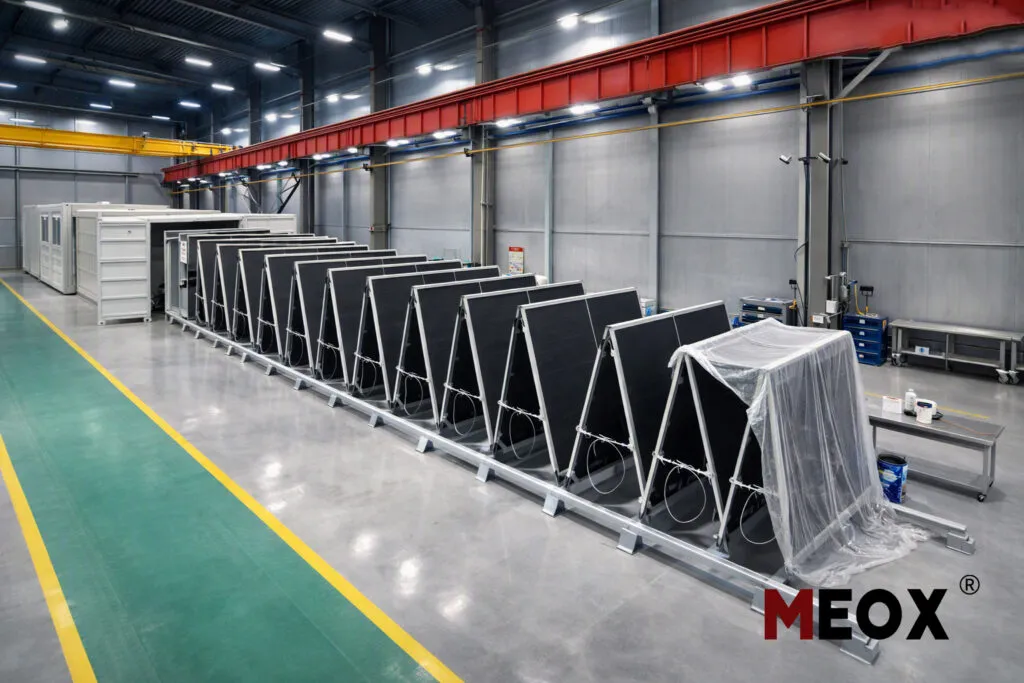
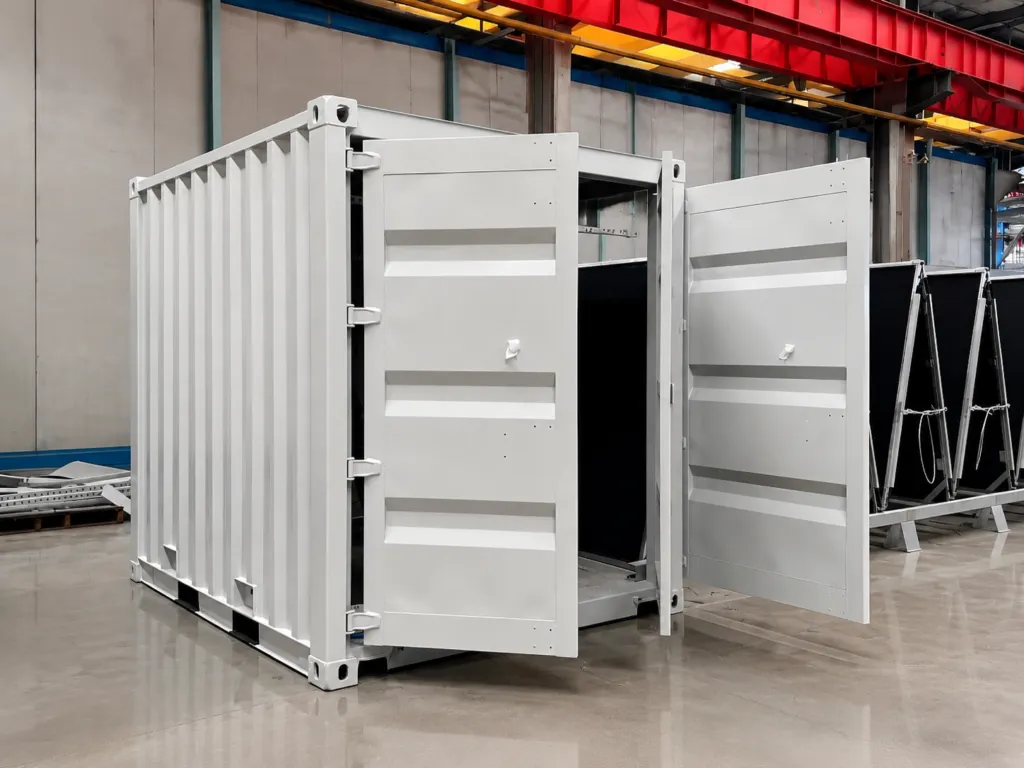
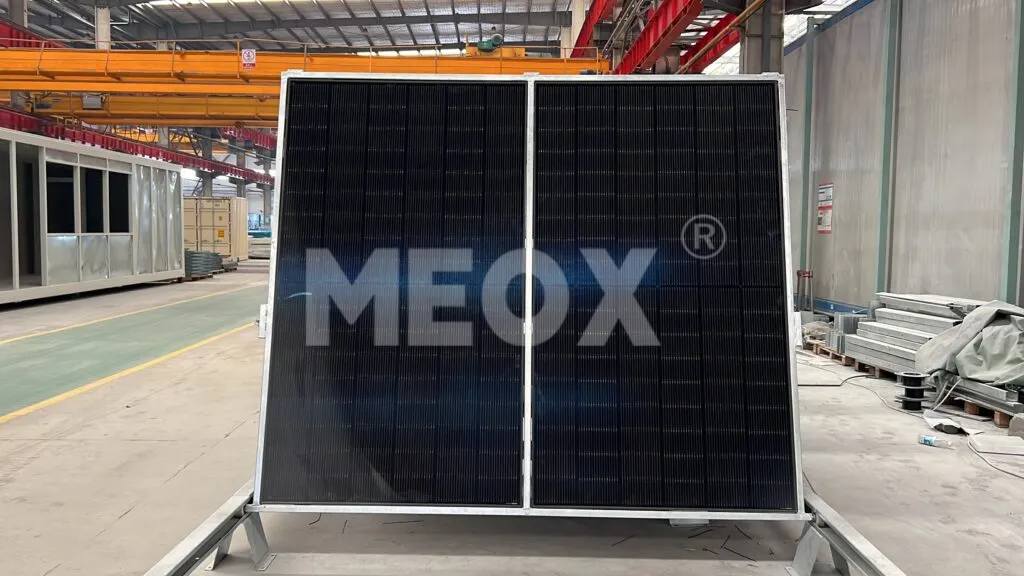
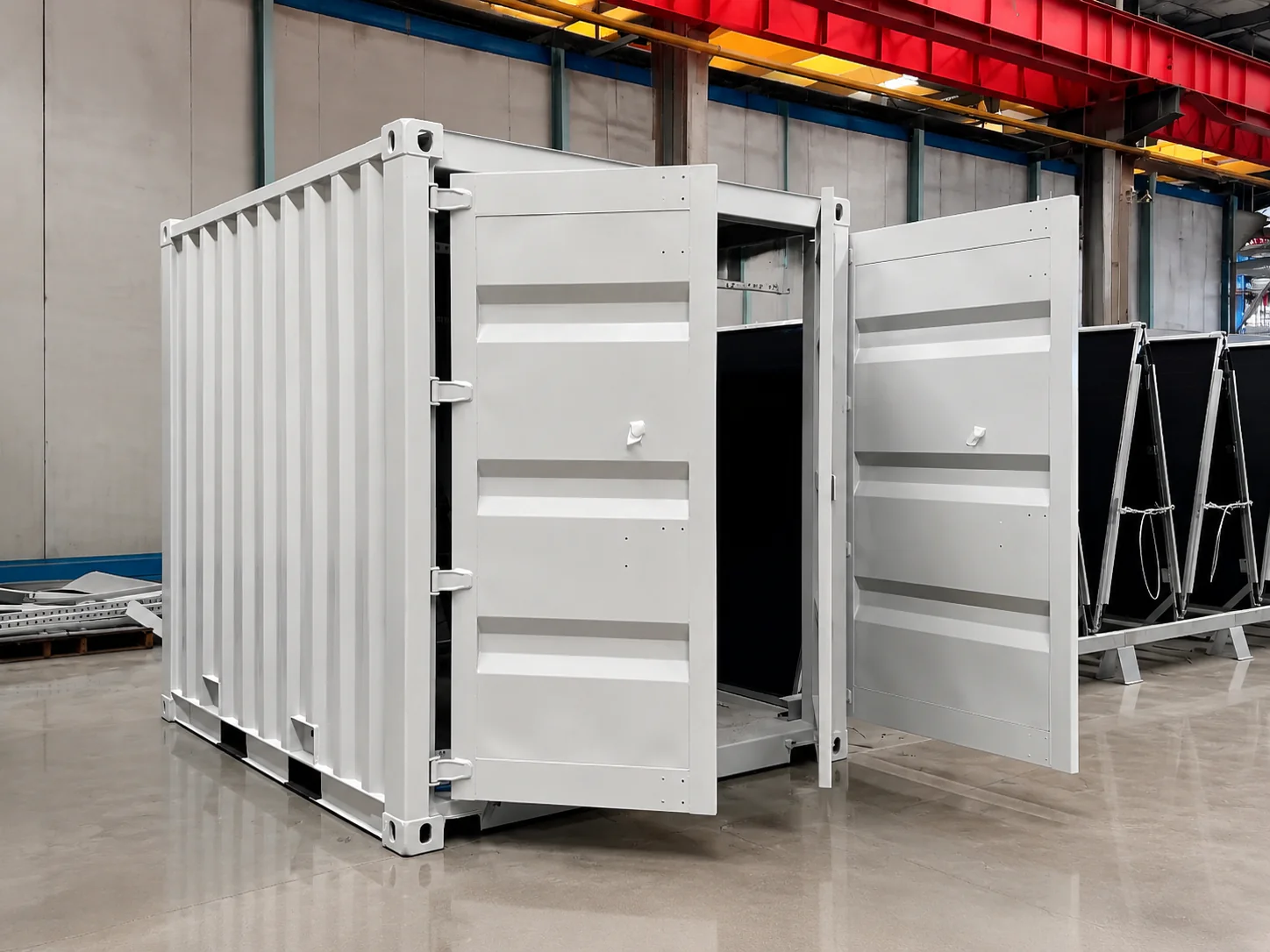
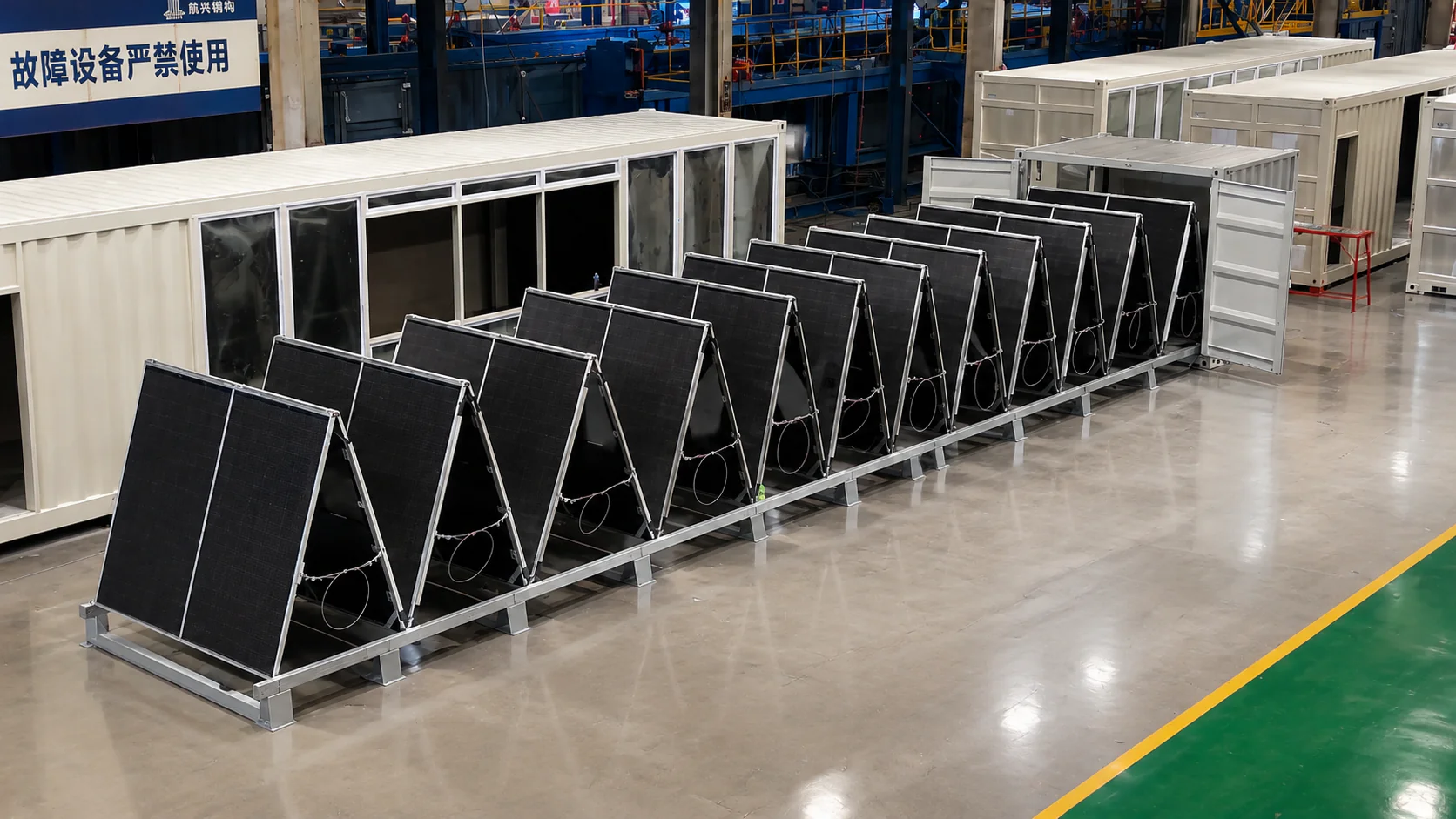
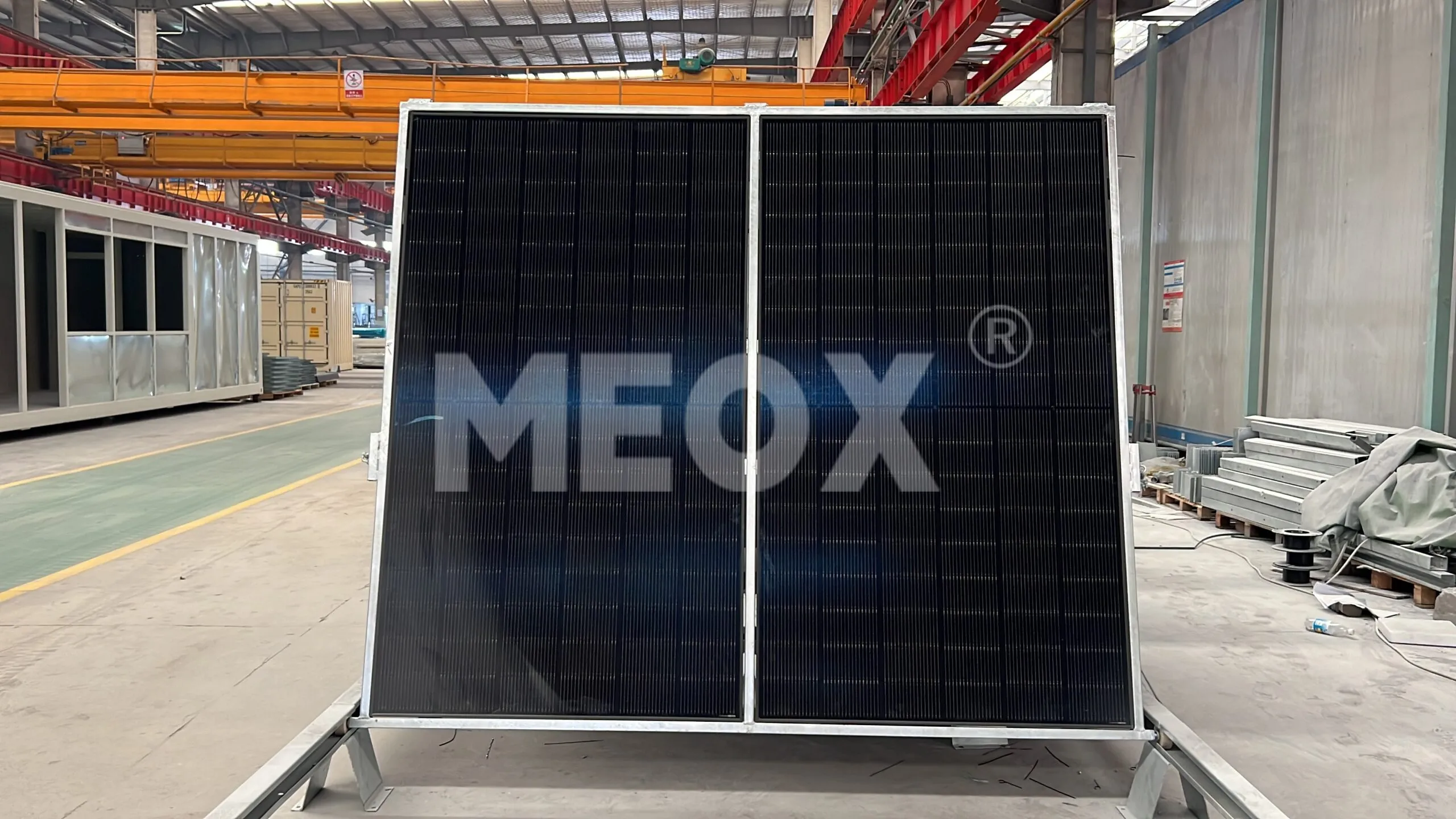
The MEOX 10FT Mobile Solar Container is the compact entry point into the MEOX solar container line. The system consists of a factory-assembled folding solar array rated at 24 kWp, paired with a 32 kWh LiFePO4 battery bank, all housed within a single 10-foot open-side ISO shell. This solution offers the same plug-and-play deployment functionality as the 20FT Mobile Solar Container that can be easily transported by a single pickup or flatbed. It is specifically well-suited for smaller remote sites, backup power loads, and projects where land, budget, or crane access is limited.
Overview Of 10FT Mobile Solar Container
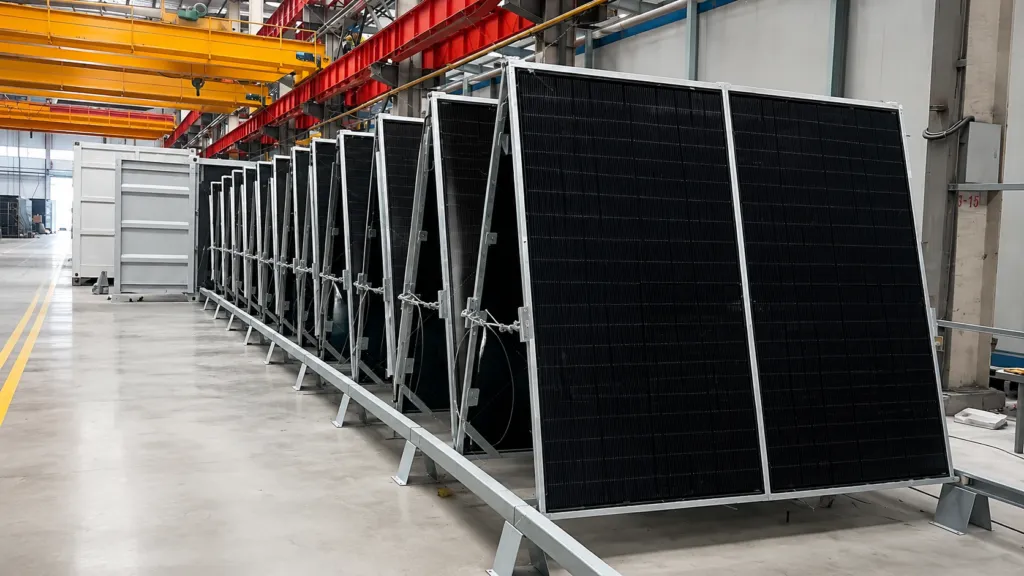
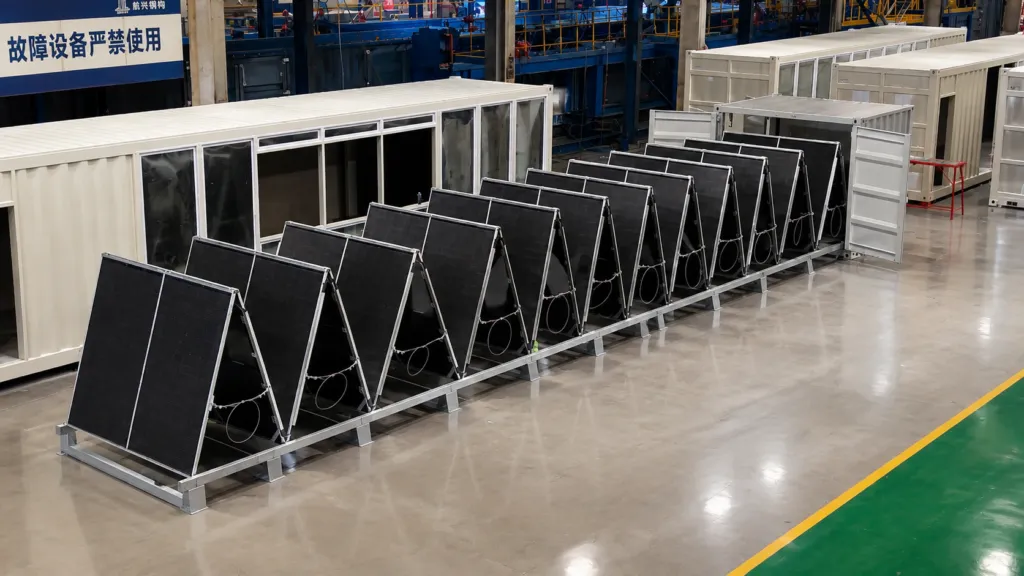
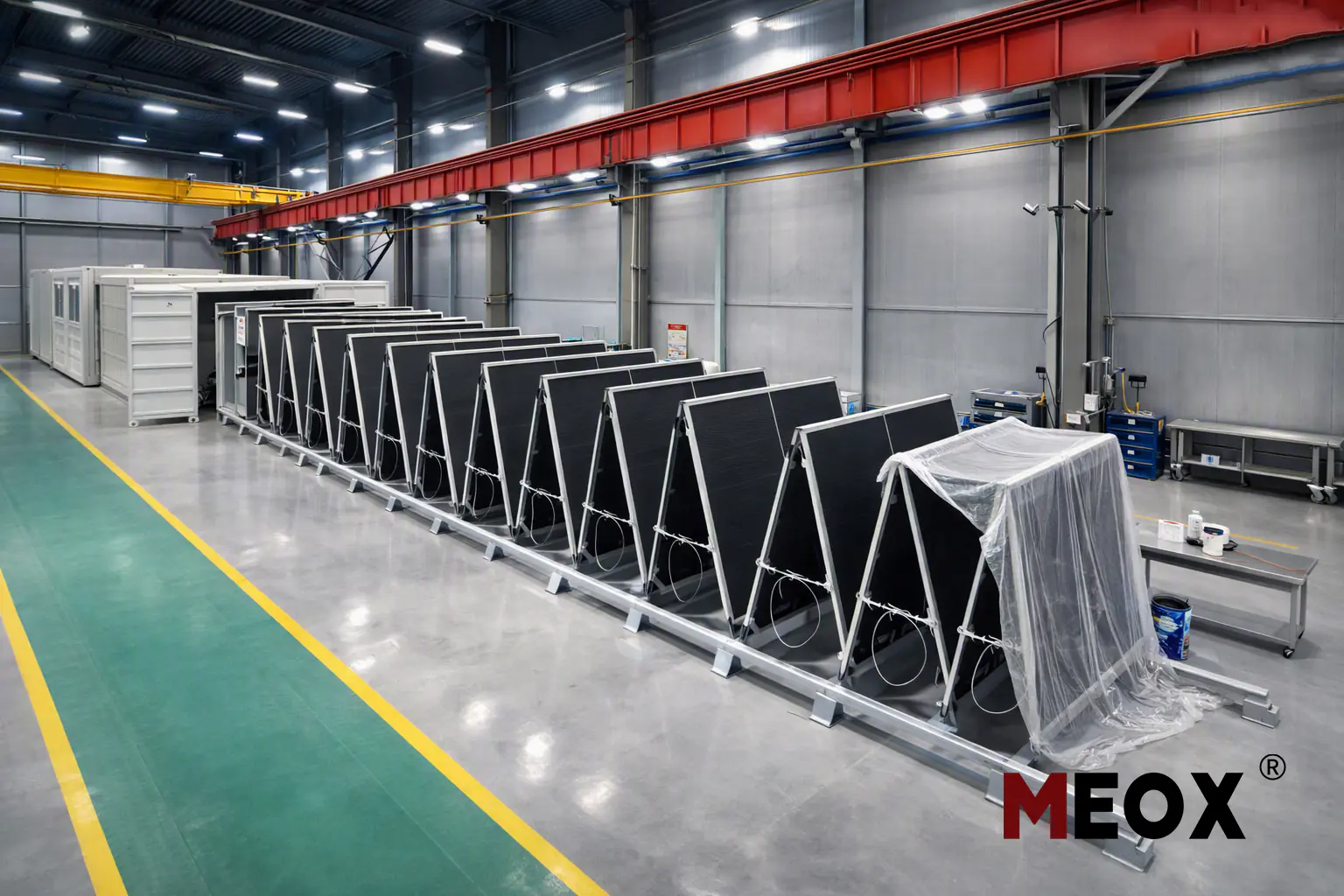
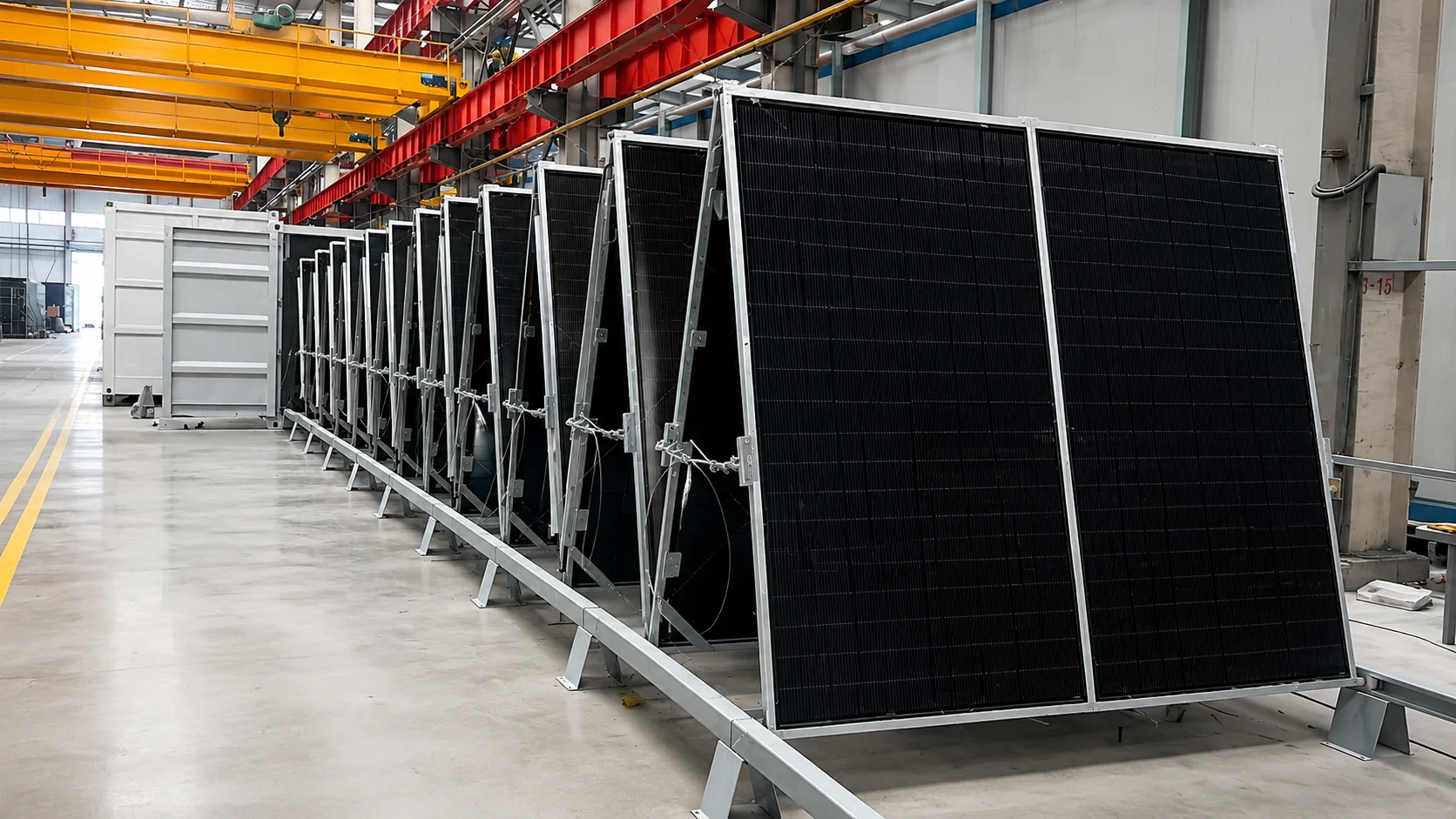
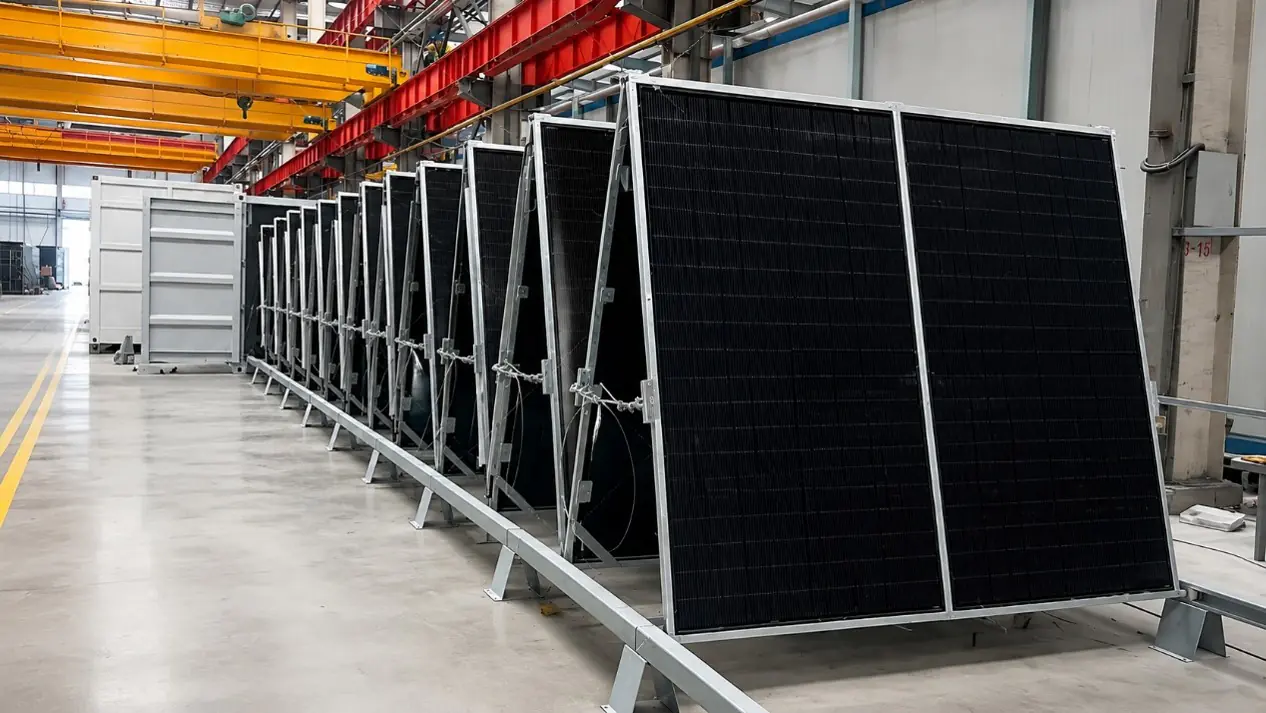
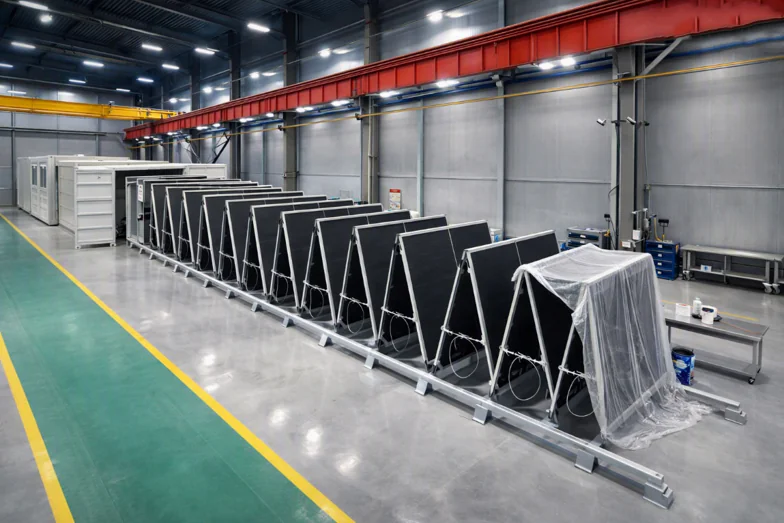
The 10FT unit is a smaller version of MEOX’s energy storage container range. It keeps the same core technologies as the larger models, including hot-dip galvanized steel racking, N-Type i-TOPCon modules, and a hybrid inverter. However, this unit uses a smaller solar array and battery system that four people can install in about one hour. The 10FT unit is, as is customary, CE-certified and TÜV tested, employing the same rail-fold mechanism as the 20ft and 40ft platforms. This allows the panels to be stored flush within the container envelope, rendering it suitable for standard ISO transport and stacking procedures. The unit is delivered as a single sealed container, entirely pre-wired at the factory, which means there is no requirement for on-site panel assembly, cabling runs, or the scheduling of racking installation. After being positioned, the crew detaches the side panels, fully extends the folding rail mechanism to a span of 45 meters, thus securing the array at a stable tilt. All the components located downstream of the panel connectors, like the combiner boxes, the hybrid inverter, and the battery bank, are securely housed within the container shell which offers protection from weather, dust, and tampering. That containment is part of why the format works well for sites without a dedicated technician on standby: there is very little exposed wiring or hardware to maintain in the field.
Design and Engineering
Two engineering options that originated from the 20FT and 40FT platforms hold the same level of importance at the 10FT scale. Their significance persists across different dimensions. The setup and channel steel are hot-dip galvanized with a minimum thickness of 65 m and feature rails coated with zinc-aluminum-magnesium, which are intended to give the same anti-corrosion protection as the larger units. That means, even though a 10FT container for coastal, desert, or humid regions is smaller, it will last as long as the bigger one. Also, the way the array folds permits a small base that is close to the ground (0.9 m with the legs fully out), which is a major design advantage because the less wind the structure bears, the less damage is done by the storm. Besides that, its visual appeal for the area where it is installed is maintained at the minimum level by keeping the array low; for example, in the vicinity of roads, airstrips or residential communities, this is a major criterion.
The battery bank uses the same Dyness Power Brick Plus modules found in MEOX’s larger configurations, wired here as two 16 kWh units for a combined 32 kWh of LiFePO4 storage. Among lithium chemistries, LiFePO4 is mainly thermally stable and has a long cycle life which is selected for MEOX throughout the range. The mentioned situation is very serious and can actually become critical when a battery which has been sealed is left in the sun with a lot of heat in the environment. The hybrid inverter of Solis handles the conversion from DC to AC and the charging/discharging scheduling so that there is no need for the system to have a site operator who manually switches between solar and battery power.
How It Works
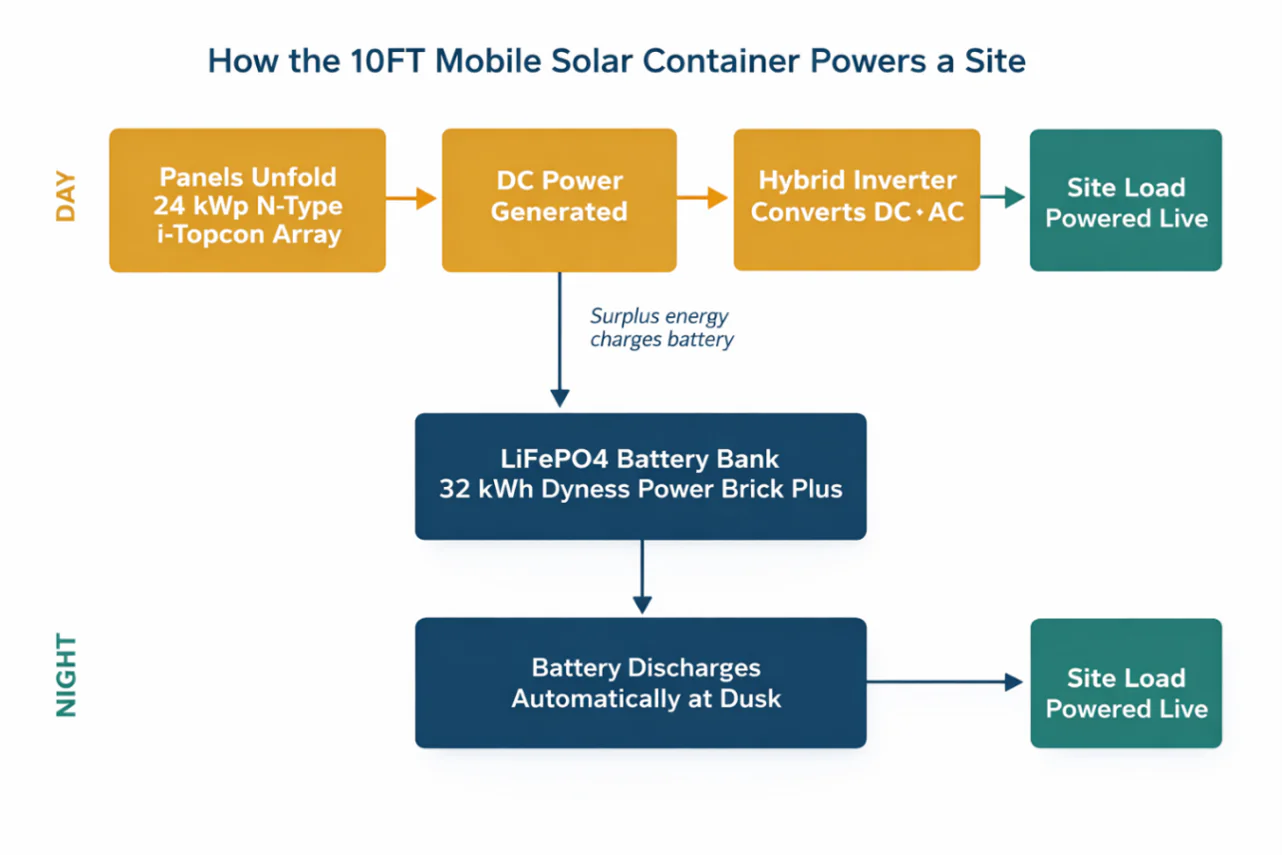
Like the rest of the MEOX solar container range, the 10FT unit runs on a simple day/night cycle: by day the folding array charges the battery bank and powers the site directly through the hybrid inverter; by night, stored energy discharges automatically to keep the load running without interruption.
10FT Mobile Solar Container Technical Specifications
Specifications below are drawn from the MEOX 10FT unit’s factory parameter sheet.
| Parameter | 10FT Mobile Solar Container |
| System Type | MEOX-10SO-24KW/32KWH (rail-mounted folding array) |
| Container Type | 10 Feet Open Side |
| External Dimensions (L×W×H) | 2,991 × 2,438 × 2,591 mm |
| Container Weight | 2 tons (empty) |
| Total Weight | 4 tons |
| Solar Array Capacity (Pmax) | 24 kWp |
| Battery Energy Storage | 32 kWh — LiFePO4, 2 × 16 kWh Dyness Power Brick Plus |
| Folding / Unfolding Time | 30 / 60 minutes |
| Installation Crew | 4 people |
| Operating Temperature | -30°C to +60°C (-86°F to +140°F) |
| Unfolded Footprint (L×W×H) | 45 × 2.4 × 0.9 m at 15° tilt |
| Folded Footprint (L×W×H) | 2.35 × 2.34 × 2 m |
| Max. Site Slope | 1% |
| Solar Panel Type | N-Type i-TOPCon |
| Solar Panel Power | 510 W per module (Tier 1), 1,962 × 1,134 × 30 mm |
| Quantity of Modules | 48 |
| Output Voltage / Frequency | 220/380 V, 230/400 V, 3L/N/PE or 3L/PE |
| Inverter | Solis SOLARATOR S6-EH3P(15)K02-NV-YD-L, 15 kW, hybrid three-phase, low voltage — 1 set |
| Bracket Material | Hot-dip galvanized carbon steel, ≥65 μm |
| Channel / Rail Material | Zinc-aluminum-magnesium steel plate, ≥275 g/m² |
| Unfolding Bracket Angle | 15°–35° |
| Unfolding Bracket Length | 45 m |
| Unfolded Bracket Project Area | 105 m² |
| Certification | TÜV tested, CE-certified |
10FT vs. 20FT vs. 40FT: Choosing the Right Size
For projects that outgrow a single 10FT unit, capacity scales directly with container length. Figures for the 20FT and 40FT formats are drawn from the Mobile Solar Container parameter sheet; units can also be paired on one site to combine capacity in stages.
| Specification | 10FT Mobile Solar Container | 20FT Mobile Solar Container | 40FT Mobile Solar Container |
| Container Format | 10 Feet Open Side | 20 Feet High Cube Open Side | 40 Feet High Cube Open Side |
| Solar Array Capacity (Pmax) | 24 kWp | 113 kWp | 226 kWp |
| Battery Storage (as configured) | 32 kWh | Scalable, hybrid/AC options | Scalable, hybrid/AC options |
| Total Weight | 4 tons | 10.64 tons | 30.48 tons |
| Quantity of Modules | 48 | 192 | 384 |
| Installation Crew | 4 | 6 | 12 |
| Folding / Unfolding Time | 30 / 60 min | 120 / 80 min | 240 / 160 min |
| Certification | TÜV tested, CE-certified | TÜV tested, CE-certified | TÜV tested, CE-certified |
Where the 10FT Unit Fits Best
The smaller footprint and lighter total weight make the 10FT container practical anywhere a full 20ft or 40ft deployment would be oversized:
- Remote telecom, monitoring, or sensor sites needing a self-contained, unattended power source
- Small construction or survey camps where tools, lighting, and site offices draw modest loads
- Emergency and disaster-response kits that must move on a single flatbed or in a shipping slot
- Backup or supplemental power alongside an existing generator or grid connection
- Agricultural, eco-tourism, or remote hospitality sites with a single building or small load cluster
In practice, the deciding factor is usually loading size rather than site remoteness. A single site office, a bank of sensors, a security checkpoint, or a small pump station typically draws well within the 24 kWp array’s daily generation and the 32 kWh battery’s overnight reserve, which is where the 10FT unit is most cost-effective. Sites with heavier continuous loads — multiple buildings, industrial equipment, or 24-hour operations — are usually better matched to the 20FT or 40FT platform, or to several 10FT units deployed together.
The lighter total weight also opens up transport options that aren’t available to the larger units. At 4 tons fully loaded, a 10FT container can move on a standard flatbed truck or trailer without the permitting and crane logistics that heavier ISO loads often require, which shortens the path from order to on-site power for projects on a tight schedule.
For teams that also need on-site living or office space alongside a compact power source, ZN House’s modular container buildings pair naturally with a unit this size — power and shelter delivered in the same container format.
Shipping and Site Requirements
Due to the fact that the folded array matches the container’s outside dimension (2.35 × 2.34 × 2 m), the 10FT version travels as a conventional ISO container and it can be shipped by truck, rail or sea freight and it does not even require special oversized permits. The only thing that is basically needed on the ground level is the array having a mostly flat site and with a slope no exceeding 1% along its 45-metre length. Uneven or sloped ground can be leveled with gravel pads or timber shims before deployment, which four-person crews typically handle as part of the standard 60-minute unfolding sequence.
Because the entire electrical system — combiner boxes, inverter, and battery bank — is pre-wired and housed inside the container, on-site commissioning is largely a matter of unfolding the array, confirming connections, and powering on, rather than a full electrical installation. This is the same commissioning approach used across the MEOX solar container range, scaled to the smaller crew size the 10FT format requires.
Maintenance and Expected Lifespan
Routine maintenance on the 10FT unit follows the same pattern as MEOX’s larger containers: periodic panel cleaning where dust or sand accumulation is heavy, a visual inspection of rail and bracket hardware after severe weather, and standard battery management system checks, which the hybrid inverter handles automatically under normal operation. Because the steel racking is hot-dip galvanized and the electrical components are housed inside the sealed container when folded, the system is designed to need minimal intervention between service visits, which matters for sites that are only accessible periodically.
Component lifespans follow industry norms for each part: N-Type i-TOPCon modules are typically rated for 25-30 years of service with gradual output degradation, while LiFePO4 battery packs are rated for several thousand charge cycles before capacity falls below usable thresholds — in practical terms, years of daily cycling before a battery replacement is needed. Because the battery and inverter are modular within the container, replacement or capacity upgrades can generally be handled without replacing the container or racking structure.
Certification and Build Standards
The 10FT unit’s solar modules and system design follow the same TÜV-tested, CE-certified path as the rest of the MEOX line. Third-party PV certification bodies such as TÜV Rheinland test modules against IEC 61215 (design qualification) and IEC 61730 (safety), verifying that panels hold their rated output and pass structural and electrical safety testing before a product carries the mark (TÜV Rheinland, PV module testing). All structural steel — brackets, rails, and channels — is hot-dip galvanized to resist corrosion in coastal, desert, and high-humidity deployments.
Why Off-Grid Solar Containers Are Gaining Ground
The demand for solar solutions that are independent, portable, compact, or used in remote conditions is growing quickly, together with the development of remote mining, telco, and rural electrification projects. Based on industry experts, the global off-grid solar market will amount to about USD 5.8 billion in 2026 and will likely grow more than twofold by the middle of the decade as the cost of batteries comes down and the need for power continues in remote locations (MarkWide Research, Off-Grid Solar Market). Compact, transportable formats like the 10FT container are positioned to capture demand from smaller sites that don’t need, or can’t accommodate, a full-scale ground-mount array.
Watch It Deploy
See the folding mechanism and setup sequence in MEOX’s short deployment video on ‘Mobile Energy Storage Folding Solar Container — MEOX’:
Get a Quote
Contact MEOX for a tailored quote on the 10FT Mobile Solar Container, including lead times, battery configuration options, and shipping to your site.
Disclaimer: Capacity, cycle life, and other performance figures on this page are representative ranges for MEOX’s containerized solar platform. Final specifications, certifications, and warranty terms are confirmed in the formal technical proposal for each project.
