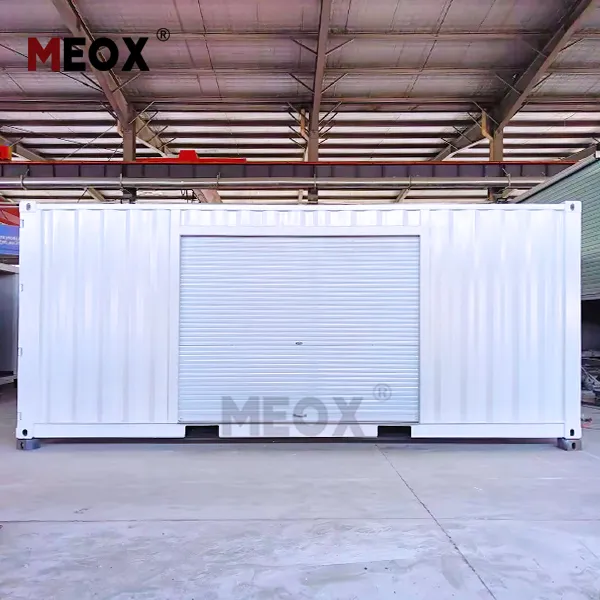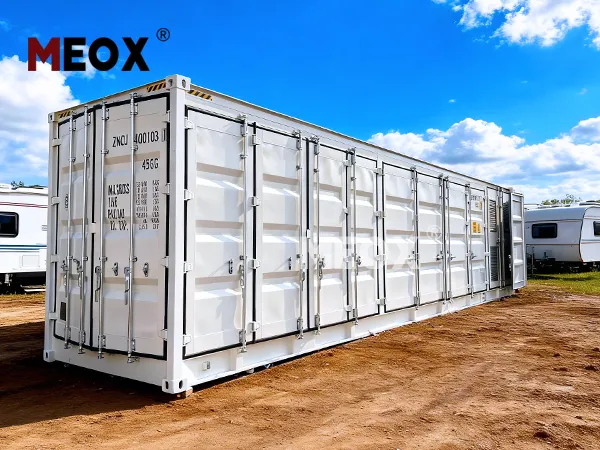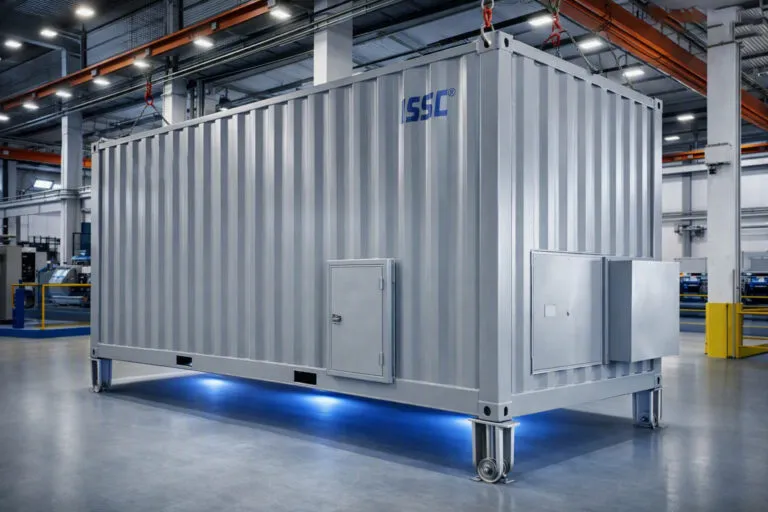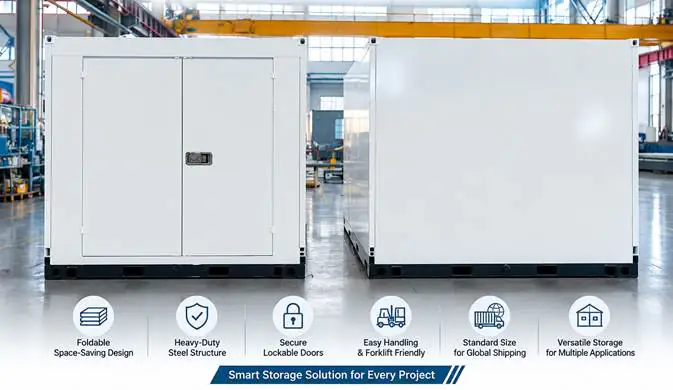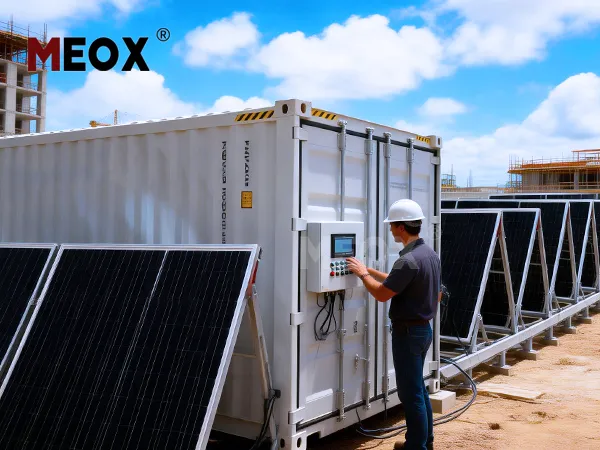
An eHouse (Electrical House) is a factory-made building that contains electrical equipment such as transformers and switchgear. The practice of making the majority of electrical equipment in a factory permits the use of this technology in applications where traditional construction was previously used. A typical eHouse is a full-fledged substation that can arrive at its destination ready for connection.
The eHouse concept is also referred to as Electrical House, E-House, Power House, or Walk-in Electrical Enclosure, and it has become an increasingly adopted approach within modular power infrastructure, particularly for projects where construction time, site access, space, or environmental conditions are important considerations. It serves as a reliable and fast option to construct new substations, replace outdated control centers, and expand the grid capacity to places and sites (data centers and remote mining areas) where reliability is prioritized over the conventional construction model.
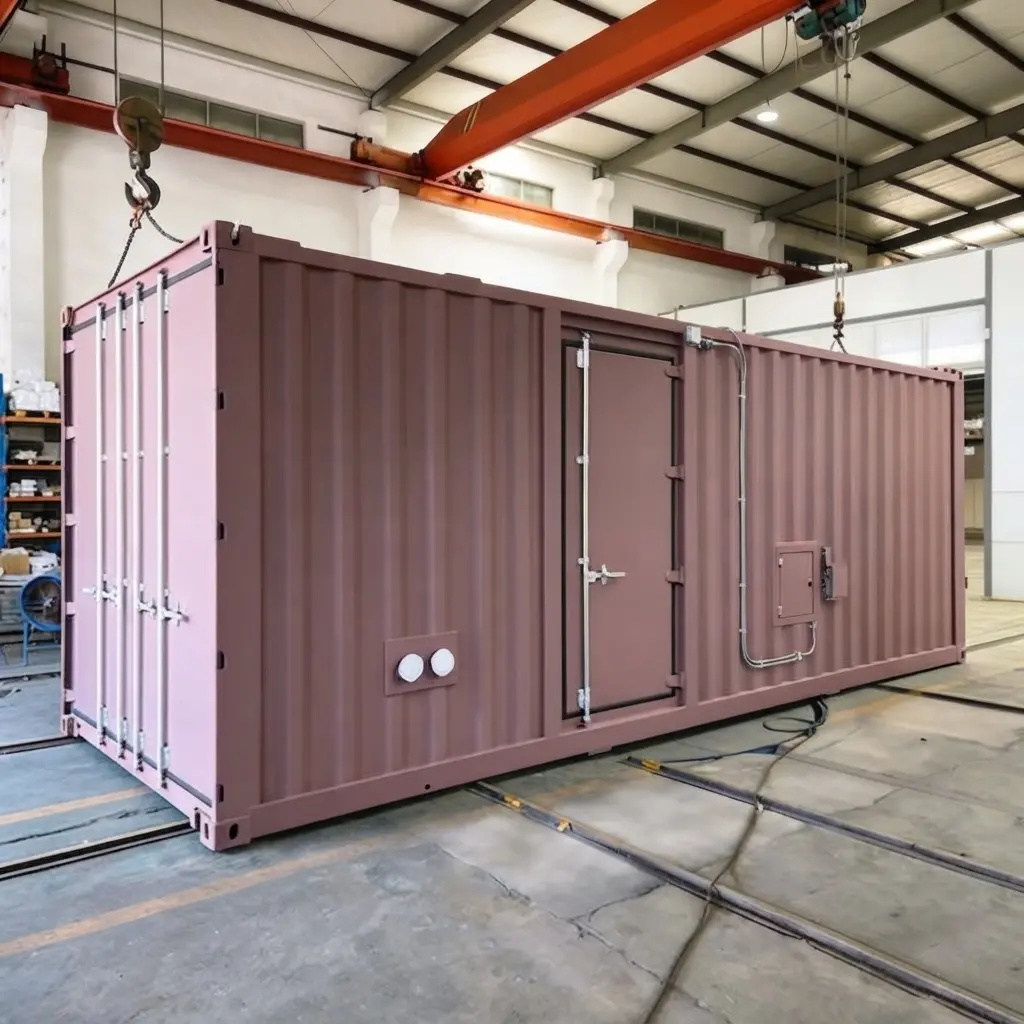
What’s Inside an eHouse?
A typical eHouse integrates several categories of electrical equipment inside a single steel modular enclosure, engineered to work together as one pre-tested system:
- Medium-voltage (MV) and low-voltage (LV) switchgear
- Distribution and power transformers
- Protection, automation, and SCADA/control panels
- Motor control centers and auxiliary power (UPS/battery backup)
- Cable management, HVAC, fire protection, and lighting systems
Because the enclosure, wiring, and electrical equipment can be engineered and integrated as a complete package, key interfaces can be verified through factory testing before shipment. This can reduce the amount of equipment integration and commissioning work required at the project site.
Key Features of an eHouse
Factory Assembled and Pre-Tested
The process of manufacturing, wiring, and performing functional tests is carried out in factory conditions. This minimizes the need for onsite work, identifies equipment or wiring problems prior to shipment, and ensures uniformity in the production of several copies of the same project.
Fast Installation and Commissioning
Equipment layouts, cable routing, and connection points are defined during the engineering stage, allowing much of the assembly and integration work to be completed before shipment. Depending on project scope and site conditions, this can reduce on-site installation and commissioning requirements compared with conventional site-built solutions.
Modular and Scalable Design
A single eHouse module can be deployed on its own, or multiple modules can be combined for larger capacity requirements — allowing the same product platform to serve small distribution upgrades and utility-scale substation projects alike.
Built for Harsh Environments
Steel modular enclosures can be specified to include high anti-corrosive coating levels, dust and moisture sealing, and advanced insulation for wide ambient temperature ranges like coastal, offshore, desert, and humid locations.
eHouse vs. Traditional Civil Substation
| Criteria | eHouse (Prefabricated Substation) | Traditional Civil Substation |
| Installation time | Factory-built and pre-tested; typical total project cycle of 6–10 weeks | Full on-site civil construction; commonly 6–18 months depending on complexity |
| Site work required | Minimal — foundation and utility connection only | Heavy civil engineering: buildings, wiring, and structural works |
| Mobility & expansion | Modular and relocatable; can be expanded or redeployed | Fixed infrastructure; relocation is difficult and costly |
| Cost predictability | Higher, due to factory fabrication and standardized processes | Exposed to weather delays, labor variation, and site-condition overruns |
| Testing coverage | Fully factory pre-assembled, tested, and quality-checked before shipment | Components tested individually; final integration tested on site |
Where eHouses Are Used
The eHouse has been adopted as a viable substation format for various industries because it can be tailored to meet multiple voltage levels, space limitations, and environmental requirements:
- Data centers — compact MV/LV switchgear housing with a small footprint
- Renewable energy — solar and wind farm collector substations at remote sites
- Utilities and distribution system operators (DSOs) — grid expansion and network reinforcement
- Oil & gas — onshore and offshore power distribution in harsh environments
- Mining — relocatable, scalable power infrastructure for changing site plans
- Railways and construction — temporary or phased power supply for active project sites
Standards and Compliance
Switchgear housed inside an eHouse is typically specified against internationally recognized standards. Low-voltage switchgear assemblies commonly follow IEC 61439-1/-2, medium-voltage metal-enclosed switchgear follows IEC 62271-200, and general high-voltage switchgear specifications follow IEC 62271-1. Where arc-resistant construction is required, manufacturers reference IEEE C37.20.7, the industry-recommended practice for testing switchgear for internal arcing faults.
The steel enclosure itself is generally designed to ISO 1496-1 freight-container construction principles and rated for enclosure protection under IEC 60529 (IP54 as a common baseline, with IP65 available for higher dust and water-ingress protection). Projects sourcing from Chinese manufacturers will also see the equivalent GB national standards — GB/T 7251.1, GB/T 11022, and GB/T 3906 — referenced alongside their IEC counterparts.
These are the standards families most commonly referenced for eHouse and prefabricated substation projects; exact applicable standards and certification requirements should always be confirmed against project specifications and the relevant local grid code.
Customization Options
Because no two substation projects have identical requirements, eHouse manufacturers typically offer a range of configurable options:
- Overall size, matched to equipment capacity and available site footprint
- MV/LV equipment layout, tailored for access, safety, and operating efficiency
- Single-room or multi-room structure for equipment separation and future maintenance
- Skid-mounted or trailer-mounted base for temporary or remote deployments
- Cooling and ventilation, sized to the internal heat load and climate
- Integrated fire protection systems
- Cable entry points, pits, or basements matched to the routing plan
- Walk-in design for safer operation and maintenance, or a compact non-walk-in footprint for constrained sites
Why Grid Investment Is Accelerating eHouse Adoption
Prefabricated substations are gaining ground at the same time global grid spending is rising sharply. According to the International Energy Agency’s World Energy Investment 2026 report, global spending on electricity networks is on pace to reach roughly USD 550 billion in 2026, up close to 20% year-on-year, as utilities work through supply chain pressure on transformers, cables, and switchgear while racing to connect new generation, storage, and large loads such as data centers.
The combination of rising grid investment, skilled-labor constraints, and longer equipment procurement schedules has increased interest in prefabricated substation solutions. By completing a significant portion of enclosure fabrication, equipment integration, wiring, and testing in a controlled factory environment, an eHouse can reduce the amount of construction and integration work required on site compared with a conventionally built substation. It shifts the bottleneck from site construction crews to factory production capacity, where schedules are easier to plan and protect.
Case Study: eHouse Substation for a Distribution Utility
In 2025, MEOX delivered a walk-in eHouse substation to support a distribution system operator’s power distribution project, with a total delivery timeline shortened to roughly 6–10 weeks depending on the level of customization required.
The system that has been manufactured was designed to be placed on an elevated structure, allowing for better protection from water intrusion and any other hazardous effects from the outside environment. Using this method results in an estimated cost reduction of about 50% in civil and electrical works as opposed to traditional construction methods.
The walk-in configuration also gave the operator’s maintenance teams safer, more orderly access to internal equipment — a practical benefit once the substation moved from installation into years of ongoing service.
Frequently Asked Questions
What is the difference between an eHouse and a mobile substation?
Both technologies are manufactured in advance and undergo factory testing; however, eHouses usually become semi-permanent or permanent structures erected on firm foundations, whereas mobile substations are designed to move from place to place, i.e., portable, trailer-based structures.
How long does an eHouse last?
If properly maintained, a quality eHouse can have a lifetime of over 15 – 20 years, which corresponds to the industry average for steel modular electrical enclosures. At the same time, the long-term durability depends on the quality of anti-corrosion coatings, insulation, and sealing, especially in coastal areas or in places with high humidity levels.
What site preparation does an eHouse need before installation?
At the very least, it is necessary to have a reinforced concrete foundation constructed according to the authorized design, accessibility for cranes for delivery and placement, trenches or pipes for cables for MV/LV and control systems, and grid connection sites that are pre-approved.
Can an eHouse be used for high-voltage applications?
Yes. eHouses are designed for both high-voltage and low-voltage uses, with the internal configuration, insulation distances and switching equipment tailored to the voltage level and equipment specifications of the project.
What determines eHouse pricing and lead time?
The cost and schedule of the unit are highly correlated to the size of the unit, the specific equipment package, degree of customization (layouts, cooling, fire protection, types of certifications received) and standards used. So, for every project, a proper quote is needed to get the correct price and time estimates.
Technical Standards and References
- International Energy Agency — World Energy Investment 2026— source for global electricity-grid investment data.
- IEEE C37.20.7 — Recommended Practice for Testing Switchgear for Internal Arcing Faults— testing of metal-enclosed switchgear for internal arcing faults.
- IEC 61439-1 — Low-Voltage Switchgear and Controlgear Assemblies— requirements for low-voltage switchgear and controlgear assemblies.
- ISO 1496-1 — Series 1 Freight Containers, General Purpose— specifications for Series 1 freight containers.
- GB/T 7251.1-2023 — Low-Voltage Switchgear and Controlgear Assemblies (China)—relevant Chinese standards
- IEC 62271-200 — requirements for AC metal-enclosed switchgear and controlgear for rated voltages above 1 kV and up to 52 kV.
- IEC 62271-1 — common specifications for high-voltage switchgear and controlgear.
- IEC 60529 — degrees of protection provided by enclosures (IP Code).
Related MEOX Solutions
The eHouse sits alongside several related MEOX energy infrastructure products, including the Battery Energy Storage Container, the Mobile Solar Container, and the Prefabricated Power Container — all built on the same modular, factory-tested manufacturing approach.
Disclaimer: The information in this article is for informational purposes only and cannot be regarded as engineering, electrical or regulatory advice. The standards, specifications, certifications and lead times mentioned here are only indicative of the actual processes and may change as per the requirements of specific projects; it is advisable to verify the requirements from a professional engineer and from MEOX prior to proceeding with the design or purchase.
Ready to move your project from civil construction to a factory-built timeline? Get in touch with MEOX to discuss a personalized eHouse package matched to your voltage class, layout, and site conditions.