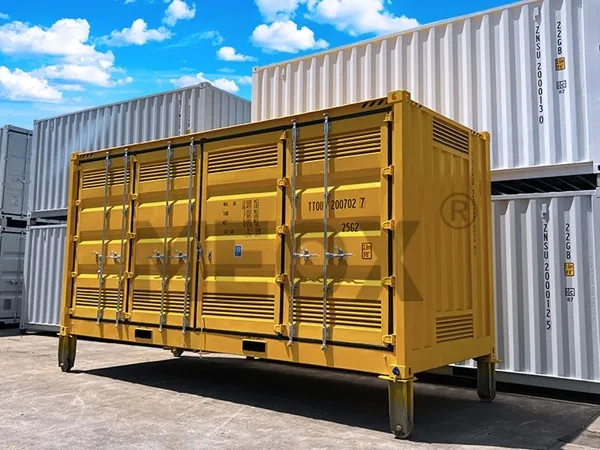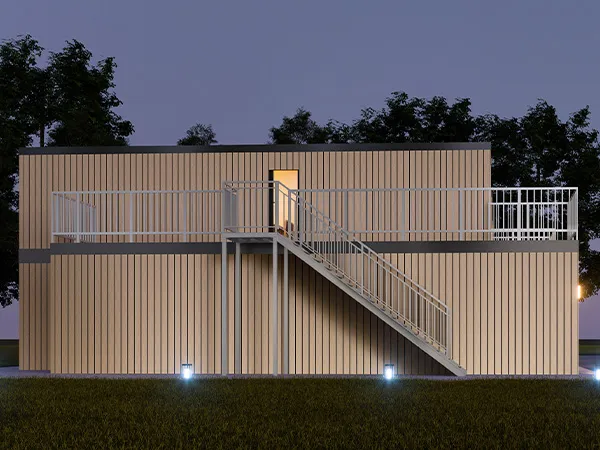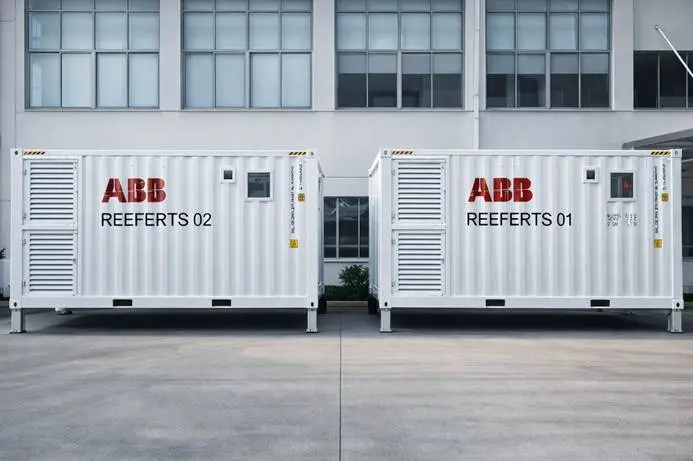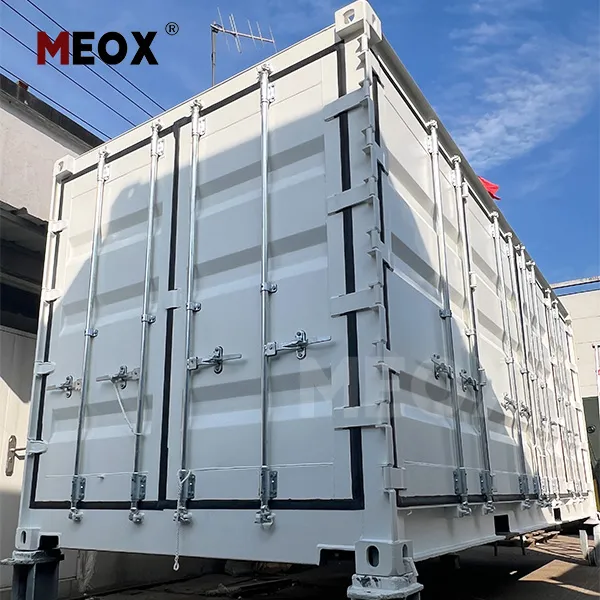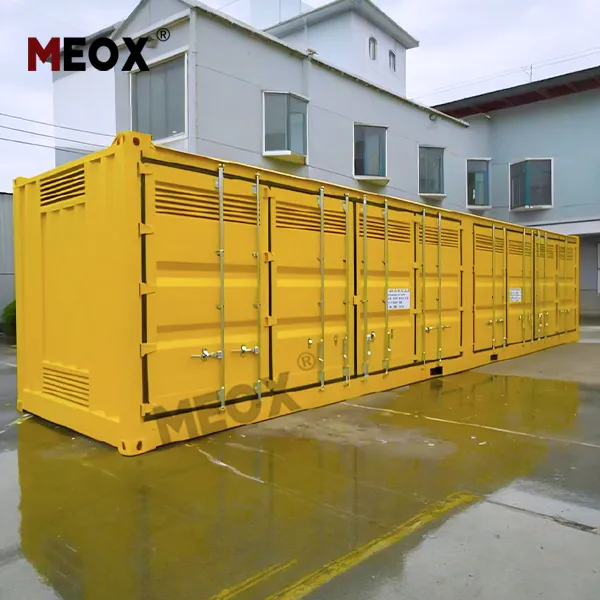
The battery energy storage container is a pre-engineered plan of arrangement for the nesting of batteries, electronics, and fire safety system. It makes the arrangement of energy storage easy by making the storage installation modular, portable, and ISO container compliant. This means battery energy storage containers make energy storage an easy process for site and project developers.
The article will break down how the containers work for the Battery Energy Storage System (BESS), where they would be best suited, and what considerations there should be when buying them.
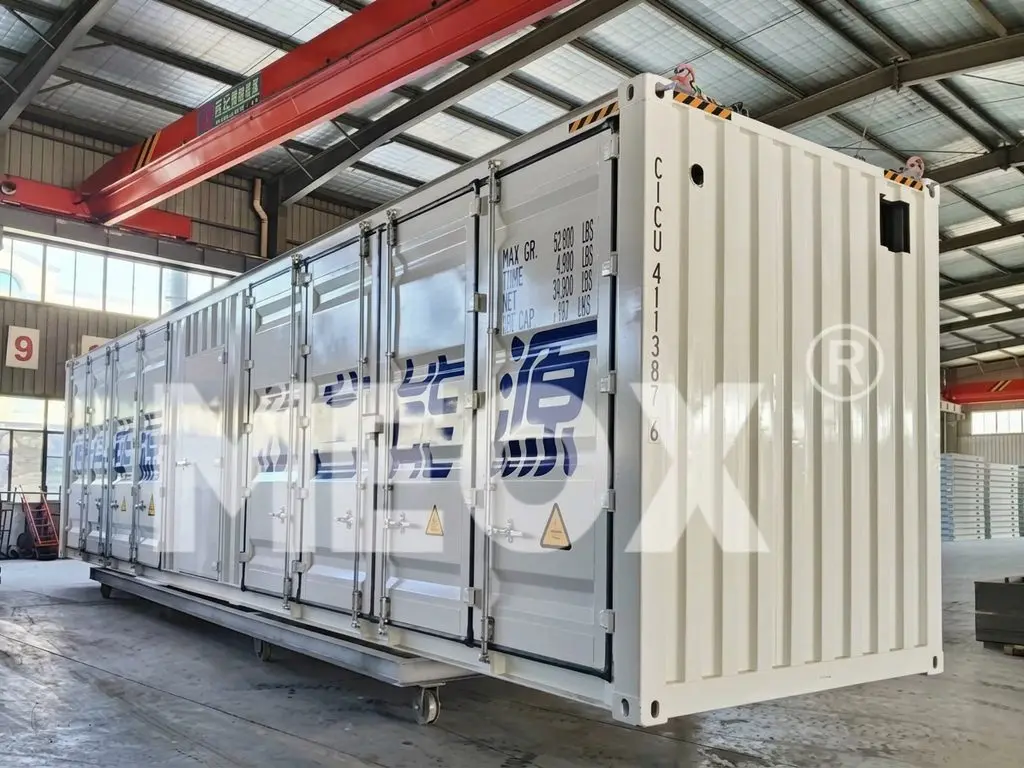
What Is a Battery Energy Storage Container?
A container that is energy storage system refers to an entirely integrated Battery Energy Storage System (BESS) that is constructed on a standard container layout.
In this case, clients would gain a compact box instead of constructing an additional room for the entire battery system. The box holds racks filled with lithium batteries, Battery Management System (BMS), Power Conversion Systems (PCS), etc.
A container is useful since it decouples the energy storage system from its associated building construction. The units can be moved around, whenever necessary, via train, truck, or ship, installed on any foundation, wired, and finally begin functioning.
In practical terms, a battery energy storage container performs four core functions:
- Stores electricity from the grid, solar arrays, wind generation, or other sources.
- Releases stored power during peak-demand periods, outages, or low-renewable-output periods.
- Manages battery health through temperature control, cell monitoring, and protective controls.
- Provides a scalable building block that can be combined with additional units as demand grows.
Why Containerized Storage Is Growing
Energy storage technology has moved with the times and is not just confined to utility substations anymore. Now other types of commercial organizations, such as mines, telecommunications firms, island microgrids, and emergency actions have the need for a flexible power supply.
A container-based battery energy system makes it possible in those instances where it is not feasible to construct permanent facilities due to logistical, geographical, or similar problems. Since the container comes pre-manufactured, all you need to do is make the foundation and connect the electrical supply and handle paperwork.
| Deployment Need | How a Battery Energy Storage Container Helps |
| Rapid project delivery | Factory integration reduces the need for a purpose-built battery room and shortens on-site installation work. |
| Limited site space | The compact ISO-format footprint fits industrial yards, remote camps, substations, and temporary sites. |
| Future expansion | Additional containers can be added in parallel as load or renewable generation increases. |
| Harsh environments | Steel enclosures, insulation, sealing, and corrosion-resistant hardware help protect equipment outdoors. |
| Remote operations | Standard transport methods make delivery to mining sites, islands, and off-grid locations more straightforward. |
Inside the Container
A battery energy storage container is not just a container or encasement for batteries. It mainly represents the integration of several subsystems that genuinely work as one unit.
Battery Racks and BMS
Strength and monitoring. Lithium battery racks help to ensure energy-storage ability. The BMS keeps control of cell voltage temperature cost and working condition and avoids impacting conditions.
Lithium iron phosphate (LFP) tends to be more prevalent when used in stationary storage due to its reasonable compromise of life cycle and safety. For high energy density requirements, Nickel Manganese Cobalt (NMC) is applicable, but the chemical selection is dictated by the duty cycle, financial budget, space requirement and the safety performance of the project.
Power Conversion and Controls
The PCS converts direct current (DC) from the batteries into alternating current (AC) for use in your home or a power grid. It also can help to even out power fluctuations in the grid, for example for peak shaving, or regulation. For off- and mixed-grid set ups the device also controls the charge of the batteries.
Current systems also use electronic control systems or EMSs. The system can be monitored through providing to operators charge levels, temperature level and the system’s status, which is of vital for remote unmanned location.

Thermal and Fire Protection
Temperature of batteries. By having insulation wall panels, the temperature difference across the battery can be minimized, and active cooling systems or HVAC solutions are used to prevent temperature fluctuations that can cause damage to the battery.
Protection against fire is just as critical. A good system design will have the protection against fire detection and suppression system.
Typical Technical Range
The exact numbers are very much determined by the battery chemistry, inverter rating, cooling section and project requirements. What comes next figures give an indication of the typical values on the containerized concept and are to be considered as ranges for planning purposes only.
| Parameter | Typical Range or Value |
| Energy capacity per unit | 200 kWh to 5 MWh, scalable through parallel units |
| Battery chemistry | LFP standard; NMC available for selected projects |
| Cycle life | Up to approximately 6,000 cycles at 80% depth of discharge |
| Round-trip efficiency | Up to approximately 98% in DC-coupled configurations |
| Grid or off-grid transition | Under 10 ms in virtual-synchronous-generator-enabled configurations |
| Operating temperature | -20°C to +55°C, with cold-climate packages available |
| Container platform | 40-foot ISO steel platform; 20-foot options may also be configured |
This information suggests the reason a storage container with battery energy can meet the requirements of small-sized businesses as well as the demands of large businesses or microgrid projects. A single module may serve local backup or peak load management while numerous modules can create a multi-megawatt-hours energy storage structure.
Common Applications
Renewable Energy Integration
The production of solar and wind energy is not constant. A commercial battery energy storage system can be able to store excess power generated by renewable energy systems when electricity is in surplus and then utilize it at another time, thereby reducing dependence on electricity purchased from the utility in periods of high electricity rates.
An example of this would be a factory equipped with solar photovoltaics located on its rooftop, as it can stockpile solar energy generated during the day and release it at night during the evening production process. This may provide the possibility to lower energy expenditures due to lower consumption charges.
Off-Grid and Hybrid Microgrids
Energy generation in remote and isolated locations, such as islands, construction sites, and /or telecommunication facilities has often been reliant on the use of diesel engines. In this respect, the use of battery energy storage can work in conjunction with diesel engines for the purpose of curbing the amount of fossil fuel used by operations in the area and also helping to ensure the provision of a steady supply of electricity.
The modular nature of these systems enables operators to trial a smaller-scale pilot scheme prior to proceeding with a full-scale deployment.
Backup Power and Critical Infrastructure
Hospitals, information hubs, telecom masts and emergency response establishments need a stable source of electricity to ensure that their work is not interrupted if something goes wrong in the grid. A mobile generator unit allows for the immediate receiving of electricity and paired with renewable and other generators can prolong the amount of time over which a facility operates.
In terms of disaster relief, getting a ready to use storage unit to a temporary site is a significant advantage. The same features that make containers useful in international trade also make them perfect for rapid delivery.
Safety and Standards
Safety must be a key consideration in any decision regarding BESS procurement. Batteries produce a significant amount of energy, and improper installations may create safety hazards.
The UL 9540 is a safety standard developed for energy storage systems It describes process of charging and discharging, protection and control of the battery and its functions.
IEC 62933-5-2 outlines the requirements for safety of grid-tied electrochemical energy storage systems. The standard covers the entire life cycle of BESS, starting with the design stage and ending with the end-of-service management.
| Standard | Primary Focus | Why it Matters |
| UL 9540 | System-level safety and performance of energy storage systems [ul] | Helps evaluate the integrated BESS rather than isolated components alone. [webstore.ansi] |
| UL 9540A | Thermal-runaway fire propagation testing | Provides a standardized way to assess fire behavior under extreme conditions. |
| NFPA 855 | Installation of stationary energy storage systems | Guides installation practices and fire-risk mitigation. |
| IEC 62933-5-2 | Safety requirements for grid-integrated electrochemical ESS | Addresses safety across the BESS life cycle. |
Certification requirements are influenced by various factors such as the country, the type of project, the specifications of the utility, and the preferences of the insurer. Individuals who are purchasing should verify what certifications are needed prior to making an order and not assume that because the container has received a structural shipping certificate, it covers the entire battery system.
What to Evaluate Before Buying
Choosing a battery storage solution for the entire system and not just its capacity helps ensure an appropriate choice between a reliable container and a cheap option with low value for the future.
| Evaluation area | Questions to ask |
| Capacity and power | Is the quoted capacity usable energy or nameplate capacity? What continuous and peak power can the PCS deliver? |
| Battery chemistry | Is LFP or NMC more appropriate for the project’s cycle life, safety, footprint, and cost priorities? |
| Thermal design | What cooling method is used, and is it suitable for the site’s ambient temperature and cycling profile? |
| Fire protection | What detection, suppression, ventilation, and compartmentalization measures are included? |
| Monitoring | Does the EMS provide remote visibility into state of charge, temperature, alarms, and faults? |
| Serviceability | Can an individual container be isolated and replaced without taking the entire storage array offline? |
| Transport and installation | Are the lifting points, weight, dimensions, and certification documents compatible with the planned shipping route? |
| Compliance | Which local codes, grid-connection rules, and certification requirements apply to the final installation? [ul] |
Installation and Maintenance
The installation process usually starts with a survey of the location and a level concrete pad or pier foundation that has been built to meet the operating weight of the container. Once the container has been shipped it is unloaded using the ISO corner castings, leveled on site, anchored, connected to the power supply and made operational.

When putting the container into operation there should be performed checks of protective settings, performance of cooling system, communication systems, emergency mode of operation, as well as behavior in grid-islanding operation.
The maintenance of the container is not as complicated as that for a standard battery room, but it is still crucial. The recommended activities for maintenance include using EMS to perform some diagnostic operations from the distance, checking the condition of electrical connections and filters, calibrating the BMS and performing in-person checks of the lock and enclosure.
The modular structure of the container also makes it easier to execute fault isolation, i.e. if one container has a faulty part, then the faulty container can be isolated or replaced without stopping the operation of the other containers which allows for uninterrupted functioning of the technology.
Choosing the Right Configuration
There is no single best battery energy storage container. The right configuration depends on the load profile, available generation, grid connection, climate, and operational priorities.
- Peak shaving and demand management: Prioritize sufficient power rating, EMS controls, and accurate load analysis.
- Solar self-consumption: Match storage capacity to daytime surplus generation and evening consumption.
- Off-grid microgrids: Design for multiple days of autonomy, generator coordination, and realistic renewable variability.
- Backup power: Define critical loads, desired runtime, transfer logic, and fuel or solar backup requirements.
- High-temperature sites: Specify enhanced cooling, insulation, and thermal monitoring.
- Frequent cycling: Review cycle life, warranty terms, depth of discharge, and degradation assumptions carefully.
For projects that also need prefabricated electrical equipment housing, an electrical house can complement a storage container by enclosing switchgear and control equipment. For renewable-heavy sites, a mobile solar container may be paired with storage to create a transportable hybrid power solution. For broader power distribution needs, a mobile power container can provide an integrated enclosure for switchgear, controls, and climate management.
Frequently Asked Questions
What capacity can a battery energy storage container provide?
Capacity of a containerized system for a containerized system the capacity is usually between 200 KWh and 5 MWh per container. The capacity of the containerized system ultimately used is largely dependent on the battery chemistry, array configuration, and engineering project specific developments. Several containers can operate in parallel to create larger multi-megawatt hour systems.
Is LFP or NMC the better battery chemistry?
LFP is a safe long-life option for mobile energy storage; NMC offers higher energy density at a premium, but the best options depend on factors like budget, cycle history and available room.
Can a battery energy storage container be shipped internationally?
Yes. In case both the box and documentation satisfy necessary specifications according to the selected region and route then the cargo will absolutely be accepted for transportation. Containers that comply with ISO standards may be shipped through any type of transportation i.e. rail, truck, and sea transportation. However, having some certifications such as ABS, BV, GL, CCS will ensure easier acceptance of the container for shipping purpose.
Final Thoughts
If you would prefer not to make something permanent then a battery box would be a good solution for you. This has the advantage of being a modular setup that can be moved, a fairly simple project and also one where you could use a single container at the beginning and then add extra containers to increase the storage.
The most successful implementations of battery energy storage containers view the container as part of the whole energy storage system and pay a lot of attention to load profiles, thermal design, fire protection, grid criteria, monitoring, and maintenance instead of just choosing the container with the biggest power.
If your organization considers using customized solutions of battery energy storage systems, ZN MEOX has containerized solutions distributed depending on your project’s requirements.
Disclaimer: The technical information, materials and performance ratings used in this article are sourced from the own manufactured products of ZN MEOX and mentioned only for general information purposes. Specific data, certification, materials and technical characteristics can differ depending upon configuration, site conditions, battery chemistry and formal project agreement.