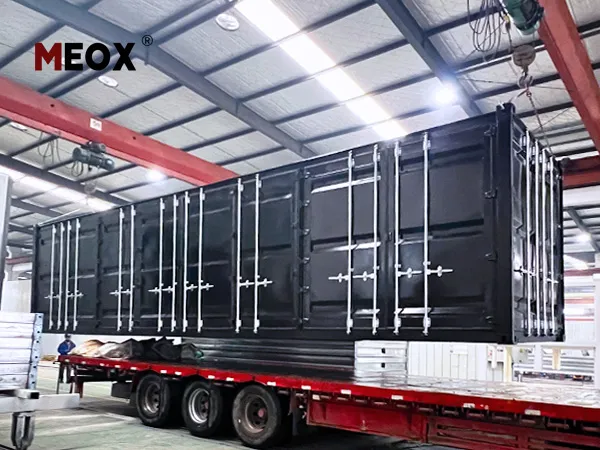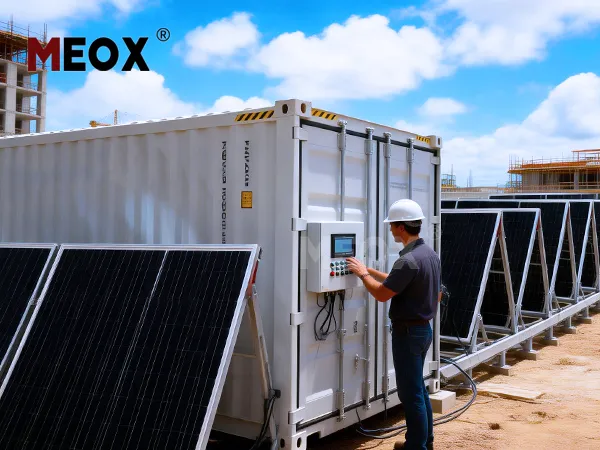
Regular, off-the-shelf shipping containers serve well for general logistics purposes. But quite frequently, their use in hazardous material storage presents several issues. The reason is that if one handles chemicals, fuels, or lithium batteries, adopting a universal, one-size-fits-all solution is certainly risky. Thus, when it comes to industrial safety, custom-made dangerous goods containers are a necessity. Such containers are designed, by bench-testing certain chemicals, in corresponding chemical profiles to full compliance with the regulations.
Working at MEOX, I have been a Senior Technical Consultant there, and I have been a Specialist in Design and Manufacture of Modular Safety Structures for over 7 years. My work had been centred around creating custom-made chemical hazardous storage units that indisputably tackle the core problems of the sites. I have been responsible for a wide range of projects in diverse environments, from secluded mining sites to city energy hubs, always ensuring safety both technically and human-wise.
Why Custom Dangerous Goods Containers Outperform Off-the-Shelf Units
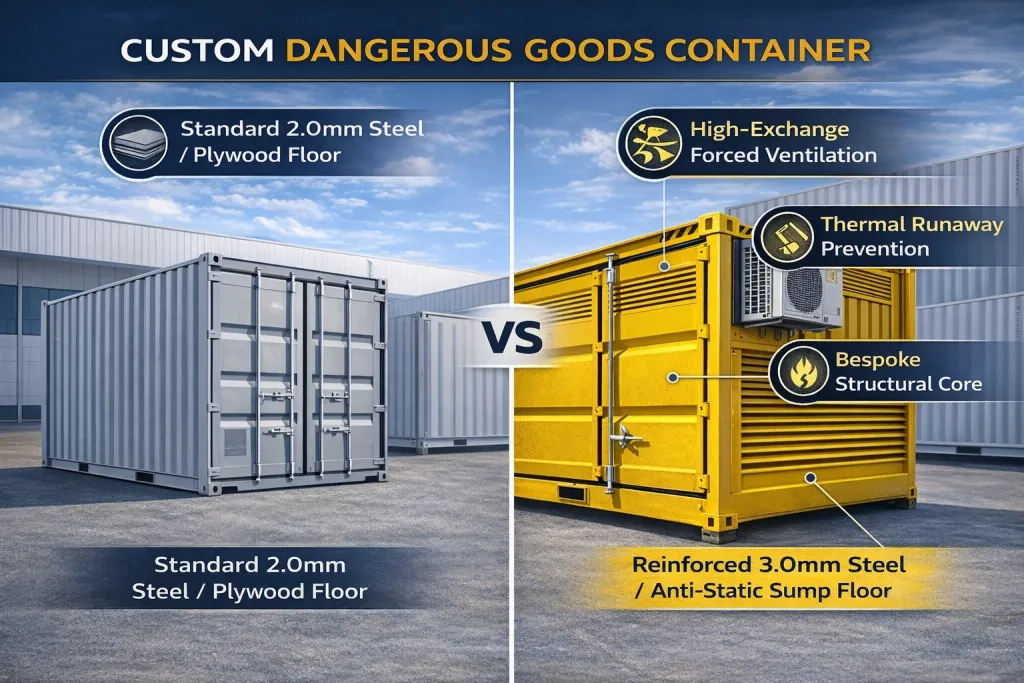
Each hazardous component is accompanied by a distinct Material Safety Data Sheet (MSDS). For example, certain chemicals need high-exchange forced ventilation while some require exact temperature control to prevent a thermal runaway situation. With tailor-made hazardous substances containers, firms get the opportunity to embed these features right into the structural core of the unit.
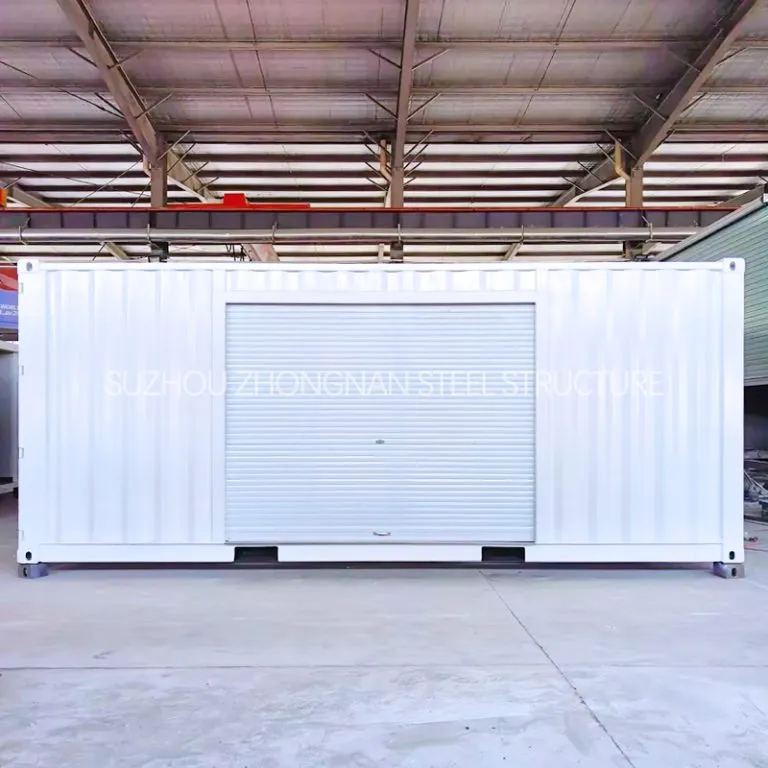
In contrast to off-the-shelf units, a tailor-made solution takes into account the precise footprint and weight constraints of your site. According to our technical information, even normal 20ft and 40ft containers need to be extensively reinforced when they are converted into hazardous substances containers.
Engineering Foundations of Custom Dangerous Goods Containers
While the storage features are custom, they are built upon high-performance container frames. The following data highlights the physical foundations of these units.
| Specification | 20ft Custom Base | 40ft Custom Base |
| External Dimensions | 6058 x 2438 x 2896 mm | 12192 x 2438 x 2896 mm |
| Tare Weight | ~3.0 Tons | ~7.0 Tons |
| Operating Temperature | -30°C to +60°C | -30°C to +60°C |
| Wall Reinforcement | 3.0mm+ Steel | 3.0mm+ Steel |
Tailored Features in Custom Dangerous Goods Containers
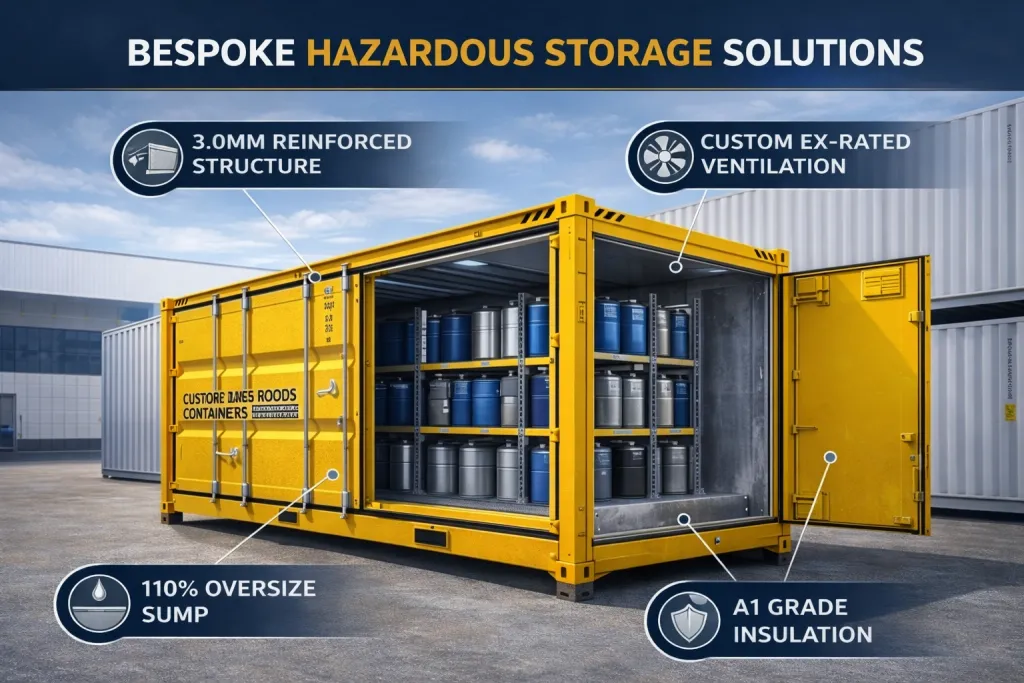
One of the primary benefits of customized chemical storage shipping containers is the freedom to select your safety features. For example, a container housing Class 3 flammables must have a different drainage system compared to that of corrosive acids.
The International Maritime Dangerous Goods (IMDG) Codeemphasizes that correct segregation and containment are the most important measures in avoiding industrial catastrophes. When you go for a tailor-made solution, you can confirm that elements such as internal shelves, grounding points, and special sumps are located precisely where they are required.
Customization Options and Features
The following table outlines common custom features we implement for high-risk industrial clients.
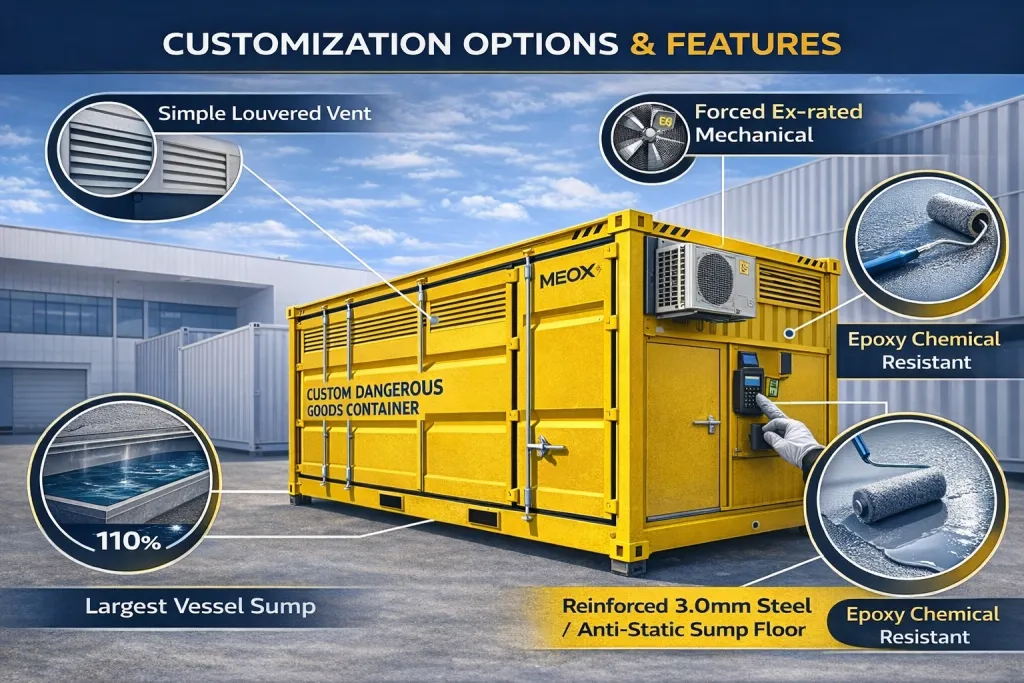
| Feature Category | Custom Option A | Custom Option B |
| Ventilation System | Natural Louvered Vents | Forced Ex-rated Mechanical |
| Secondary Containment | 25% Total Volume Sump | 110% Largest Vessel Sump |
| Internal Coating | Epoxy Chemical Resistant | Polyurethane Anti-corrosive |
| Access Control | Mechanical Panic Bars | Electronic Biometric Access |
The Growth of Custom Lithium Battery Storage
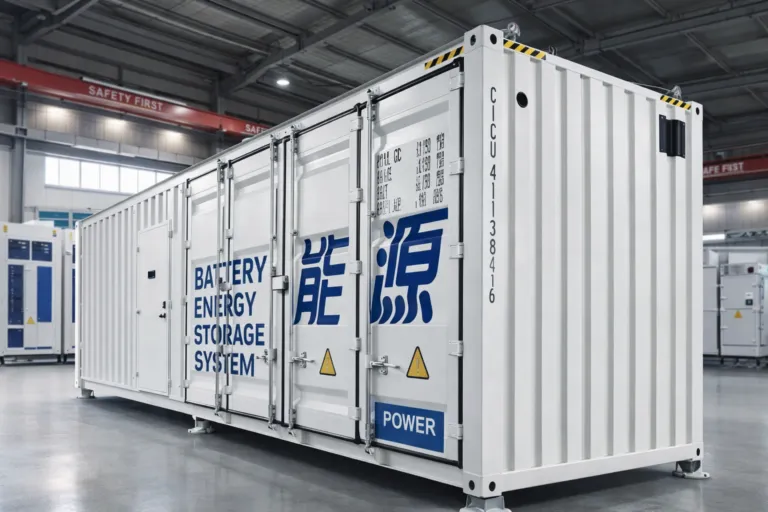
A growing demand for custom-engineered storage solutions for flammable liquids and battery housings, in particular, is becoming one of the rapidly expanding sectors. Lithium-ion batteries have been listed as dangerous goods. Therefore, they need sophisticated liquid cooling systems and thermal detectors.
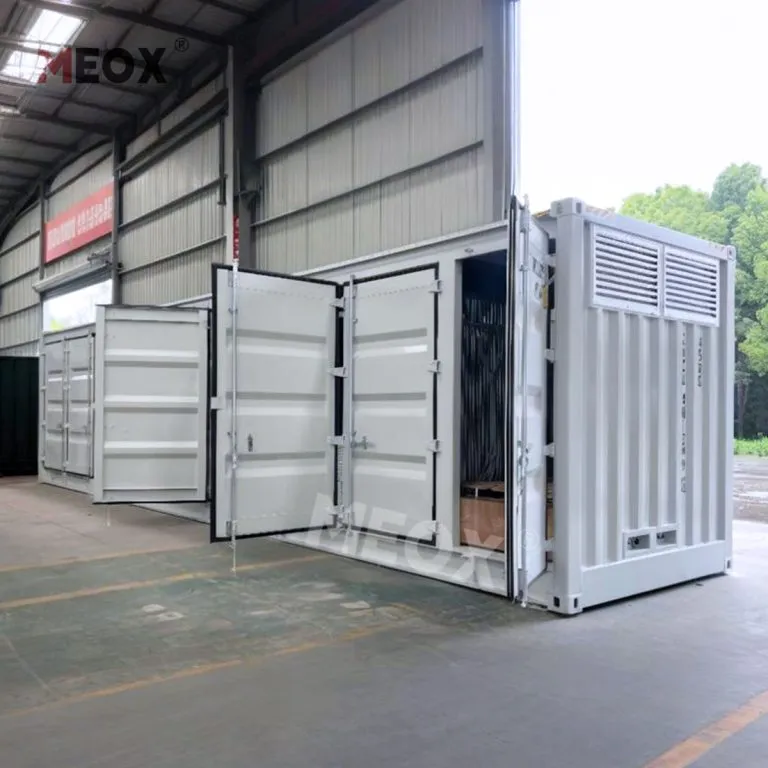
Work at MEOX lately has revealed a change in preference to “Open Side” high-cube containers. Such containers make it possible to conveniently get to big battery racks. This feature not only speeds up the maintenance but also the emergency response.
Real-World Success: Case Studies
Case Study 1: Remote Mining Chemical Hub
Location:Pilbara Region, Australia
Time:June 2023
Participants:Mr. Liam O’Connor, Project Director at Australis Mining.
The Problem:The place had to keep unstable laboratory reagents in very hot conditions (up to 50°C). Normal devices would get too hot, and that would lead to the chemicals breaking down.
The Solution:I designed a 20-foot custom container for dangerous goods with 100mm high-density rock wool insulation and a dual redundant Ex-rated HVAC system. O’Connor mentioned, “We kept the internal temperature stable even during the hottest week on record.”
Case Study 2: Urban Battery Energy Storage System (BESS)
Location:Munich, Germany
Time:November 2023
Participants:Ms. Sarah Weber, Engineering Lead at Rhine Energy.
The Problem: The client was looking for a storage solution for a large-scale lithium battery array that could fit within the narrow urban footprint while at the same time complying with strict fire safety codes.
The Solutions:We provided a 40ft Open Side container with built-in liquid cooling compatibility. It was my personal responsibility to supervise the installation of the automatic gas suppression system. Ms. Weber told us, “The tailor-made open-side design enabled our engineers to install racks in half the time we had anticipated.”
Conclusion
Buying custom dangerous goods containers should not simply be considered as acquiring a box. It has to do with creating a safety barrier that shields your enterprise from disastrous loss. According to the National Fire Protection Association (NFPA), the best method to control chemical hazards is through localized containment. When you opt for a tailor-made solution, you are making sure that each vent, sensor, and steel plate is doing its part to keep your site safe.
Are you seeking a safety solution that meets your precise requirements? Here at MEOX, we are experts in creating high-performance customized hazardous materials containers for the leading industries worldwide.
Get in touch with our engineering team now and begin your customized project.
Frequently Asked Questions (FAQs)
How long does it take to manufacture a custom dangerous goods container?
A typical custom build normally takes between 6 and 10 weeks. This timeframe covers the engineering stage, buying the materials, and thorough safety tests.
Can dangerous goods containers be moved once they are installed?
Yes. One of the main perks of container-based solutions is that they are portable. Containers can be moved using standard heavy-lift equipment as long as they are free of any hazardous materials.
Do custom dangerous goods containers meet international shipping standards?
Absolutely. While they are customized for storage, we ensure they maintain their ISO structural integrity for transport.
Disclaimer:The technical data and materials disclosed in this article are only for MEOX’s containers; the specifications, materials, and technical information of other products may be different.
Watch the video below to learn how to maximize container space using precision-packed dangerous goods containers: