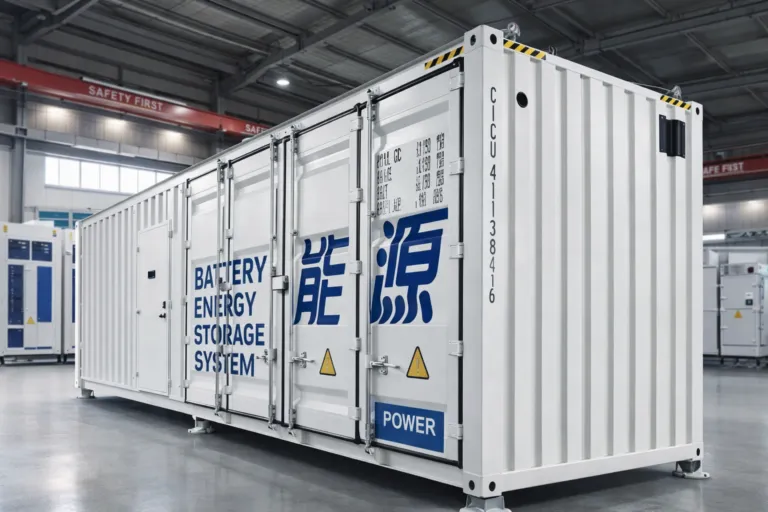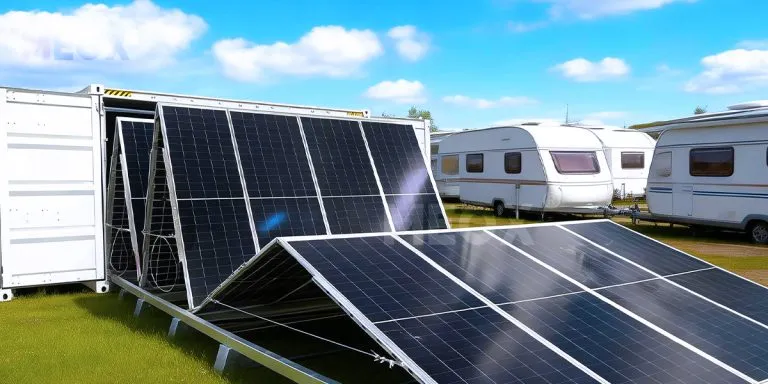
Power infrastructure projects face increasing challenges. Deadlines are shortened. Locations are even more isolated. Finally, the price of postponement continues to escalate. It is in such settings that the containerized substation (also called a prefabricated E-House, modular electrical house) has emerged as one of the most suitable solutions for the new era of electrical engineering.
This article covers the basics of a containerized substation or e house and how it offers a different experience compared to a traditional civil substation, with the most suitable scenarios for this equipment. Besides that, this article also presents a recent project example case to demonstrate the capacity of these units to work under harsh conditions in the day-to-day operation.
What Is a Containerized Substation?
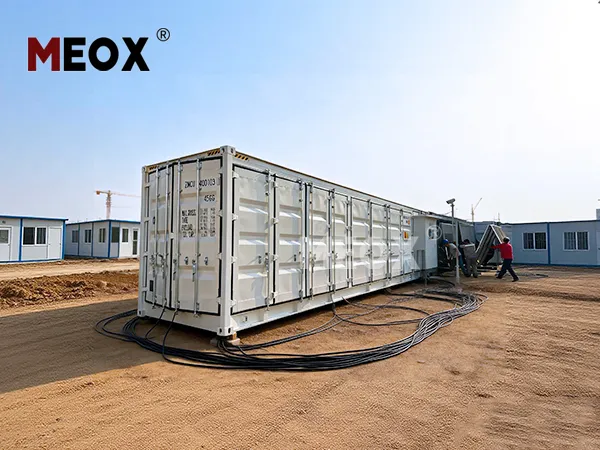
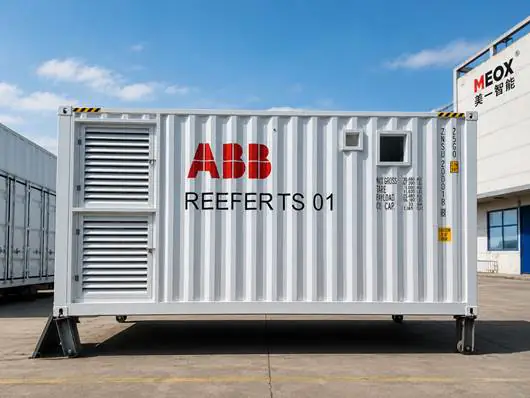
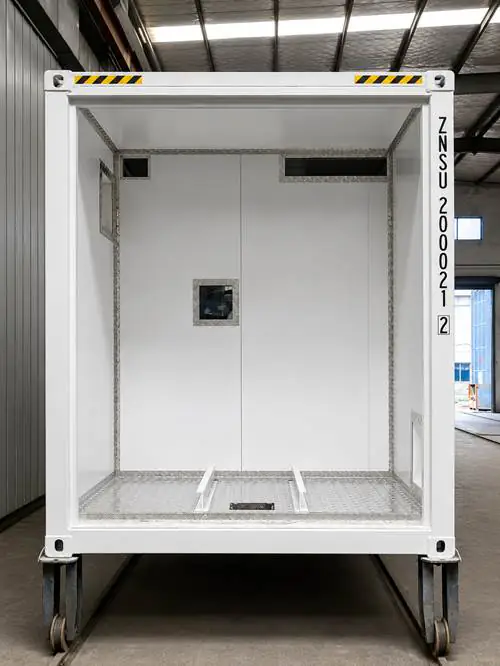
A containerized substation, also known as an E-House, prefabricated electrical house, or modular electrical house, is a factory-made enclosure that contains all the necessary electrical components: medium/low voltage switchgear, transformer control cabinets, and protection and automation systems.
While a traditional substation may take several months for civil construction on-site, a containerized substation or an e house is put together and tested at the factory. It is delivered to the site ready to be connected. The site work is mostly limited to foundation installation, cable termination, and final commissioning.
The term “containerized” refers to the steel modular enclosure that houses the equipment, structurally the same as a shipping container but designed more exactly for electrical infrastructure. One unit or multiple interconnected modules can be deployed according to the project scope.
Market research by Intel Market Research shows that the global prefabricated containerized E-House market was worth around USD 2.15 billion in 2025 and it is estimated to increase to USD 3.86 billion by 2034, at a CAGR of 8.5%. This trend is mainly the result of the rapid growth of renewable energy projects and the demand for fast grid integration. Ehouse has become one of the primary choices for remote site owners.
Containerized Substation vs. Traditional Civil Substation
The following table compares the two approaches on the criteria that matter most to project teams:
| Criteria | Containerized Substation (E-House) | Traditional Civil Substation |
| Construction Time | 4–12 weeks (factory-built) | 6–18 months (on-site) |
| On-site Labor | Minimal | Extensive |
| Mobility | Relocatable | Fixed / Permanent |
| Factory Testing | Full pre-shipment testing | Tested on-site only |
| Environmental Protection | IP-rated, CX paint, wind Grade 10 | Depends on civil build quality |
| Scalability | Modular — add units as needed | Major civil works required |
One of the biggest benefits is time. Using modular containerized electrical room designs and prefabricated methods can quite dramatically reduce the time required for project implementation by roughly 50% over traditional on-site construction, a fact that is emphasized in Technavio’s packaged substation market research report.
Mobility matters too. The prefabricated power containers and E-House units that are designed for relocation provide project operators with a kind of flexibility which traditional substations cannot offer at all.
Where Containerized Substations Are Used
Industries of different kinds have somehow welcomed the idea of the plug-and-play substation. Practically any field that depends on a power supply system which is dependable, quickly deployable, and robust would be a suitable candidate.
| Industry | Use Case | Key Benefit |
| Renewable Energy | Grid connection for solar & wind farms | Rapid deployment, plug-and-play |
| Oil & Gas | Upstream / offshore power supply | Explosion-safe, harsh-environment ready |
| Mining | Medium-voltage power distribution | Relocatable, dust & moisture resistant |
| Data Centers | LV/MV switchgear housing | Compact footprint, high reliability |
| Railways | Traction power supply points | Fast commissioning, scalable design |
Renewable energy is among the most rapidly expanding sectors. About 38% of the global new E-House projects between 2023 and 2025 were commissioned for solar and wind, showing the industry’s demand for modular grid connection solutions. The offshore and marine sector has also used containerized designs because of their specific advantages against saltwater and vibration.
Remote mining and oil and gas sites will greatly benefit from the prefabricated E-House. In fact, the E-House can be moved when the work site is shifted, which is a perfect feature for temporary or semi-permanent uses where a conventional civil structure would be both costly and impractical.
Key Technical Features
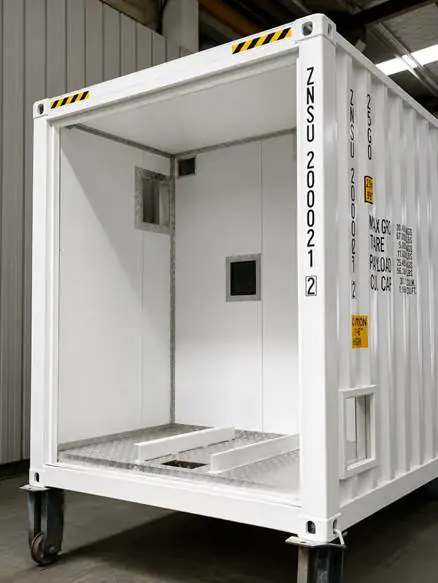
A containerized substation (ehouse) that is properly designed isn’t merely a box which holds electrical devices. The container in which the equipment is housed is a planned system. To start with, here are the usual technical parameters:
| Parameter | Specification |
| Voltage Range | Low voltage (LV) to medium voltage (MV) |
| Housed Equipment | MV/LV switchgear, transformers, control & protection cabinets |
| Corrosion Protection | Anti-corrosion paint up to CX grade |
| Wind Resistance | Up to Grade 10 |
| Environmental Rating | Dust-proof, rain-proof, temperature-resistant |
| Deployment Type | Temporary, semi-permanent, or permanent |
The very high level of anti-corrosion protection (up to CX grade) and wind resistance (up to Grade 10) allow these units to be used in offshore, coastal, and high-altitude environments. Thermal insulation will not only protect the internal equipment from high temperatures but also from low temperatures, ensuring a level operating environment for highly sensitive electrical equipment.
Units that are factory assembled substations are necessarily completely tested before dispatch. All wiring, interlocking control logic, and protection settings are being checked in a controlled environment. This is bound to lessen commissioning risk vastly.
Real-World Case Study: Renewable Energy Site in Southeast Asia
One developer of solar energy in Southeast Asia was looking for a power distribution system for his 50 MW solar park that was situated in a very remote coastal area. The project met three main difficulties:
- Compressed Timeline: Grid connection had to be achieved within 10 weeks of equipment delivery.
- Harsh Environment: The coastal site experienced high humidity, salt-laden air, and seasonal typhoon-strength winds.
- Remote Location: Skilled electrical labor was scarce on-site, making complex installation work a risk.
MEOX came up with a ready-to-use E-House solution that brought together the MV switchgear, transformer, and the full control and protection systems. The whole unit was put together at the Suzhou factory and was tested before shipping. The salt and humidity issues were solved with CX-grade anti-corrosion coating and IP-rated sealing. The wind resistance up to Grade 10 was designed for exposure to typhoons.
The installation on the site took no more than two weeks. The developer was able to connect to the grid ahead of the deadline. After commissioning, there were no changes or modifications made in the field – the elimination of such changes was the direct outcome of factory pre-testing.
Frequently Asked Questions
What is the difference between a containerized substation and a compact substation?
In the discussion about compact substations, what we are essentially referring to is a smaller version of a standard piece of equipment suitable for the distribution of low-to-medium voltage in urban or commercial areas. E-Houses, or containerized substations, are typically larger in size, so much so that one can walk inside them, and they also offer complete customization options. E-Houses can accommodate a broader range of electrical equipment like transformers, MV/LV switchgear, control rooms, and protection systems. They are more often used for industrial, energy, and remote site projects.
How long does it take to commission a containerized substation?
Since the unit is assembled and tested at the factory, the on-site commissioning is much quicker than a conventional civil substation. Usually, plug-and-play substation deployments finalize commissioning within one to three weeks on-site, given cable termination complexity and local grid connection requirements.
Can a containerized substation be relocated after installation?
Yes, that is probably one of the biggest advantages. A modular electrical house can be purpose-designed for transport and relocation. Interconnections of equipment, cable routing, and the enclosure structure are all designed with moving around in mind. As a result, it is an excellent option for mining operations, oil and gas project sites, and construction sites where the power source has to be changing locations as the project progresses, for instance. You may check the energy storage container product range for examples of modular, relocatable solutions.
Work With MEOX on Your Next Power Project
Should your project have a requirement for a dependable, quick-to-implement and technically advanced containerized substation – be it for renewable energy, oil and gas, mining or industrial – MEOX engineers can come up with a design for a solution that would suit your voltage needs, environmental factors and schedule for installation.
Explore the MEOX Prefabricated E-House product page for technical specifications and configuration options, or contact the team directly for a project-specific consultation.
Disclaimer: Technical details, specifications, and reference materials mentioned in this article are taken from the products that have been produced by MEOX. Specifications, materials, configurations, and other technical details depend on the project requirements, applicable standards, and individual customer needs. It is very important to verify all data with MEOX engineers before the project application.
To understand how a Containerized Substation works in real engineering environments, watch the following video on MEOX E-House Solution: