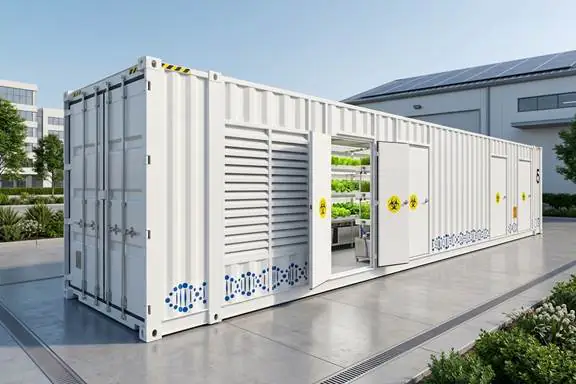
Every construction site, mine, remote camp and temporary project require a workplace, and it needs it right away. The shipping container office provides that with its robust steel frame, factory-built interior and portability. ZN MEOX offers custom-made office containers in 20ft and 40ft versions, whereby the exterior, colors, interior, and accessories can all be customized as per the requirements of the client.
The following article gives information on the aspects that separate the container office from a lightweight cabin, what goes inside a typical 20FT model, the space that should be available and what should be done in terms of planning.

What Is a Custom Shipping Container Office?
A container office is an office that is constructed within or on the framework of a container made out of steel. As a result of being made out of welded steel, it enjoys high mobility and high structural integrity. This is why offices made from containers are favored in mining areas, desert areas, and hurricane-prone areas along the coast. A number of containers can be assembled to create large offices in construction sites and other temporary places.
The container offices of ZN MEOX differ from its regular detachable container houses in how they are built. The ground frame is made of 6 mm Q235-B steel, a high-strength, high-toughness grade, where detachable container houses use a 2.3 mm galvanized steel frame. The whole structure is joined by integral full welding rather than bolted connections. The result is a heavier, more rigid unit that is designed to be transported as a whole.
Features of the Standard 20FT Office
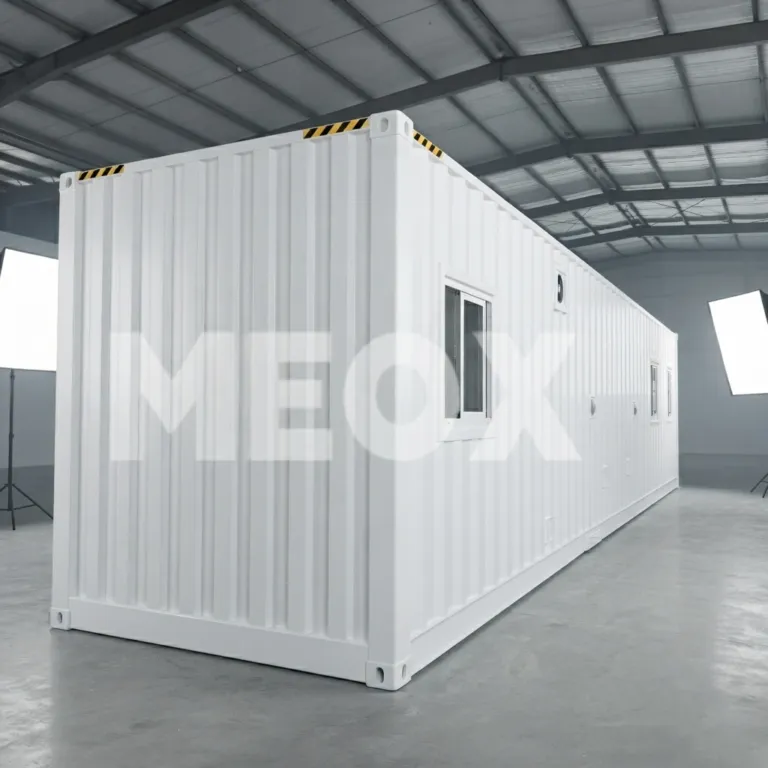
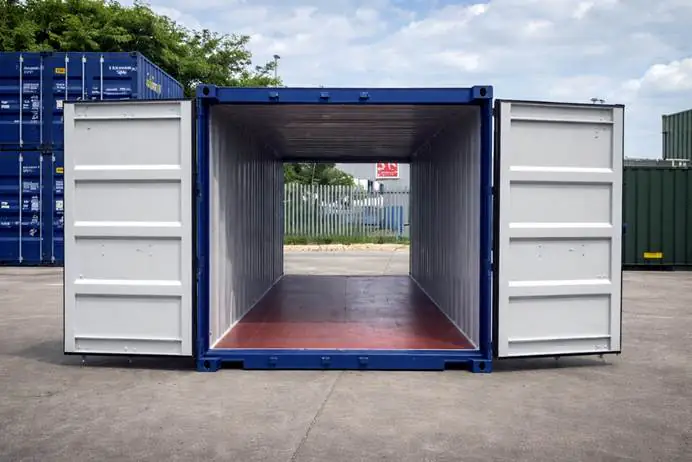
The standard 20ft model keeps the original end doors and adds a steel side door and two glass windows. The end doors can be left open to move large office items in and out, and the windows are customized anti-theft windows. In terms of the interior:
- Walls: rock wool sandwich panels for insulation and fire protection
- Floor: high-strength cement fiber board with strong load-bearing capacity
- Services: factory-prefabricated electrical circuits and water lines
As the unit arrives complete, installation on site is mostly a matter of placing it and connecting water and electricity.
For details product specification, please visit the product page.
How Much Space Do You Really Get?
However, the two aspects have nothing common – container size and space. In case of 20 ft container viewed from the outside, its length is equal to 6.06m and width 2.44m correspondingly. At the same time, when the container is empty, the size of the box is 5.90 m x 2.35 m = 13.9 m2. In case of 50 mm of insulation on each side, it will make 5.8 m x 2.25 m = 13 m2 of available space. 40 ft office will provide 27 to 28 m2 of available space.
Another restricted component of interior space is height, which has a dimension of 2.39 m on a standard container without insulation and floor. In reality, the 20-foot office will serve better as an office for site manager, a small conference room or some working places; however, the 40-foot office will be suitable for more people or the combination of the 20-foot office and conference room. The containers can be arranged adjacent to each other, even stacked on top of one another, in order to enlarge the area of an office. The occupancy must always be taken into consideration according to the local standards.
Keeping the Office Comfortable
A steel box with insulated panels is tightly built, so comfort has to be designed in rather than left to natural leakage.
Ventilation
Outdoor air is needed for occupants and for the space itself. In the widely used ASHRAE 62.1 standard, office space is assigned 5 cfm per person plus 0.06 cfm per square foot, as summarized in this ventilation guide, or about 2.5 L/s per person plus 0.3 L/s per square meter. For a 13 m² office with three or four people, that works out to about 11 to 14 L/s, or roughly 40 to 50 m³/h. The number is small, but a sealed container needs a deliberate way to deliver it, such as a window, an exhaust fan or a ventilation unit. Local codes may set different values.
Heating and Cooling
A simple illustration shows the scale of the load. Consider the case of an office of 20 feet where there is an exposed surface area of 74 m2 with a value of U= 0.7 W/m2K, which is common in the case of rock wool panels of 50mm thickness and neglecting the impact of thermal bridging. With a temperature difference of 25°C inside and 40°C outside, heat gain will be 770 watts due to conduction. Adding three people, three computers, and lighting will add another 700 watts heat gain. This makes a total of 1.5 kilowatts of heat gain without considering heat gain from the roof and walls through solar radiation and also before ventilating the air; therefore, 2.5-3.5 kW split air conditioner would appear sensible.

Strength, Safety and Certification
ZN MEOX lists the following structural characteristics for its container offices:
- Top load capacity of 2 tons, and bottom load capacity of 4 to 10 tons
- Earthquake and hurricane resistance for harsh or variable climates
- A service life of up to 30 years
This is according to manufacturer data. The purchaser needs to find out on which basis this data was obtained, and whether the wind speeds and the seismicity for which the structure was designed are the same in their particular location.
Certification is another point worth understanding. ZN MEOX’s containers are certified by ABS, BV, GL and CCS, which are classification societies, and that shipping lines accept them. Separately, the International Maritime Organization’s International Convention for Safe Containers (CSC) covers freight containers used in international transport and relies on a safety approval plate showing that the container meets its structural test requirements. An office differs from the freight box in that it has doors and windows along with some insulation and fit-out. If the container is to be shipped internationally, it would be pertinent to know what approvals are applicable to the completed office and what about the openings?
Customization Options
Clients choose between 20ft and 40ft formats and then customize:
- The exterior finish, colour and logo
- Interior decoration and layout
- Door and window positions and security features
- Accessories such as air conditioning, lighting, power outlets and furniture
For accommodation-focused layouts, ZN MEOX also offers a shipping container dormitory that can sit beside an office on the same site.
Installation, Mobility and Approvals
Because the office is built and finished in the factory, it is transported as a whole, with no assembly on site. The key activities on site include leveling the ground, crane facilities, and connecting the unit to water and electricity sources. This ensures that the manpower cost is reduced, that the construction time frame is shortened, and the machine will be ready to be used immediately.
The company states that container offices are exempt from land planning and design requirements. These regulations may vary significantly from one nation or region to another, and construction that will last a long time might be approached very differently than that which is only intended to be temporary. In order for instructions to be issued, the purchaser must find out whether or not a permit or permission will be required for the building or structure.

Maintenance
Steel structures remain durable only when the coating is maintained. There are several maintenance actions, which include looking out for paint and weld joint damages, fixing any scratches to prevent rust formation, keeping the drainage system clean, checking for door and window seals, and looking out for any condensation on the inside lining.
Factors Influencing the Cost of a Container Office
ZN MEOX quotes each container office by project, because the price follows the specification. The main factors are:
| Cost Factor | How It Affects the Price |
| Container size | A 40ft office uses more steel, panels and fit-out than a 20ft office. |
| Structure and materials | The frame thickness and panel type (such as rock wool) change the material cost. |
| Layout and openings | Extra doors, windows and partitions add materials and labor. |
| Interior and services | Wiring, lighting, air conditioning, plumbing and furniture add to the base unit. |
| Customization | Special colours, logos, finishes and security features need extra design and production time. |
| Order quantity | Larger orders usually lower the average cost per unit. |
| Delivery | Freight, shipping terms and delivery to the site vary with the destination. |
Costs such as foundations, utility connections and local permits are normally separate from the unit price. For an accurate figure, contact ZN MEOX with the size, layout, quantity and delivery location.
Buyer’s Checklist
Before placing an order, it helps to confirm the following in writing:
- The container size (20ft or 40ft), the clear interior area and the interior height
- The wall panel type and thickness, the floor specification and the frame thickness
- The door, window and security specification
- The electrical load, number of outlets, lighting and air conditioning included
- The ventilation and heating or cooling provisions for the climate
- The structural design basis: load ratings, wind and seismic assumptions
- The certificates provided, and whether they cover the finished office
- What is included in the price, including delivery and any extra transport to your site
Frequently Asked Questions
Are the containers new?
ZN MEOX says its containers are brand new, and clients can choose the colour and logo.
Can goods be loaded in the container?
Yes. ZN MEOX handles this under its SOC (shipper-owned container) model.
Can ZN MEOX deliver the container to a supplier’s factory or another location?
Yes. Delivery can be arranged on request, with an additional delivery cost.
Does the shipping company accept these containers?
ZN MEOX states that its containers are ABS, BV, GL and CCS certified and are therefore qualified for shipment.
Does ZN MEOX have its own factory?
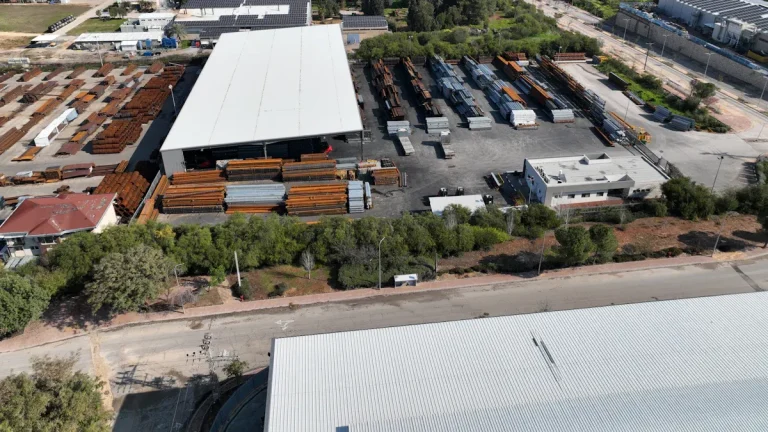
Yes. The company manufactures ISO, reefer and special containers, energy storage and solar panel containers, water treatment and generator containers, and customized containers.
Conclusion
The main advantage of a custom shipping container office is that it provides a sturdy mobile office space that can be used right after delivery. This office will give you the best performance when it is treated as a building where space, ventilation, cooling, structural knowledge, and certifications are needed to order one.
To discuss sizes, layouts and a quotation, contact ZN MEOX. For larger developments that combine offices with accommodation and other spaces, the company’s modular container house range is a useful comparison.
Disclaimer: This article is for general information only and is not engineering, legal or planning advice. Product specifications and performance figures are based on information published by ZN MEOX and may vary by project. Space, Ventilation and Cooling examples are sample calculations made using assumptions. Building codes, workplace conditions, wind and earthquake conditions are different from one location to another; therefore, you will have to check all the requirements with your local authority or professionals before purchasing and installation of any system.