
Solar Container for Disaster Relief Powering Emergency Infrastructure: When It Matters Most
Solar containers for disaster relief give quick, clean power and water during disasters. They help people get back to normal faster. These systems are simple to move and set up in a few hours. You do not need special tools or fuel. Solar containers do not need the power grid to work. They give steady energy all day and night. You can add more containers if you need more power. This makes the system easy to change for different needs. Remote monitoring and strong support keep the system safe. They also help it work well during emergencies.
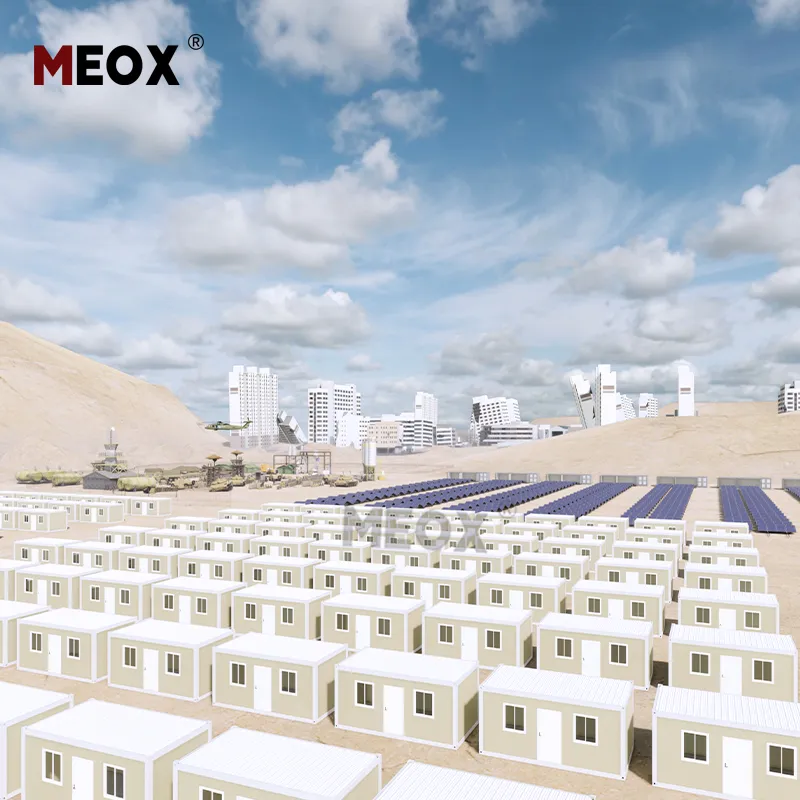
Concept Overview: Solar Container for Disaster Relief & Infrastructure Support
What is a Solar Container for Disaster Relief?
A solar container for disaster relief is a full power station inside a tough shipping container. It has solar panels, batteries, inverters, and smart controls together. This system uses solar energy to make electricity, store it, and send it where needed. You can move the container by truck, ship, or even by air. When you get to a disaster area, setup takes only a few hours. You do not need special tools or big machines.
Here are the main parts you find inside a solar containerfor disaster relief:
- Solar panels: Change sunlight into electricity.
- Inverters: Switch the electricity from DC to AC, so you can use it for lights, medical tools, or pumps.
- Energy storage batteries: Save extra power for nighttime or cloudy days.
- Charge controllers: Help protect the batteries and make them last longer.
- Wiring and connections: Make sure power moves safely.
- Mounting racks: Hold the solar panels steady, even in strong winds.
- Protection and monitoring systems: Watch for problems and keep the system safe.
- Optional add-ons: Backup generators, cooling fans, or more solar panels.
You can see how each part works together in the table below:
| Component | Function |
| Solar panels | Collect sunlight and make electricity |
| Inverters | Change DC to AC power |
| Batteries | Save energy for later use |
| Charge controllers | Control battery charging |
| Monitoring systems | Check performance and safety |
Solar Container for disaster relief
A solar container for disaster relief helps emergency teams in many ways. When a storm or earthquake knocks out power, you need electricity fast. Solar containers can get there quickly and start working in just a few hours. You do not need fuel or a working power grid. The system is quiet and does not make air dirty, so it is safe for hospitals, shelters, and schools.
- Solar containers do many important jobs during emergencies:
- Give quick, steady power for field hospitals, water pumps, and communication centers.
- Keep lights on in shelters and charge phones and radios for rescue teams.
- Run water cleaning systems to give clean drinking water.
- Work day and night because of battery storage.
- Add more containers if you need more power.
For example, after the 2015 Nepal earthquake, solar containers brought power back to 15 medical outposts in 48 hours. Medical teams could keep vaccines cold and help patients at night. In other disasters, solar solutions powered communication towers and water systems, helping people recover faster.
You can use solar technology in many places, from faraway villages to busy cities. The system is easy to set up and does not need much training. If you need to move, you can pack up and take the container somewhere else fast. After the emergency, you can keep using the solar container for clinics, schools, or water pumps, making the community stronger for the future.
A solar container for disaster relief gives you a flexible, clean, and steady way to help in emergencies and rebuild better communities.
Solar Container for Disaster Relief Solution
When there is a crisis, a solar container helps fast. It brings power and water to places that need help. Hospitals, shelters, and communication centers can use it right away. These systems give backup power and clean water when the grid is down. They work even if normal electricity is not available. Let’s see how quick setup, working without the grid, and easy use make these systems important for emergencies.
Rapid Deployment
Speed is very important in disasters. People need power and water quickly. A solar container comes ready to use. You can move it by truck, ship, or plane. The team can set it up in just a few hours. For example, a MEOXMobile Solar Container takes only 1 to 2 hours. Diesel generators often take more than 6 hours to set up. Building a new power station takes much longer. A container system can be ready in about 4 hours. A normal power station may take up to 6 months.
| Deployment Aspect | MEOX Mobile Solar Container | Conventional Diesel Generators |
| Average Deployment Time | 1 to 2 hours (60 to 120 minutes) | Approximately 6 hours or more |
| Labor Required | 6 workers for 120 minutes | More labor-intensive and complex |
| Setup Complexity | Plug-and-play, pre-assembled | Requires longer setup and installation |
| Additional Notes | Minimal ground penetration, silent, zero emissions | Rumbling noise, emissions, longer setup delays |
This disaster relief solution saves time and hard work. The system is already put together. You do not need special tools or big machines. You can use it in faraway places, flood zones, or after storms. If you need to move, you can pack it up fast. This quick action helps bring back important services and helps more people.
Grid Independence
Sometimes the power grid stops working in emergencies. You need a system that works anywhere, anytime. A solar container gives you power without the grid. It uses solar panels to make electricity and stores extra energy in batteries. You can run lights, medical tools, water pumps, and radios without outside power.
Studies show solar and storage can meet up to 85% of needs. In places like California and Texas, solar containers kept power on during heat waves and blackouts. Shelters and community centersuse these systems to keep people safe. You get steady power day or night, with no fuel or loud engines.
You can also use solar containers with other solar systems or backup generators. This makes it easy to add more power if needed. You can connect more containers for bigger places or link them to local grids. The system’s design lets you change it for different needs during emergencies.
Plug-and-Play Operation
You want a system that is simple to use. Plug-and-play makes solar containers easy for anyone. The system comes ready to go. You do not need to dig, lay cables, or build special bases. Just connect the container, open the solar panels, and start making power.
- Factory assembly keeps cost and quality under control.
- Local teams can learn to use the system fast.
- Remote monitoring helps check and fix problems quickly.
- Modular design lets you add or remove units as needed.
This makes setup and training easier. Emergency teams can help people instead of worrying about tech problems. You get backup power and clean water with little effort. If there are problems like bad weather or rules, you can solve them with good planning and training. Many groups offer support and training for local teams and help with repairs.
A solar container for disaster relief gives you a full, ready-to-use power system. You can trust it to give emergency power, backup, and clean water when you need it most. This solution helps you respond quickly and recover over time.
Benefits of Solar Containers for Disaster Relief
Portability & Rapid Deployment
Pre-wired, plug-and-play design reduces on-site setup to hours
Solar containers help you act fast during emergencies. The system is already wired and ready to use. You can set it up in just a few hours. You do not need special tools or long lessons. This helps you get power and water back quickly after disasters. For example, a solar water purifier can work right away. It gives clean water even if local systems are broken.
Fits on standard trucks, ships and air lifts
You can move solar containers with trucks, ships, or planes. They go to faraway or hard places easily. Relief teams used them after hurricanes to make offices and supply centers in one day. The table below lists the main benefits:
| Benefit Category | Description |
| Rapid Deployment | Fast setup for emergency centers and medical units |
| Portability & Mobility | Easy to move for relief and temporary homes |
| Efficiency & Sustainability | Less time needed for setup and less waiting |
| Durability & Safety | Strong, safe, and can be changed for needs |
Energy Independence & Cost Savings
Zero fuel cost, low maintenance vs. diesel generators
Solar energy means you do not need fuel deliveries. You do not worry about fuel prices or supply problems. Solar containers need less care than diesel generators. You save money over time and avoid loud noise and bad smells from old systems.
Predictable operation expenses and ROI in project timelines
Solar solutions help you plan your spending better. Sunlight is free, so most costs come at the start. Batteries keep your power steady at night or when it is cloudy. This helps you be energy independent and recover faster after disasters.
| Feature | Diesel Generator | Solar Container System |
| Fuel Cost | High and keeps going up | Free (sunlight) |
| Maintenance | Needs lots of work | Needs little work |
| Noise | Very loud and annoying | Very quiet |
| Emissions | Makes lots of CO₂ and smoke | No emissions |
| Setup Time | Takes hours or days | Ready in hours |
Environmental & Safety Benefits
Zero emissions, silent operation, reduced fire hazard
Solar technology does not make pollution when used. You help the planet and keep the air clean. The system is quiet, which is good for hospitals and shelters. You also do not have to worry about fuel fires.
Compliance with international safety and environmental standards
Solar containers follow strict safety and green rules. You get steady power for safe water and clean air. This makes solar microgrids a smart pick for disaster help.
- Solar containers lower carbon pollution.
- No fuel storage means fewer accidents.
- Quiet running helps people feel calm in emergencies.
Scalability & Modular Growth
Stackable or linkable units to match power requirements from kW to MW
You can add more solar containers to get more power. Each one works alone or together, so you can power small clinics or big camps. Solar technology lets you grow as needed.
Hybrid integration with local grid or backup gensets
Hybrid systems mix solar, batteries, and backup generators. Smart controls switch between them to keep power steady if the grid stops. This helps run important things like water cleaners and medical tools.
Tip: Use modular solar systems to grow your power as you need more. You can add more units or connect to the grid for extra help.
Solar containers give you safe, clean, and flexible power. You get quick setup, save money, and stay safe. These systems help you give clean water and power when people need it most.
Key Features of Solar Containers for Disaster Relief Solution
When there is a disaster, solar containers give power and water fast. They are built strong and have smart controls. You can pick different options to fit your needs. These features help people during emergencies.
Electrical Specifications
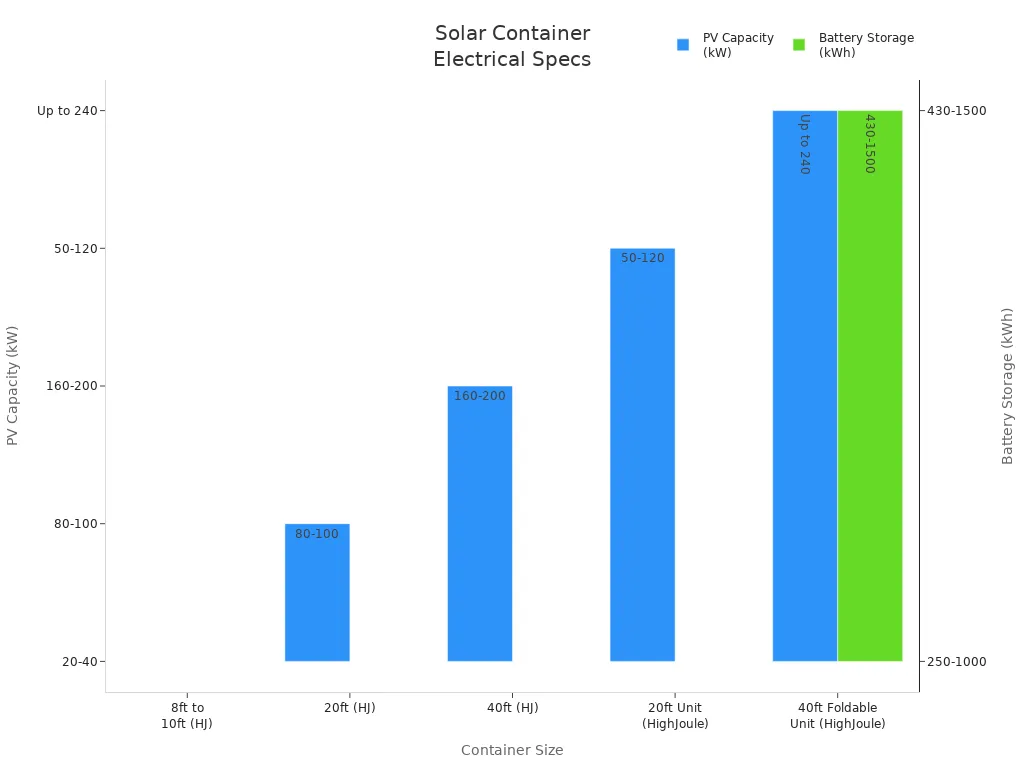
Solar containers come in many sizes and power levels. You can pick the size that works best for you. A 20ft container gives about 80 kW to 100 kW of solar power. Bigger 40ft containers can give up to 200 kW. Battery storage can be from 250 kWh to 1500 kWh. This means you have power at night or when it is cloudy.
| Container Size | PV Capacity Range | Battery Storage Range |
| 8ft to 10ft | 20 kW to 40 kW | N/A |
| 20ft | 80 kW to 100 kW | 250 kWh to 1000 kWh |
| 40ft | 160 kW to 200 kW | 430 kWh to 1500 kWh |
You can see how each model is different in this chart:
You can pick the voltage you need. Some containers give AC or DC power. You can use single-phase or three-phase. This lets you run medical tools, pumps, or radios. You can also connect more containers for extra power.
You can choose the right voltage for your site. Some systems give both AC and DC outputs. You can run lights, charge phones, or use big machines. This helps you change things as you need during recovery.
Mechanical & Structural Features
Solar containers use standard sizes like 20ft or 40ft. This makes them easy to move by truck, ship, or plane. The frame is made of strong steel that does not rust. It stays strong in rain or near the ocean. Twist-locks keep the container safe when moving.
| Feature | Description |
| ISO Standardized Dimensions | Easy to move and stack with standard logistics equipment |
| Twist-lock Transport Security | Keeps the container stable during transport |
| Hot-dip Galvanized Steel | Protects against corrosion and mechanical stress |
| Folding Rail System | Lets you deploy solar panels quickly without drilling |
| Ballast Stones | Stabilize the system in high winds or storms |
| Modular Pre-assembly | Factory-built for quality and fast setup |
The container stays safe in bad weather. Some models have insulation to keep things cool or warm. You also get fire safety systems for extra protection.
You get weather-proofing like sealed doors and strong corners. Ballast stones and folding rails help in strong winds. Insulation keeps the inside at the right temperature. This means your power works in hot or cold places.
Control & Monitoring Systems
You can check your solar system from anywhere. The system uses special controls to watch energy and battery levels. You get alerts if something is wrong. This helps you fix problems fast.
You can use a phone app or website to see how your system is doing. Dashboards show power, battery health, and alerts. You can change settings or fix things from far away. This saves time and keeps your power running.
Tip: Remote monitoring helps you find problems early. You can share data with your team for better help.
Optional Add-Ons
You can add a diesel generator for more backup power. Some containers let you pick between different battery types. This helps you choose what is best for your budget and safety.
You can add HVAC to keep things cool or warm inside. Fire safety systems give extra protection, especially in hot or crowded places.
- You can ask for extras like water cleaning, more lights, or your own logo.
- Support teams help with repairs, spare parts, or upgrades. You can call them for help or to order new parts.
- When you pick a solar container for disaster relief, you get a full system. It is strong, smart, and flexible. You can trust it to give power and water anywhere, in any weather.
Real-World Disaster Relief Solar Container Applications
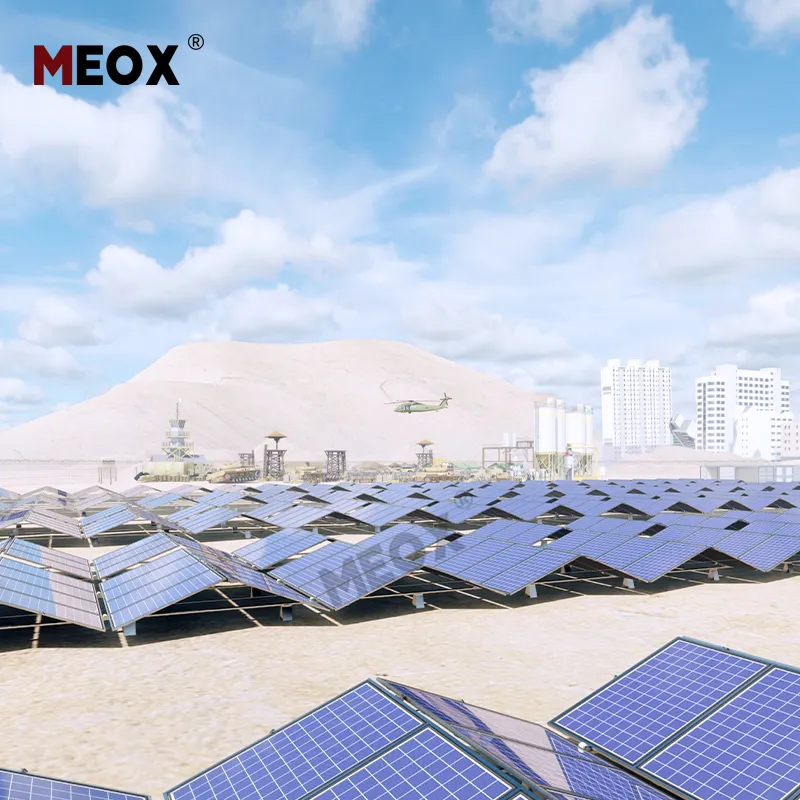
Solar containers are very important in emergencies. They help people and communities stay strong. You can see how they work in real disasters. They have helped on islands after hurricanes, at mining camps, and in refugee camps. Each story shows how these systems power shelters and help people recover.
Natural Disaster Response: Hurricane hit Caribbean Island
Deployment time, setup, power output, communities served
When a hurricane hits, people need power right away. After Hurricane Maria in Puerto Rico, solar microgrids came to far places in just a few days. Teams set up solar containers in less than four hours. Each container gave power to shelters, clinics, and relief stations. In Japan, after the 2011 earthquake and tsunami, solar systems kept schools and hospitals open. In California, solar microgrids helped during wildfires and blackouts.
| Location | Setup Time | Power Output | Facilities Served |
| Puerto Rico | <4 hours | 10-20 kW | Clinics, shelters |
| Japan | <6 hours | 5-15 kW | Schools, hospitals |
| California | <5 hours | 15-30 kW | Emergency shelters |
Lessons learned and feedback from field teams
- You can set up solar containers fast, even in hard places.
- Off-grid systems do not need broken power lines.
- You can add more containers as the community grows.
- Teams say remote checks and little upkeep make things easier.
- Quiet, clean power helps keep shelters calm and safe.
Remote Infrastructure Projects: Mining Exploration Camp
Hybrid operation with diesel gensets, fuel savings, project ROI
Mining camps far away need steady power. Solar container houses let you build a base in eight hours. Each one gives 5 kW of solar power and shares it with others. At an Arctic site, using solar cut diesel use by 92%. This saved money and made the project better. Hybrid setups let you switch between solar and diesel when needed.
Environmental compliance in sensitive ecosystems
Solar containers can handle tough weather, like sandstorms or freezing cold. You can use remote climate controls and sensors to check for problems. These tools help you follow environmental rules and protect nature. Better living spaces help bring skilled workers and make work better.
Humanitarian & Refugee Camps: East Africa Refugee Settlement
Lighting, water-pump operation, mobile charging stations
In East Africa, solar-powered boreholes give clean water to refugee camps. You can run water pumps, lights, and phone charging for everyone. This means you do not need as much fuel and water keeps flowing for drinking, cooking, and washing.
Impact on safety, healthcare, and education services
Solar containers help stop water diseases by giving safe water at taps, showers, and toilets. Women and kids spend less time getting water, so they have more time for school and family. Training on water care and solar pumps helps the community stay strong. Shelters are safer, and health care can keep going.
Note: Solar containers help in emergencies, make communities stronger, and help shelters give important services. You can count on these systems for quick, lasting recovery.
Why Choose MEOX: Solar Container for Disaster Relief
Solar Container for Disaster: Proven Track Record
Over 2000+ projects deployed in 50+ countries across 5 continents
If you pick a solar container for disaster relief, you want someone with real experience. MEOX has finished more than 2,000 projects in over 50 countries. Their solar containers work on five continents, from faraway islands to big cities. This shows the technology works in many places. For example, after a big cyclone in Southeast Asia, a MEOX solar container brought power back to a field hospital in four hours. Local teams said they had steady electricity and clean water, even when it rained hard.
Partnerships with UN agencies, NGOs, and major EPC firms
You get help from strong partners. MEOX works with UN agencies, global NGOs, and top engineering companies. These partnerships make sure each solar container for disaster relief meets strict world standards. You can trust every unit is tested for safety and works well. When you need help, you get quick answers and real support.
Customization and Global Delivery
Every disaster is different. MEOX changes each solar container for disaster relief to fit your needs:
- Modular designs in 20ft or 40ft sizes for different power needs.
- Solar panels can tilt from 0° to 60° for better sunlight.
- Custom battery storage from 20kWh to 100kWh for day or night.
- Options for HVAC, water cleaning, or more lights.
- Strong steel frames for tough weather and rough ground.
- Double doors and tunnel designs for easy use and fast moving.
You get fast setup and plug-and-play use. Global supply chains let you get delivery in 6-8 weeks. After-sales help includes remote checks, spare parts, and on-site training.
Long-Term Value and Sustainability
A solar container for disaster relief gives you long-term benefits:
- Solar panels and batteries use less diesel and lower pollution.
- Strong Corten steel containers last for years and help green building.
- Modular systems can be used again, made bigger or smaller, or moved, saving money and resources.
- Good insulation and energy-saving features make things comfortable and efficient.
- Containers can be recycled after use, so there is less waste.
Tip: Solar energy systems can lower electricity costs by over 40% compared to diesel. You get steady power, lower bills, and cleaner air.
You can count on a solar container for disaster relief to give you value, flexibility, and sustainability now and in the future.
Solar container solutions help your community get power and clean water during disasters. These systems are easy to set up fast. They are built strong and do not need much fixing.
- Solar energy helps keep clinics, shelters, and phones working, even if the main power is out.
- You can add more units if your community needs more power.
- Support teams help you keep your system working for any emergency.
Get your community ready for the future. Use solar containers in your disaster plans to stay strong and safe.
FAQ
What is a solar container for disaster relief and how does it work?
A solar container for disaster relief gives quick power and clean water. It has solar panels, batteries, and controls all together. You can set it up in just a few hours. This system works even if the main power is out. It helps people recover fast after storms or earthquakes.
How long does it take to deploy a solar container for disaster relief?
You can set up a solar container for disaster relief in 3 to 4 hours. A small team can do it without special tools. In one real example, teams brought power back to a field hospital in Southeast Asia in four hours after a cyclone.
What support do I get if my solar container for disaster relief needs repair?
You get help from remote monitoring, spare parts, and on-site visits. Support teams show you how to fix problems. You can talk to experts for quick answers. Many people say after-sales service keeps their solar container for disaster relief working well, even in hard times.
Can I expand my solar container for disaster relief system if my needs grow?
Yes, you can add more units or connect to the grid. The modular design lets you make the system bigger. For example, a refugee camp in East Africa joined several solar containers for disaster relief. They powered water pumps and lights for thousands of people.
Tip: Always check what your site needs before adding more solar containers for disaster relief. This helps you get ready for future emergencies.
| Feature | Solar Container for Disaster Relief | Diesel Generator |
| Setup Time | 3-4 hours | 6+ hours |
| Fuel Needed | No | Yes |
| Emissions | Zero | High |
| Maintenance | Low | High |
You can count on a solar container for disaster relief to give you power, clean water, and peace of mind when you need it most.
