Ski resorts are confronted with a particularly challenging problem nowadays. On the one hand, they are required to meet very high customer expectations and, on the other hand, they have to grow quickly and sustainably. Normal building in mountain areas is usually very slow. Besides, it is also limited by very short periods of favourable weather. Container houses for ski resorts are a game-changer in this context. These prefabricated buildings offer a combination of contemporary beauty and tough, durable functionality. They used to be just “boxes” but no more. Nowadays, they are luxurious, warm, and inviting little homes that can be set up more quickly than any traditional construction.
I have been working at MEOX as the Senior Modular Housing Consultant for more than six years and am quite familiar with prefab architecture and green building technologies. Over time, I have focused on improving modular designs for harsh environments. The main point of my work is striking the perfect balance between structural strength and heat insulation. I help, among others, real estate developers develop luxury apartments that can comfortably withstand the coldest winters while being the least damaging to the environment.
Why Choose Container Houses for Alpine Environments?
The main benefit of container houses for ski resorts is their quick installation. Construction on the mountains is quite challenging. Work is often stopped for several months due to snow and strong winds. Modular sections are produced in factories where conditions are controlled. This guarantees accuracy and quality. As soon as the land is prepared, the modules are brought in and set up within a few days.
On the other hand, these buildings are very sturdy. They have been designed to be stacked on ships and withstand ocean storms. This natural strength makes them perfect for areas with heavy snow. The Modular Home Builders Association states that modular construction can trim build times by as much as 50% in comparison with traditional construction methods.
Technical Excellence: Withstanding the Cold
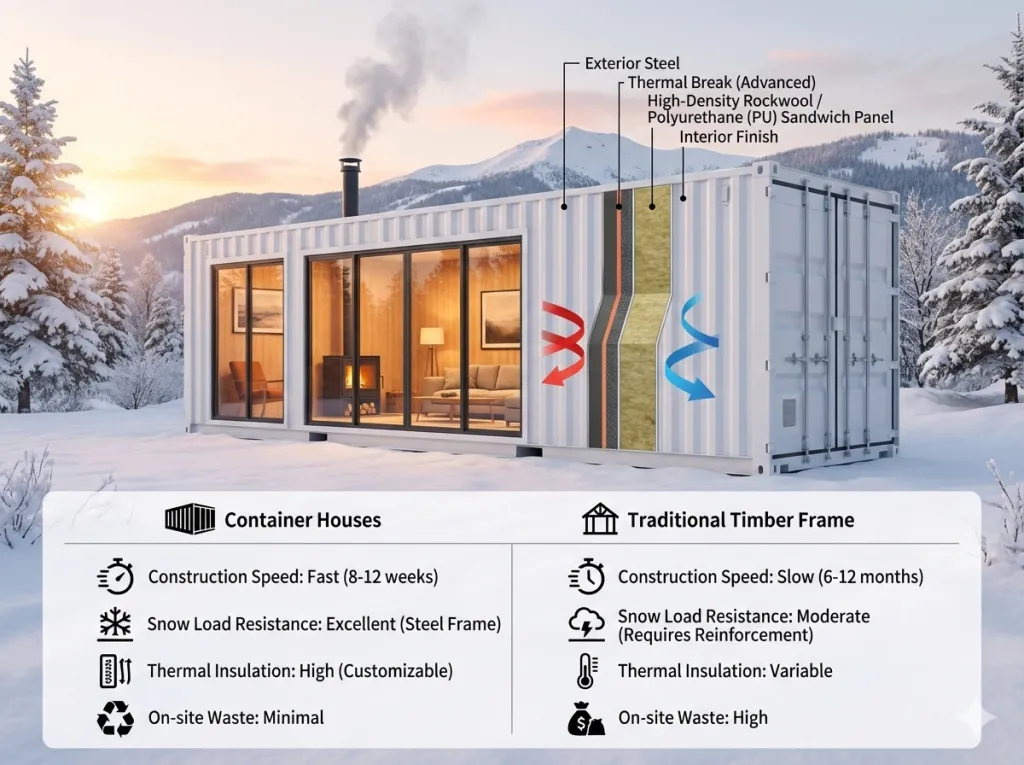
One of the issues frequently raised is how to regulate temperature. Nonetheless, insulated container homes designed for cold regions incorporate state-of-the-art thermal breaks. The walls are made of high-density Rockwool or Polyurethane (PU) sandwich panels, which are also good heat insulators. Besides preventing heat from leaking, these materials also help to keep the living spaces warm when the temperature outside is below zero.
| Feature | Container Houses | Traditional Timber Frame |
| Construction Speed | High (8–12 weeks) | Low (6–12 months) |
| Snow Load Resistance | Excellent (Steel Frame) | Moderate (Requires reinforcement) |
| Thermal Insulation | High (Customizable) | Variable |
| On-site Waste | Minimal | High |
Table 1: Material Comparison for Alpine Housing
Sustainability and Impact
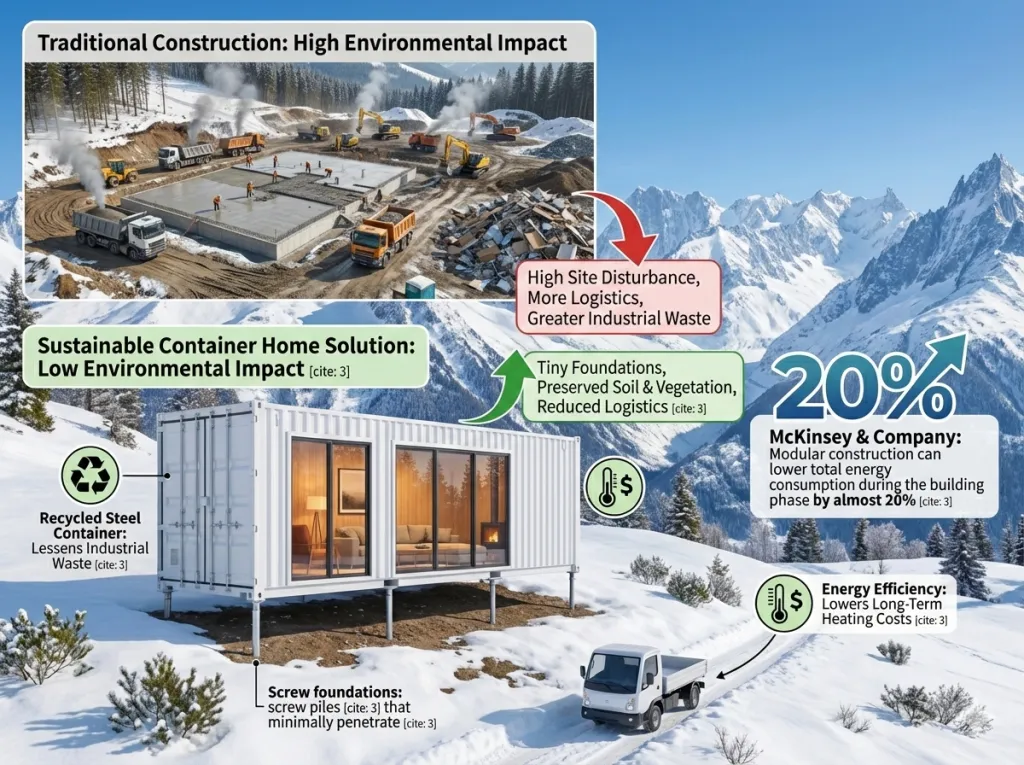
Container Houses for Ski Resorts exist in sensitive environments. They should ensure that the site is disturbed as little as possible. Sustainable ski resort accommodation solutions put the environment first. Since container homes are compact, they only need tiny foundations, which helps to preserve the local soil and vegetation. Besides, recycling steel containers is a way of lessening industrial waste. Research by McKinsey & Companyshows that modular construction has the potential to lower total energy consumption during the building phase by almost 20%.
| Benefit | Impact on Resort |
| Reduced Logistics | Fewer truck trips to remote sites. |
| Foundation Type | Minimal ground penetration/Screw piles. |
| Recyclability | Steel is 100% recyclable at the end of life. |
| Energy Efficiency | Lowers long-term heating costs. |
Table 2: Environmental Benefits of Modular Prefab Units
Logistics and Installation in Remote Locations
It is a big problem for builders to carry construction materials to the top of a mountain. Prefab mountain cabins for snow can make this task easier. Because the parts are self-sufficient, carrying them on flatbed trucks or even by helicopters is less complicated. Due to the facility’s “plug-and-play” nature, resorts can increase their capacity quickly just ahead of the peak season.
To read more about custom shipping containers, please visit our Product Page here.
Conclusion
The transition to container homes for ski resorts is influenced by need and innovation. These buildings provide an ideal combination of solidity and look. They can withstand the harshest alpine weather conditions and at the same time, offer a contemporary experience to the guests. As the hotel sector moves toward environmentally friendly methods, modular steel houses are expected to be the norm for mountain living.
Do you want to expand your resort with trendy and green accommodation?
MEOX is a factory of premium quality shipping containers for extreme weather conditions. We will cooperate with you to create a custom solution that will be unique, sufficiently attractive, and affordable. Check out the newest mountain cabin designs at MEOX now.
Frequently Asked Questions (FAQs)
How well does a ski resort container house retain heat in sub-zero alpine climates?
A top-tier ski resort container house is very effective at keeping the heat inside. Through the combination of 100mm Polyurethane (PU) sandwich panels and special thermal bridge breaks, these homes form an airtight barrier against the cold. With this arrangement, heat is not lost through the steel frame.
As a result, the inside stays warm even if it gets as cold as 30 °C outside. Because of this, the heat insulation is at times comparable to or even better than that of a classic timber-framed chalet.
Is a ski resort container house structurally safe enough to support heavy mountain snow loads?
Yes, the structural integrity of a ski resort container house is probably its strongest selling point. The original containers are comprised of corrugated Corten steel, a very durable material, as it must endure being stacked on top of each other in high-sea environments. For the mountain environment, the roof is provided with an additional layer of reinforcement so that it is able to carry a static snow load of over 3.5kN/m2. This indicates that the building will be solid and secure even during the most severe winter storms. Hence, you can be one hundred percent sure that the steel frame provides a degree of durability that is scarcely matched by any other modular systems.
How long does a ski resort container house last when exposed to extreme winter weather?
A ski resort container house is designed to last in the most severe environments. When using marine-grade anti-corrosion coatings together with proper foundation drainage, a building here can normally be expected to last for 25 – 30 years. Regularly checking and maintaining the outdoor seals and paint can extend the time between remodels significantly. As the materials are resistant to decay and pest infestations, the long-term care needs of such buildings are usually less, if any, than those of traditional wood-based structures.
Disclaimer:This article discusses mainly the technical information and materials of MEOX’s self-manufactured containers. However, the specifications, materials, and technical data quoted may slightly differ due to custom orders, local building codes, and manufacturing processes changes.
Watch the following video about MEOX Luxury Modern Mobile Modular 40 ft Shipping Container House: