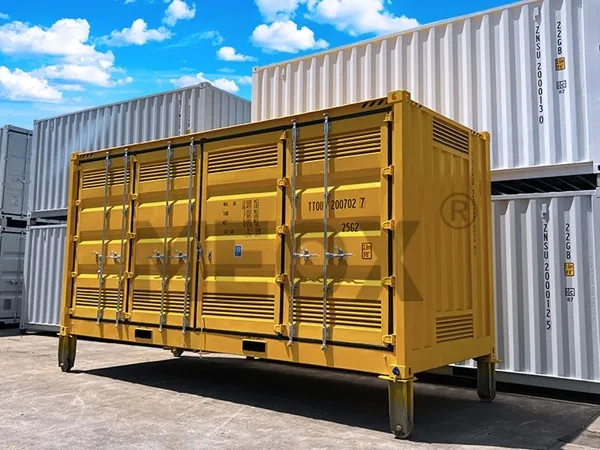
A practical buyer’s guide for logistics managers, contractors and site operators.
A standard steel storage container is strong, secure and weatherproof. It also takes up the same space whether it is full or empty. That is a real cost when you ship, store or reposition many boxes. A foldable steel storage container is designed to solve exactly this problem. It folds down for transport and storage, then opens into a rigid, lockable space on site.
Folding steel containers are an excellent solution for those who want to cut down on transport and storage empty volume costs. It is evident that we sacrifice a little convenience for high transportation efficiency, which depends on the components: steel material, coating, hinges, locks, sealing, and price.
If you need specifications, loading diagram, or a quotation, do not hesitate to contact our ZN MEOX specialists. You can view the ZN MEOX’s foldable steel storage container product page for current specifications.
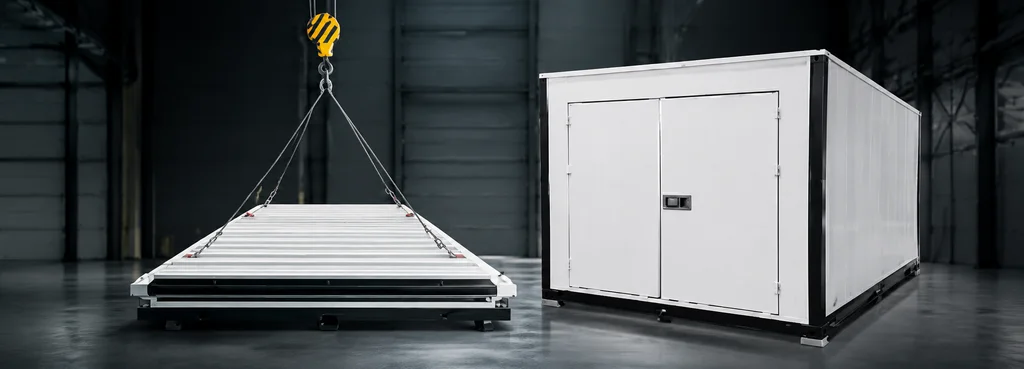
What Is a Foldable Steel Storage Container?
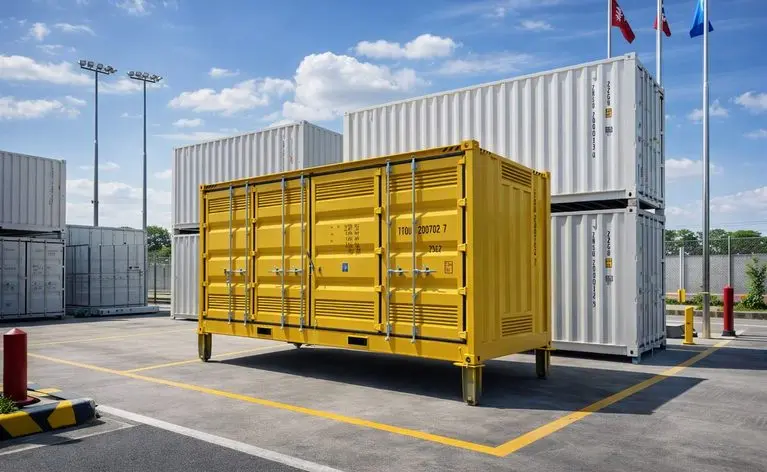
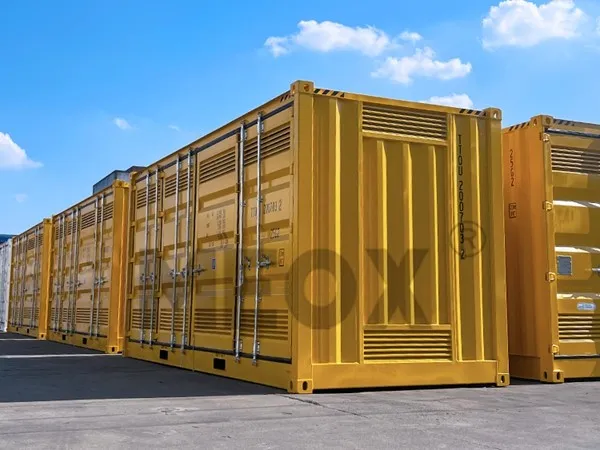
Foldable steel storage box refers to the box which is manufactured using foldable or removable parts. The wall as well as sometimes the roof of the box is foldable down to the bottom of the box. The box becomes compact and stackable when folded. When it opens up, it becomes solid with entrance points.
Most designs fall into two groups:
- Hinged fold-flat designs. Walls swing down or inward on hinges and lock back into position.
- Panel and frame designs. Walls bolt or pin into a base frame and can be removed for transport.
Steel is the type of material which is the most widely used. The most widely known grade of mild structural steel is Q235 and its yield point is about 235 MPa. The drawback of this steel is that it corrodes easily. ZN MEOX’s own guide to storage shipping containers notes foldable, portable and stackable units made from Q235 steel.
Foldable vs Fixed Steel Containers
Neither type is better in every case. The right choice depends on how often you move the box and how far.
| Factor | Fixed container | Foldable container |
| Empty transport | Full size, even when empty | Compact when folded |
| Setup on site | Place and open doors | Unfold, lock and secure |
| Rigidity | Welded, one-piece structure | Depends on hinges and locks |
| Stacking when stored | Limited by size | Folded units stack closely |
| Best use | Long-term, fixed storage | Mobile, seasonal or repeated use |
| Main maintenance point | Corrosion and door seals | Hinges, locks, seals and corrosion |
A fixed container wins on simplicity. A foldable container wins when empty space is expensive to move.
The Hidden Cost of Moving Empty Boxes
The case for folding becomes clear when you look at the wider shipping industry. Sea-Intelligence found that about 30% of global container shipping activity, measured in TEU-miles, now involves moving empty containers. Before the pandemic, the figure was 24%. Boston Consulting Group estimates that repositioning empty containers costs the shipping industry $15–20 billion a year.
The numbers pertain to shipments and not to buyers. Nevertheless, this statement is valid only partially. If you have many containers available for you to use, then it can be seen that each time you move without loading them, all you have in the containers is air.
A few cautions apply:
- Folded units may be wider than the internal width of a standard dry container. Ask whether they ship on flat racks, in open-top containers or inside standard boxes.
- Handling folded bundles may need a forklift or crane.
- Savings depend on distance, volume and how often units are moved.
Always ask for a loading plan and a delivered-cost quotation, not just a unit price.

Structure and Durability: What to Verify
The number of mechanical parts used in a folding box will be greater than that of a non-folding box. This does not imply that the folding box is any weaker. All it implies is that proper consideration must be exercised in designing the parts.
| Item | What to ask the supplier |
| Steel grade and thickness | Grade (for example Q235), wall, roof and floor thickness |
| Frame and corner fittings | Whether corner castings or reinforced corners are used |
| Hinges and pins | Material, size and expected cycle life |
| Locking system | Number of lock points and how the panels secure when open |
| Floor load | Rated floor and stacking load, with test evidence |
| Corrosion protection | Galvanizing, paint system and coating thickness |
| Seals and gaskets | Material and replacement method |
| Wind and anchoring | Wind rating and recommended ground anchors |
Three points deserve extra emphasis.
- It is the connection that will determine how strong the lock will be. For the creation of the locked box, the lock must be perfectly connected to the pins. The strength of the wall panel does not matter since the connection is weak.
- When talking about longevity, one can say that painting plays a big role. Generally, steel containers get damaged by rust rather than from impact. In case there is more humidity than usual, then the painting must be done thoroughly. Just see how the painting is done.
- Loading capacity needs proof. Do not believe in stacking ability just based on what people say without any tests or calculations. If you plan to stack open boxes, look for the capacity for stacking in writing.
Security and Weatherproofing
When buying storage, there are two important considerations we have to bear in mind for safe storage and drying of the items being kept in the storage facility.
Nevertheless, it would be important to bear in mind the aspects of the door, the locking and hinge mechanisms with regard to the security. The point is that it is impossible to tamper with the doors that are properly protected with weather plates and are concealed. There are numerous other factors listed in the ZN MEOX manual with respect to a storage space, which talk about e-security systems, like alarms and cameras, allowing remote monitoring.
Roof slope, door sealing and floor joints are among the factors that have to be taken into account in weather-proofing. Water enters the building through the joints. The issue of condensation must also be addressed because of the sweating of even metal boxes as a result of changes in temperature.
Setup, Labour and Repeated Use
Setup is usually quick, but the exact time depends on the design, the crew and the site. Treat any published time as an indication rather than a promise. A typical sequence looks like this:
- Prepare a level, stable base.
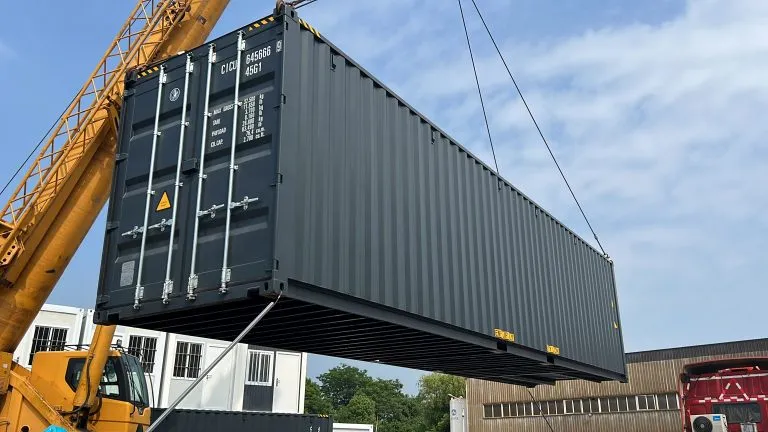
- Place the folded unit, using lifting equipment if required.
- Unfold the walls and roof.
- Engage all locks, pins or bolts.
- Check seals and doors.
- Anchor the unit if the site requires it.
At the moment, the process will take a longer time because of the team’s adaptation to it. Others will take less time than this. A small crew can operate units, while a large crew will need machines. The continuous folding will cause the degradation of the container. Before the container is used once more, all hinges, pins, locks, seals, and coating should be inspected. Thus, any worn-out parts must be replaced immediately.
This is due to the fact that the container is reusable but not maintenance-free.
Cost and Budget Considerations
The purchase price is only one part of the budget. A fair comparison looks at the whole life of the unit.
| Cost factor | What to examine |
| Purchase price | Steel, coating, hinges, locks and options |
| Freight | Folded size, container type and number of moves |
| Handling | Forklift or crane needs at each end |
| Setup labour | Crew size and time per unit |
| Site preparation | Base, levelling and anchoring |
| Maintenance | Inspections, coating repairs and spare parts |
| Resale or reuse value | Condition after repeated cycles |
In most cases, foldable units cost more per box than regular non-foldable units. However, these extra costs usually pay for themselves if the boxes are moved frequently or transported far.

Where Foldable Containers Make Sense
A portable foldable storage container for construction sites is one of the most common uses. Crews can store tools and materials, then fold the unit and move it to the next job.
Other good fits include:
- Seasonal storage: retail stock, farm supplies and event equipment.
- Pop-up retail and events: units that arrive compact and open quickly.
- Disaster relief and logistics hubs: fast-deploy storage where space is limited.
- Remote operations: mining, energy and infrastructure sites with frequent moves.
- Warehouse overflow: short-term capacity that can be removed when demand falls.
A fixed container is often better for permanent, heavy-duty storage that will never move.
How to Choose a Foldable Steel Storage Container
Use this short checklist before you order:
- Define how often you will fold, move and reopen the unit.
- Request the datasheet, drawings and test reports.
- Confirm steel grade, thickness and coating system.
- Ask for hinge and lock specifications and expected cycle life.
- Compare delivered cost, including freight and handling.
- Confirm security options and weather sealing for your climate.
- Check spare-parts availability and after-sales support.
- Request a sample, photo record or reference project if possible.
Frequently Asked Questions
Are foldable steel storage containers as secure as standard containers?
Nevertheless, it can be done, given the right design for the door, the lock, and the hinges, and the unit being completely locked while it is open. Find out how many lock points, security hinges, and alarms there are.
How many times can a foldable container be folded and unfolded?
This is dependent on the hinge design, construction, and maintenance. No assumptions should be made about infinite cycle lives. Get the data from the supplier, and check the hinges, locks, and seals before using them.
Can foldable containers be stacked?
This does not apply to all models. The maximum stacking capacity will be determined by the model itself. Ensure that you note down the maximum stacking capacity and do not exceed this figure.
Final Thoughts
The information stated above is of an informative kind and therefore is not meant to give any type of engineering or technical advice. The report should be verified with appropriate professionals or manufacturers, as results may vary from region to region.
Disclaimer: The information stated above is of an informative kind and therefore is not meant to give any type of engineering or technical advice. The report should be verified with appropriate professionals or manufacturers, as results may vary from region to region.