What a 20ft DG container is built to do, which hazard classes it can carry, how its containment is engineered, and what changed in dangerous goods shipping rules for 2026.
How this guide was compiled: cross-checked against the current IMDG Code (Amendment 42-24, mandatory from 1 January 2026), the CSC 1972 convention on freight container structural safety, HSE and EPA secondary-containment engineering guidance, and MEOX’s published product specifications. Last verified September 2026. This page reports what those primary sources require — it does not set, interpret, or substitute for them. MEOX is a container manufacturer, not a regulatory or classification authority; always confirm requirements against the primary text or a licensed DG compliance professional before shipping.
What Is a 20FT Dangerous Goods Container?
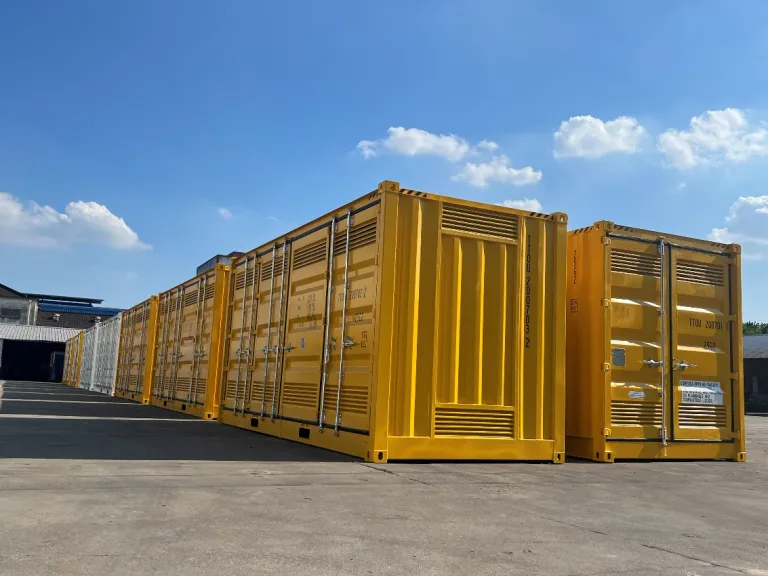
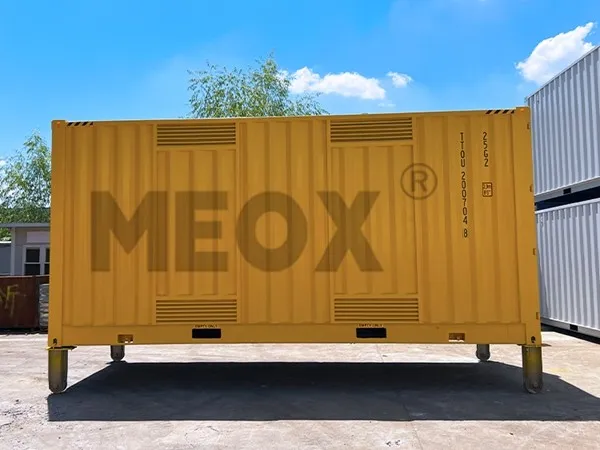
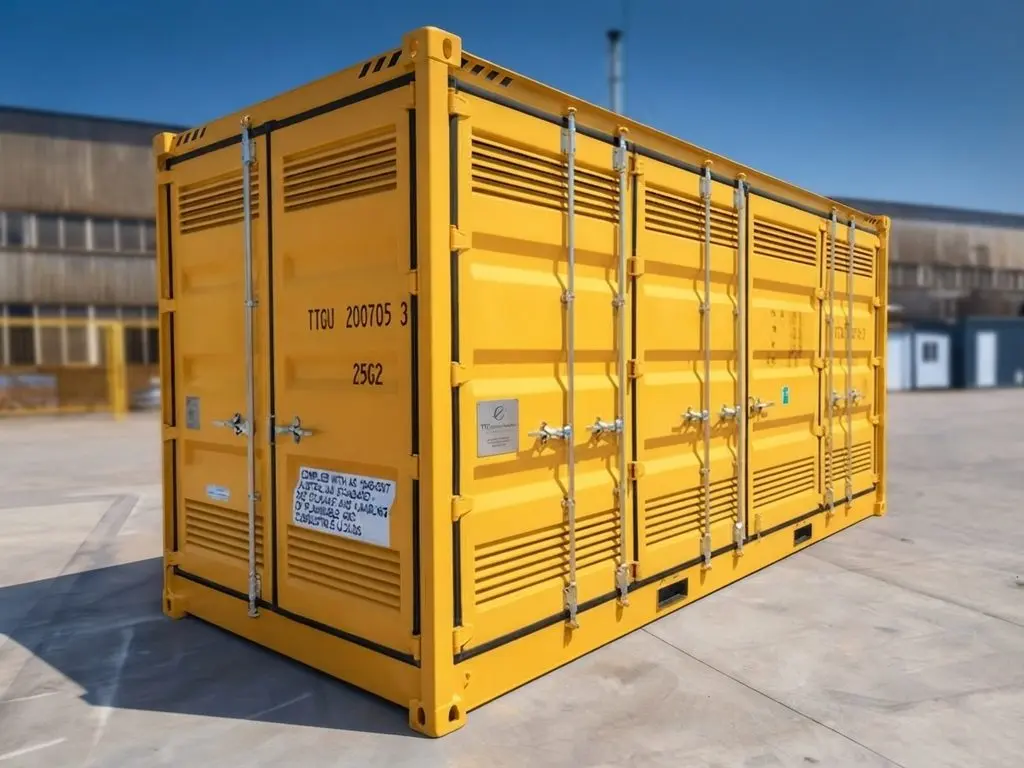
The 20FT Dangerous Goods (DG) container is a specifically engineered container constructed of steel to be used for the transportation of hazardous materials such as drums, IBCs and palletized chemicals in accordance with international hazmat regulations. Compared to a regular dry container, a DG container has additional features including spill containment, emergency exits and reinforced access.
The 20ft format follows the standard ISO freight-container footprint (20′ × 8′ × 9’6″), which keeps it compatible with normal container handling equipment, vessel cell guides, and chassis — the DG-specific features are added to that standard shell rather than requiring a nonstandard structure.
Key Safety Features
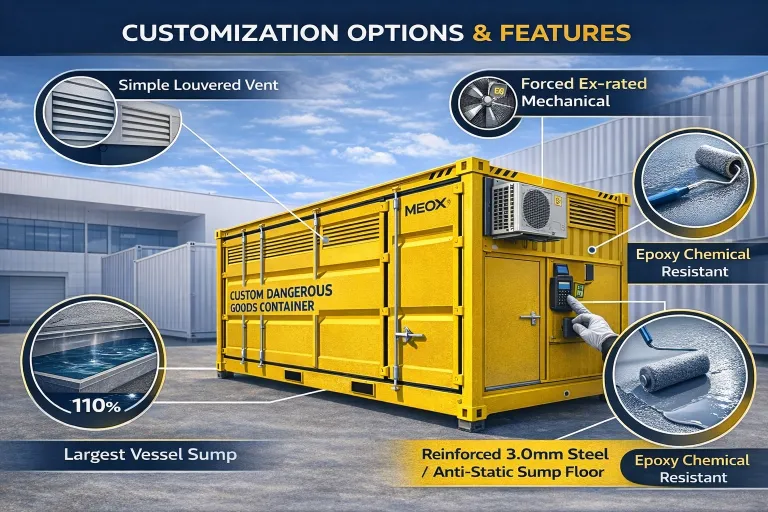
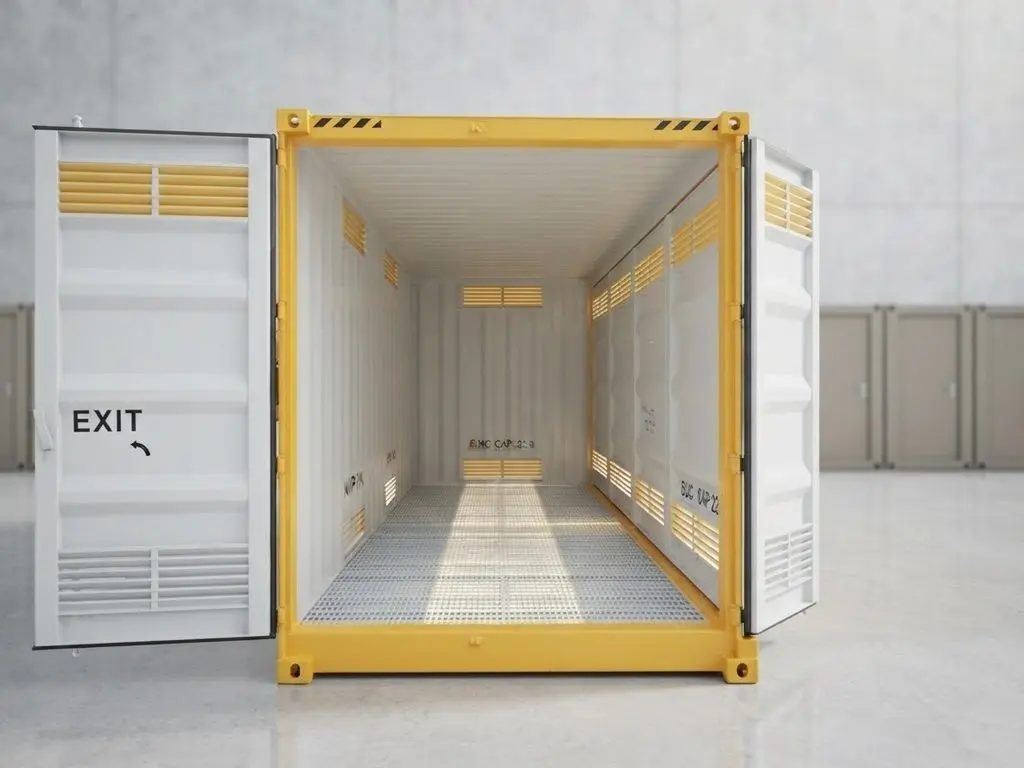
- Spill-containment bunded floor with a chemical drainage valve, so leaked liquid is captured rather than escaping the unit.
- Dual side-access doors, giving loading crews an alternative to the standard end doors for drums and IBCs.
- A dedicated safety emergency escape hatch, separate from the main cargo doors.
- Reinforced container locking bars and ISO corner castings, so the unit remains stackable under normal container-yard handling.
- Integrated forklift lifting pockets for sites without container-handling cranes.
- Custom color branding options for hazard-class placarding and company livery.
Specifications
| Spec | Metric | Imperial |
| Max. gross weight | 12,000 kg | 26,455 lb |
| Tare weight (±2%) | 3,350 kg | 7,385 lb |
| Max. cargo weight | 8,650 kg | 19,070 lb |
| Cubic capacity | 35.1 m³ | 1,241 ft³ |
These figures describe the standard 20ft unit. Heavier-duty variants rated for denser cargo are available on request — ask your MEOX sales contact to confirm gross weight rating and cubic capacity for the specific configuration you need before finalizing an order, since capacity varies by fit-out.
Understanding DG Classification: The Three Numbers That Actually Matter
Before sizing a container, it helps to know what’s actually on the shipping documents, since these three identifiers — not the container itself — determine what can be packed together:
- UN Number — a four-digit code identifying the specific substance (e.g., UN 1993, Flammable Liquid, N.O.S.). This is what customs, carriers, and emergency responders look up first.
- Hazard Class — the broad category of danger (1 through 9). A 20ft DG container is generally suited to Classes 3 through 9 — flammable liquids, corrosives, and similar cargo groups — while Class 1 explosives are excluded.
- Packing Group — how dangerous the specific substance is within its class: Packing Group I (high danger), II (medium danger), or III (minor danger). This affects how the goods must be packed, not just what container they ride in.
Groups that cannot be mixed together, for instance, an oxidizing material and a flammable material, must not be combined regardless of the category of risks involved. It is essential to consider the IMDG Code segregation guidelines to verify which UN numbers can be shipped together and which must be kept apart.
Sizing a Shipment: A Worked Example
To make the specs concrete: say a shipment is 40 drums of a Class 3 flammable liquid (Packing Group II), each a standard 200-liter (55-gallon) steel drum.
- Volume check: 40 drums × 200 L = 8,000 L (8 m³) of liquid — well inside the container’s 35.1 m³ capacity, so volume isn’t the binding constraint here.
- Weight check: at roughly 180 kg per filled drum (drum plus a moderate-density organic solvent), 40 drums run about 7,200 kg — under the 8,650 kg max cargo weight, but close enough that a denser liquid or heavier drums could push the shipment over the limit.
- The binding constraint in most DG shipments is weight, not volume, which is why it’s worth calculating both before assuming a container fits a load.
This example is illustrative — always run the actual numbers for your specific UN number, drum weight, and packing group before booking a container.
Spill Containment: Why the Bunded Floor Is Sized the Way It Is
The bunded floor isn’t an arbitrary safety add-on — its sizing follows the same engineering logic used in industrial secondary containment generally. The widely used benchmark, applied by bodies including the UK’s Health and Safety Executive and reflected in the US EPA’s SPCC rule (40 CFR Part 112), is that secondary containment should hold at least 110% of the capacity of the largest single container inside it — the extra 10% accounts for a sudden rupture surge, added firefighting foam, or rainwater, rather than a slow, containable leak.
Applied to the drum example above, a single 200-liter drum failing catastrophically would need at least 220 liters of containment capacity to be fully captured. The published spec sheet for this container doesn’t state its certified bunded-floor containment volume, so if your shipment involves a single large-volume container rather than multiple small drums, ask MEOX directly for that figure before finalizing the order — it’s the one number in this whole guide that genuinely can’t be estimated from the outside.
Compliance: What Actually Governs a DG Container
Dangerous goods containers sit inside a layered compliance framework, and it helps to know which document governs which part of the shipment:
Sea transport classification and segregation — the IMDG Code, published by the International Maritime Organization, is the primary reference for hazard classification, packing, and stowage of dangerous goods carried by sea. Amendment 42-24 entered into effect on January 1st, 2026, making revisions to the Dangerous Goods List and introducing new UN numbers for substances such as sodium-ion batteries, as well as making carbon products stricter in terms of packaging and ventilation requirements. Any shipping papers with versions prior to Amendment 42-24 after the designated date are regarded as invalid, so make sure to ascertain that the forwarding agent has the necessary updated documentation.
Container structural safety — the International Convention for Safe Containers (CSC) governs the structural testing and periodic inspection regime behind the safety approval plate riveted to every ISO freight container, DG or otherwise. That plate, not the sales brochure, is the document a port authority or surveyor will actually check.
Manufacturer quality and third-party certification — MEOX states TÜV-verified compliance and alignment with ISO 16106, a quality-management guidance standard covering the manufacture and testing of dangerous goods packaging. That standard governs the manufacturer’s quality system rather than the container’s structural test data directly, so it’s worth pairing it with the CSC safety approval plate above when you’re evaluating a specific unit.
What to Ask For: A Verification Checklist
Rather than taking any manufacturer’s compliance claims at face value, a buyer evaluating a DG container — from MEOX or any supplier — should request:
- The CSC safety approval plate details and, for older or resold units, evidence of current periodic inspection.
- The specific TÜV or equivalent third-party certificate number and its scope (structural test, QMS audit, or both).
- The certified bunded-floor containment volume, if the shipment involves large single-container liquid loads rather than multiple small drums.
- Confirmation that shipping documentation and MSDS references the current IMDG Code amendment, not a superseded one.
Handling Leaks and Fires: The Basic Protocol
- Isolate the area and use the dedicated emergency exit rather than the main cargo doors.
- Contain any spill using the bunded floor, then drain it safely through the chemical drainage valve.
- Fight fires with dry chemical extinguishers only — never water on a chemical fire inside the unit.
- Keep 24/7 emergency contact placards posted on the container at all times, as most jurisdictions require.
20FT vs. 10FT: Which Size Fits Your Shipment?
The 20ft unit covers most palletized and drummed DG freight moving through standard multimodal routes. For smaller batch shipments, tighter yard space, or last-mile hazmat storage, MEOX also offers a 10FT Dangerous Goods Container built on the same bunded-floor, dual-access safety platform in a more compact footprint.
Frequently Asked Questions
Why choose a 20FT Dangerous Goods Container for hazardous materials?
With a footprint size that is standard in the industry, measuring 20’ × 8’ × 9’6” and volume of around 35 m3, the unit is capable of transporting drums, IBCs, and DG cargo on pallets easily as the side doors make it very easy to load cargo onto the unit.
What safety features are mandatory on this container type?
At minimum: a spill-containment bunded floor with a chemical drainage valve, dual side-access doors plus a separate safety escape hatch, and reinforced locking bars with ISO-certified corner castings for safe stacking.
Does the packing group affect which container I need?
Not the container size, generally — but Packing Group I (high-danger) substances often carry stricter documentation and segregation requirements than Group III, so confirm segregation rules for your specific UN number even if the container itself is standard.
Is multimodal transport supported?
Yes. Since the unit follows standard ISO container sizes, it can be transported on ships, trucks, and rail without any additional handling equipment. In the case of sea transportation, the shipment must be accompanied by a valid tank certificate and a Material Safety Data Sheet (MSDS) that is in line with the current IMDG Code amendment.
What’s the maximum payload capacity?
The standard unit’s rated max. gross weight is 12,000 kg, with roughly 8,650 kg of that available as cargo weight once the container’s own tare weight is subtracted. If you’re shipping dense material and need a higher-capacity configuration, confirm the exact gross weight rating for that build with MEOX directly rather than assuming a figure — capacity varies by fit-out and this is one spec worth double-checking against your quote.
Related Custom Shipping Containers
MEOX builds a range of certified special-purpose containers alongside the DG line, including the DNV 2.7-1 Certified Offshore Container for offshore lifting and the Side-Opening Shipping Container for cargo that needs full-length access.
Sources
- IMDG Code (International Maritime Organization) — imo.org
- International Convention for Safe Containers (CSC), 1972
- HSE — Secondary containment technical guidance — hse.gov.uk
- US EPA — SPCC Rule, 40 CFR Part 112
- MEOX published product specification sheet for the 20FT Dangerous Goods Container
Disclaimer: Specifications, certifications, and hazard-class guidance above are provided for general reference and do not substitute for professional DG shipping advice. Always confirm current IMDG Code requirements, exact gross weight and capacity ratings, certified bunded-floor containment volume, and certification scope directly with MEOX, a qualified DG compliance consultant, and your carrier before shipping, since regulations and container fit-out details can change.
Get a Quote for Your Dangerous Goods Container
Whether you’re shipping palletized chemicals or drummed corrosives, MEOX’s technical team can confirm the right configuration, capacity rating, and certification package for your cargo. Reach out for a free quote and specification sheet.