Why Water Treatment Can’t Wait
Clean water access is still a major infrastructure challenge around the world. With the help of modern sanitation solutions, it remains a fact that nearly one-fourth of the total world population has no reliable access to drinking water at home and at the same time, safe and hygienic sanitation services are not available to billions more (WHO/UNICEF, 2025). The traditional sewage and water treatment plants, apart from a few that may be completed within 6 months, usually take at least a year or sometimes even longer, in the phases of design, licensing, and construction. However, a containerized water treatment system is just right for this need. In fact, such modular plants deliver a fully functioning sewage or water treatment plant in one or more sturdy steel container units that are already made and ready to be delivered, erected, and operational within a very short timeframe.
What Is a Containerized Water Treatment Plant?
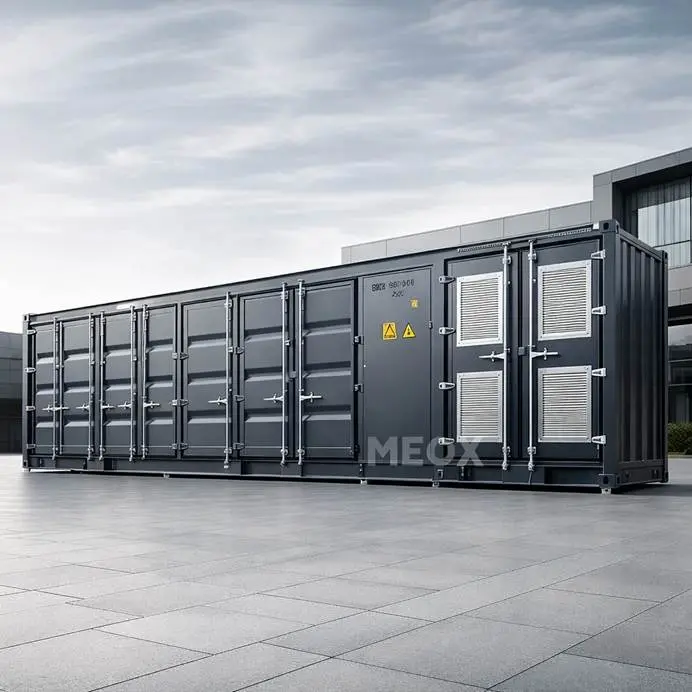
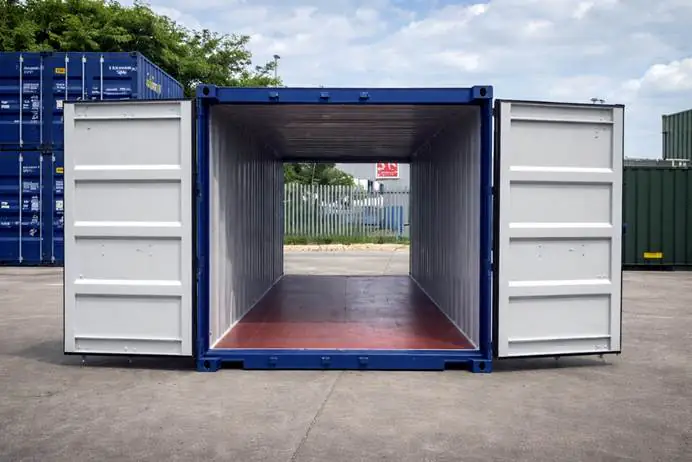
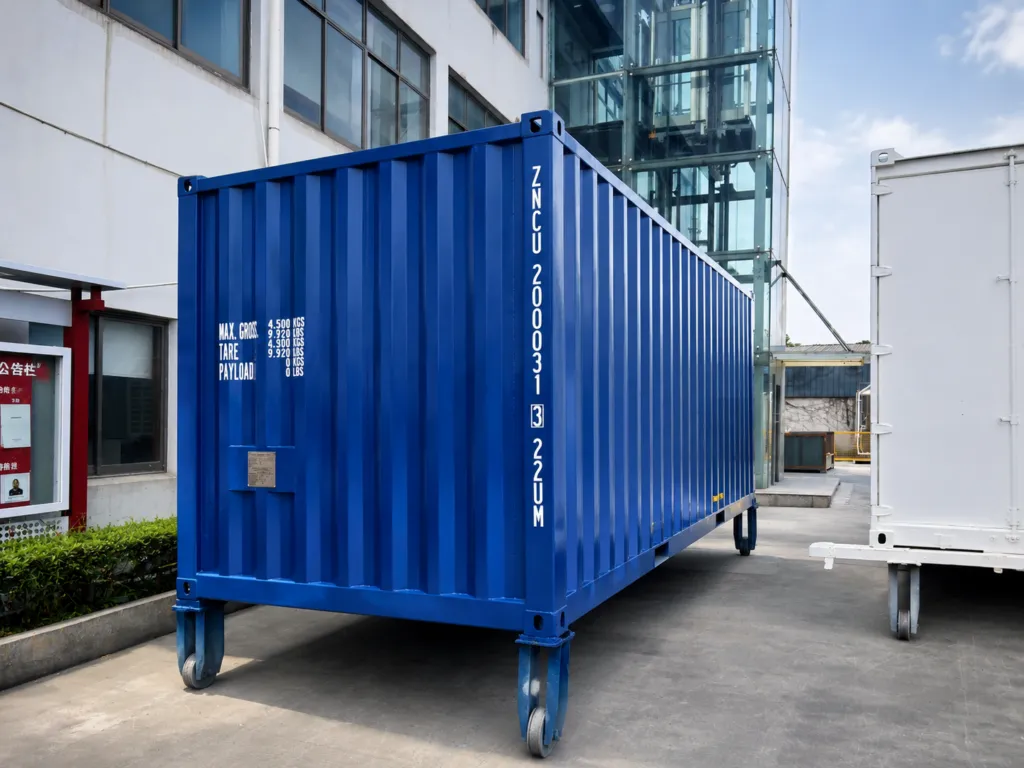
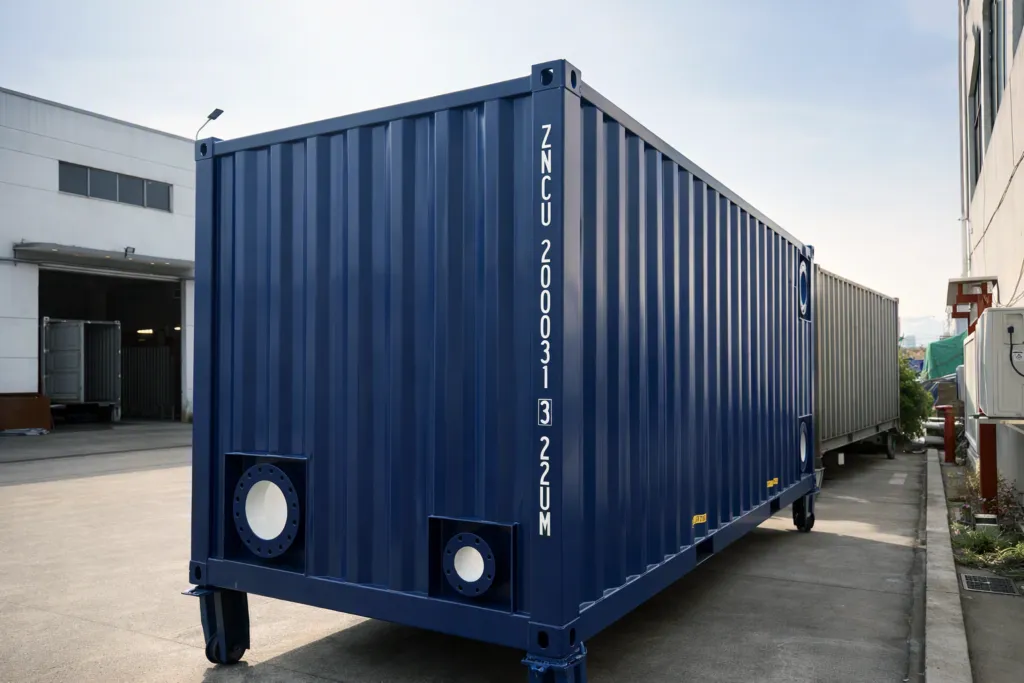
A container-based water treatment plant is basically an ISO container that contains a sewage treatment or seawater desalination system. The container itself, as a result, is the facility. Water pressure is one of the major factors that the container side and bottom panels should withstand, and because of this the container is designed in such a way that the unit can not only hold and treat wastewater but also be a shelter for the equipment.
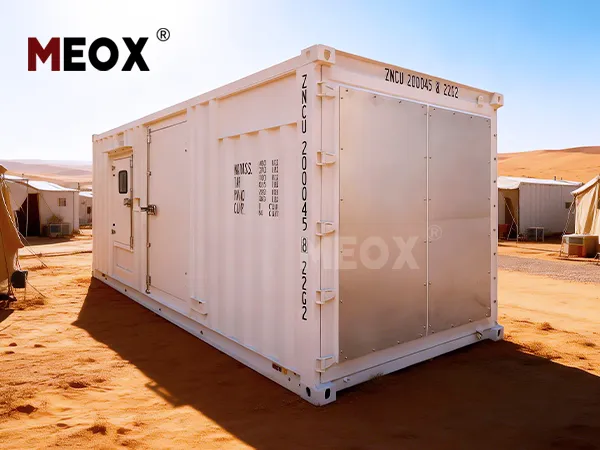
This containerized water treatment plant design suits any project where a fixed civil-works plant isn’t practical or affordable, from resort developments to disaster relief camps. Because the containerized water treatment plant arrives largely pre-built, on-site work is limited to hardened ground, pipe tie-ins, and power connections.
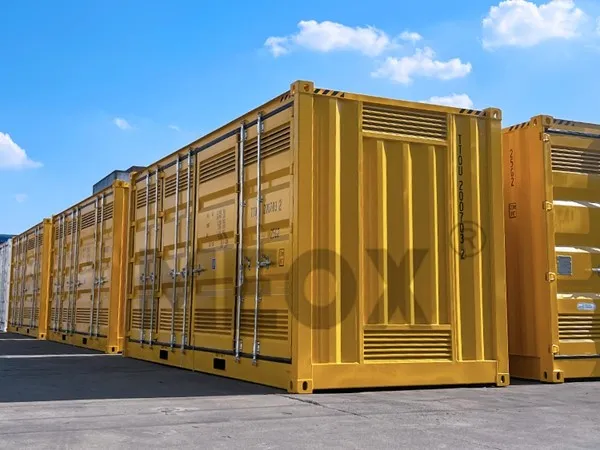
This category sits within a broader equipment container line, alongside generator, kitchen, and farm containers built on the same modular logic: factory-finished, transportable, and ready to work on delivery.
| Factor | Traditional Plant | Containerized Water Treatment Plant |
| Construction time | 6–18 months | Weeks, once delivered |
| Civil works cost | High (concrete tanks, buildings) | Reduced by roughly 60%* |
| Mobility | Fixed, permanent | Relocatable by truck, rail, or ship |
| Capacity range | Fixed at design | 100–10,000 tons/day, modular** |
*Based on ZN MEOX’s own project data, civil works costs typically fall by roughly 60% compared to a traditional build.
**Capacity scales by adding modules in parallel, from a single-container unit suited to a resort or camp up to multi-module installations sized for municipal-scale demand.
Core Features
- Built on standard or custom steel containers, with reinforced structure for water pressure.
- Connects to on-site inlet and outlet piping, so no complex civil works are needed.
- Customizable load analysis, insulation, heat dissipation, and noise control for the local climate.
These features make a modular sewage treatment system genuinely plug-and-play. Site teams connect pipes and power, then start commissioning the same week.
Key Advantages of Containerized Treatment
Quality-built prefabricated water treatment facilities are selected for a project to overcome challenges the conventional type of installation can’t deal with. Some instances include a limited time window for the project, lack of transport access to the location, and the need for capacity to be increased gradually and in stages.
| Advantage | What It Means On Site |
| High efficiency | MBBR biofilm technology handles variable loads well |
| Containerization | Works standalone or stacked into multi-module plants |
| Quick construction | Cuts build time and cost by more than two-thirds |
| Intelligence | PLC automation supports remote monitoring |
| Consistent quality | Factory-built components hold steady performance |
| Flexible design | Process tuned to local water quality and volume |
Decentralized, containerized treatment isn’t just faster. It’s also recognized for measurable operational and environmental gains, including lower pumping energy and easier water reuse, compared with extending a plant’s reach through long pipe networks (U.S. EPA, 2025). A portable wastewater treatment system avoids exactly that pipeline cost.
Where These Plants Get Used
A modular water treatment facility can be placed practically any place the project needs treatment capacity without the requirement of lengthy construction. Not only that, being a packaged water treatment unit, it also works for developments in stages, adding treatment capacity at regular intervals.
| Application | Typical Driver |
| Urban wastewater plants | Fast capacity addition without new buildings |
| Resorts and scenic areas | Compact footprint, low visual impact |
| Service areas and highways | Remote sites without municipal sewage lines |
| Industrial parks | Treat process water on-site before discharge |
| Emergency and relief camps | Rapid deployment, no permanent works |
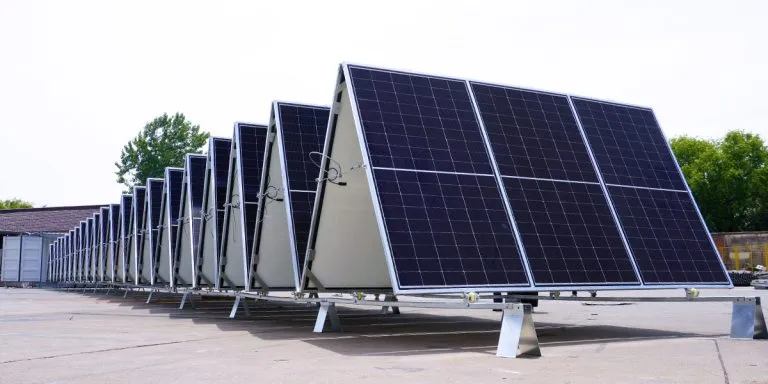
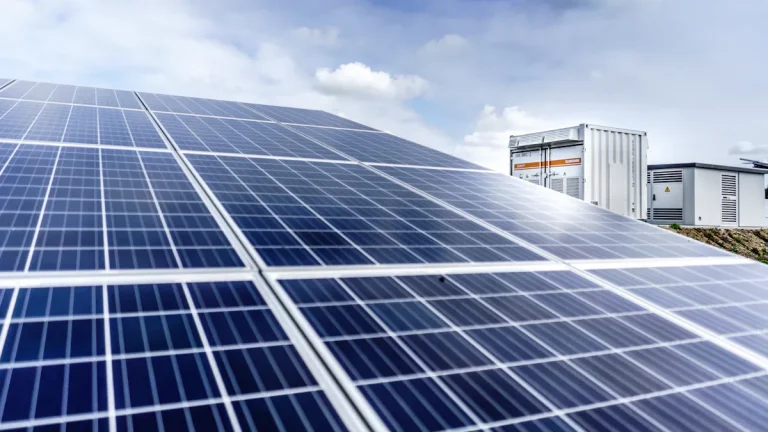
Many of these sites also need standalone power. Pairing a containerized plant with a generator container or an electrical house keeps pumps and PLC controls running where grid power is unreliable. For off-grid coastal or island sites, a mobile solar container can entirely offset diesel use.
Case Study: Azure Bay Resort Wastewater Upgrade
The Azure Bay Resort, a beach resort in Phuket, Thailand, ran into a pretty rough patch during the first months of 2025. It didn’t have the town sewer system available to connect to, guests came and went in different numbers according to the seasons, and yet the opening was planned only 90 days ahead of schedule. Building a usual concrete treatment facility would not make it to the deadline so right on, a portable or a containerized water treatment plant that just fits would be the ideal choice to fill the void.
In the case of the water treatment plant designed by the team, the MBBR system was in a container and its size was enough for treating 300 tons of water per day. The main materials that were used were containers from ZN MEOX and tanks made of reinforced concrete that were integrated with the containers themselves. The equipment had been shipped in fully assembled and pre-tested condition and on arrival at the site it only required connection of pipes and power. The work of installing the plant on site which included laying foundations, fitting up pipes, and activating the PLC control system, required less than three weeks. Automated controllers enabled the facility to increase treatment rates during higher demands and decrease them during lower activity periods, all the while making sure that the discharge from the plant meets the standards all year.
Workforce housing was part of the same timeline pressure. The construction crew was accommodated in container dormitory units from sister company ZN House, deployed alongside the water treatment plant so crews could live on site from day one rather than waiting on local housing.
Frequently Asked Questions
What types of wastewaters can a containerized water treatment plant handle?
It treats domestic sewage, commercial wastewater, and many industrial effluents. Process design is adjusted for each waste stream so the finished plant meets local discharge or reuse standards.
How does the treatment process actually work?
Wastewater is screened first to remove solids. It then passes through biological treatment, often MBBR-based, to break down organic matter, followed by clarification to remove remaining particles before discharge or reuse.
Can a containerized sewage treatment plant be customized?
Yes. Capacity, monitoring systems, and structural details can all be adjusted for a specific site, water composition, and local regulatory requirements. That flexibility is a big reason a containerized water treatment plant fits so many different project types.
Ready to Deploy Faster?
A containerized water treatment plant can change a construction schedule that takes months to just weeks, installation-wise, all the while ensuring the quality of the output water. Regardless of what type of facility is going to use the treated water, a resort, an industrial site, or an emergency response unit, the ZN MEOX team designs modular water treatment plants ready for shipping and operation. Get in touch and let us know your project details to receive a specific quotation.
Disclaimer
Technical data, dimensions, and specifications referenced in this article are based on ZN MEOX’s own manufactured container products. Actual specifications, materials, and technical details may vary by project and are subject to change without notice. Please confirm exact parameters with ZN MEOX before finalizing project plans.