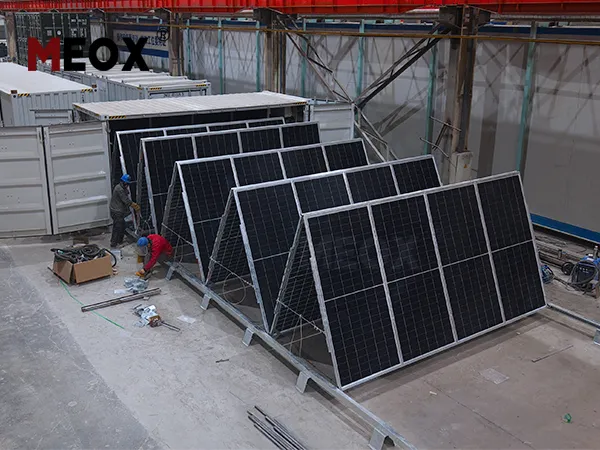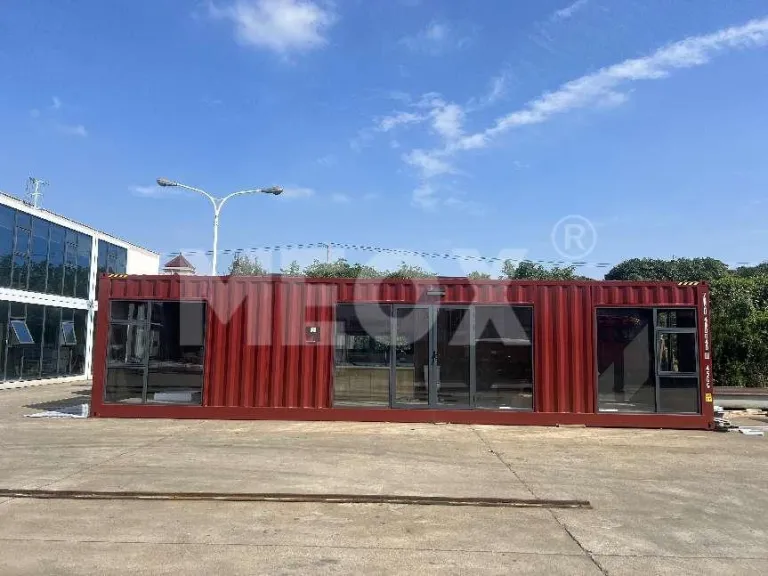
Utilities don’t have the luxury of waiting months while a new permanent building gets erected if a transformer fails at 2 a.m. or a storm blows away the whole distribution line. Mobile substations are exactly the solution that can be a grid planner’s savior in such situations. Mobile substations are electrical facilities pre-fabricated in factories and capable of being transported to a destination which can then be put into operation in days instead of years. Basically, it is a mobile version of the essential permanent equipment packed into a compact unit including transformers, switchgear, and protection systems.
Manufacturers describe this category by several overlapping names: eHouse, E-House, Electrical House, prefabricated substation, or containerized substation. Whatever the label, the goal is the same. Get reliable power infrastructure on the ground fast, with less on-site construction and fewer weather-related delays.
What Is a Mobile Substation?
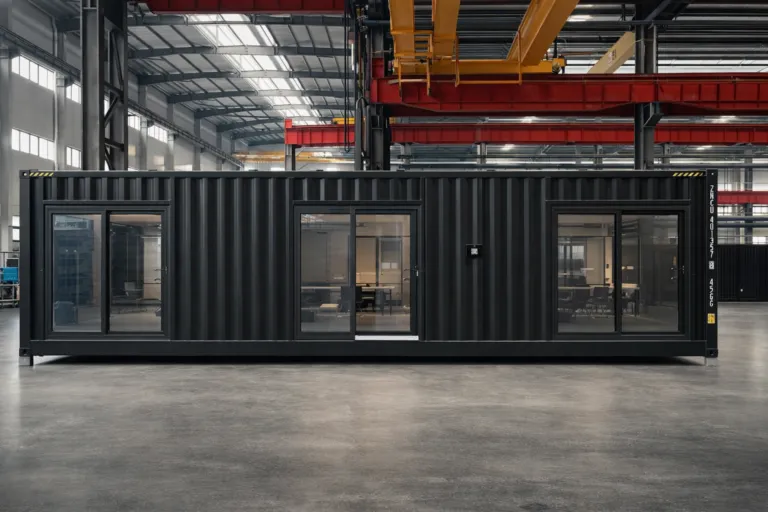
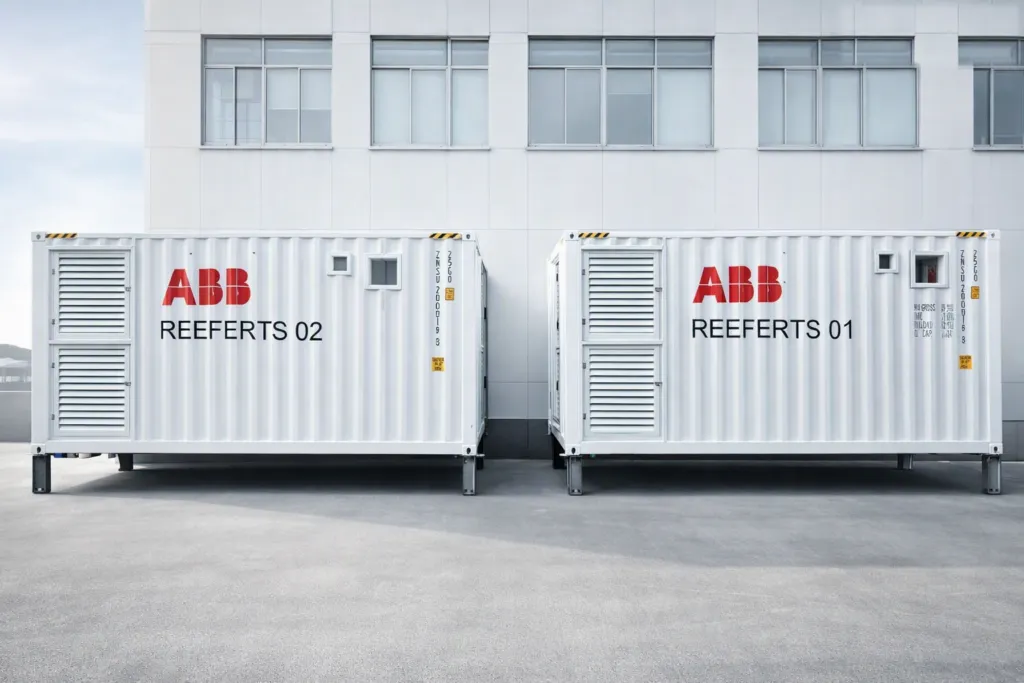
A mobile substation is a power distribution unit basically a power distribution device that is self-contained and housed within a steel box or installed on a frame or trailer. Rather than laying the foundation and building the control house on the spot, the manufacturer will put, wire, and test the equipment together at the factory. The completed eHouse will then be transported as a single unit and installed on the site-ready area.
The MEOX eHouse is a good example of how this works in practice. The Electrical House (eHouse) product line houses MV/LV switchgear, transformers, control cabinets, and protection and automation equipment inside a single steel enclosure. Because most of the fabrication and testing happens before the unit ever leaves the factory, on-site work is limited to placement, cable termination, and final commissioning.
This is crucial because traditional civil substations are the outcomes of construction projects. The process of working with concrete, brick and mortar used in the construction, and also building up various trades in stages, causes every construction work to be complicated and take time. However, the use of the prefabricated mobile substation solves many of these issues. When civil works are being done on site, the eHouse is being manufactured in the factory..
Mobile Substation vs. Traditional Civil Substation
| Key Criteria | Mobile Substation | Traditional Civil Substation |
| Installation Time | Factory-built and pre-tested; typical project cycle of 6–10 weeks | Full on-site civil construction; often 6–18 months depending on complexity |
| Site Work Required | Minimal — foundation and utility connection only | Heavy civil engineering: buildings, wiring, structural works |
| Mobility & Expansion | Modular and relocatable; can be redeployed to a new site | Fixed infrastructure; relocation is difficult and costly |
| Cost Predictability | High, due to standardized factory fabrication | Lower, due to weather delays and labor variability |
| Testing Coverage | 100% factory pre-assembled and tested before shipment | Limited component testing; final integration done on site |
Applications of a Mobile Electrical Substation Container
The mobile electrical substation container is used for a multitude of purposes. It is used during emergency restoration, in scheduled maintenance periods, for temporary construction power, and fixed installations wherever it would not be possible to use a conventional building.
As an eHouse, Power House, Walk-in Electrical Enclosure, or Containerized Substation, this format is widely used across several sectors:
- Data centers that need scalable, incremental power capacity
- Renewable energy sites, including solar and battery energy storage container installations
- Railways and transit systems requiring trackside power
- Mining and processing operations in remote or harsh locations
- Oil and gas facilities where hazardous-area design is a factor
- Utilities managing planned outages or storm restoration
For projects already deploying a battery energy storage container or a mobile solar container, pairing that generation asset with a matching E-House keeps the electrical interface consistent and simplifies commissioning.
Since the majority of fabrication occurs indoors, weather-related disruptions become less of an issue, making the manufacturing process more predictable than with traditional construction methods that rely on outdoor sequencing. This consistency is one of the reasons that utilities are beginning to see mobile substations as standard items in their planning toolbox rather than just emergency equipment. A mobile electrical substation that is designed according to specifications can switch back and forth between being used for storm recovery in one year and being employed for preventive maintenance work the next without losing its value between uses.
Independent industry coverage backs this shift. According to Modern Power Systems, mobile substation technology can be installed and commissioned within days instead of the years typically required for a permanently installed substation, and in at least one documented transmission rebuild project it helped a utility avoid building a temporary line altogether while saving millions of dollars in project costs (Modern Power Systems, 2024). Separately, Switchgear Magazine notes that a utility owning a mobile substation gains the flexibility to shift the same unit between emergency response and scheduled maintenance tasks, which improves the return on a single capital asset (Switchgear Magazine, 2025).
Key Features of the E-House
Four characteristics define a well-built prefabricated substation:
Factory assembled and pre-tested. Equipment is installed and function-tested before it leaves the plant, which reduces the risk of field rework and shortens commissioning.
Fast installation and commissioning. Because cable entries, equipment positions, and interfaces are planned in advance, a plug-and-play substation can often be energized within days of arriving on site.
Modular and scalable design. A single module can be used alone, or multiple modules can be combined for larger capacity needs, which suits phased projects.
Built for harsh environments. Anti-corrosion coatings, dust and rain protection, and reinforced insulation allow the enclosure to hold up in coastal, offshore, and extreme-temperature locations.
Reference Specifications (20FT Prefabricated Unit)
| Item | Specification |
| Function | Power generation and storage housing |
| Cubic Capacity | 33 CBM |
| External Dimensions (L × W × H) | 6096 × 2438 × 2896 mm |
| Internal Dimensions (L × W × H) | 5898 × 2252 × 2493 mm |
| Material | SPA-H weather-resistant steel |
| IP Rating | IP54 standard; IP65 available |
| Operating Temperature | −20°C to +50°C standard; extended range available |
| Structure Standard | Built to ISO 1496-1 container framework, CSC certified |
Note: parameters are indicative. Specific configurations can be adjusted according to project voltage, layout, and environmental requirements.
E-House Customization Options
Since every project has different requirements, mobile substations are sometimes individually designed. The prefabricated mobile substation is viable if it is appropriate for its destination.
Size and layout can be scaled to match equipment capacity and available site space. MV and LV switchgear, transformers, and control panels can be arranged as a single-room or multi-room structure depending on how the operator wants to zone access and maintenance. For projects that need to move quickly between sites, a skid-mounted or trailer-mounted prefabricated power container option supports faster redeployment than a fixed-pad unit.
The cooling, ventilating, and fire protection systems can be adjusted to match the internal heat load and site safety codes. Cable entry point locations, pits, and basements are configured according to the actual implementation plan instead of a generic template. The completed enclosure is available as a walk-in that allows for easier access by operators or a non-walk-in type requiring less space in restricted areas.
This is also where operators most often connect a mobile substation with an adjacent generator container or a prefabricated power container, since matching interface standards across units keeps future expansion straightforward.
Case Study: Raised eHouse Substation for a Distribution Utility
In March 2025, a regional distribution system operator approached ZN MEOX to add substation capacity at a site where a full civil build was not realistic within the project timeline. Two challenges stood out. First, the site had limited access for heavy construction equipment. Second, the surrounding area was prone to ground-level water exposure, which raised concerns about the long-term reliability of a conventional at-grade structure.
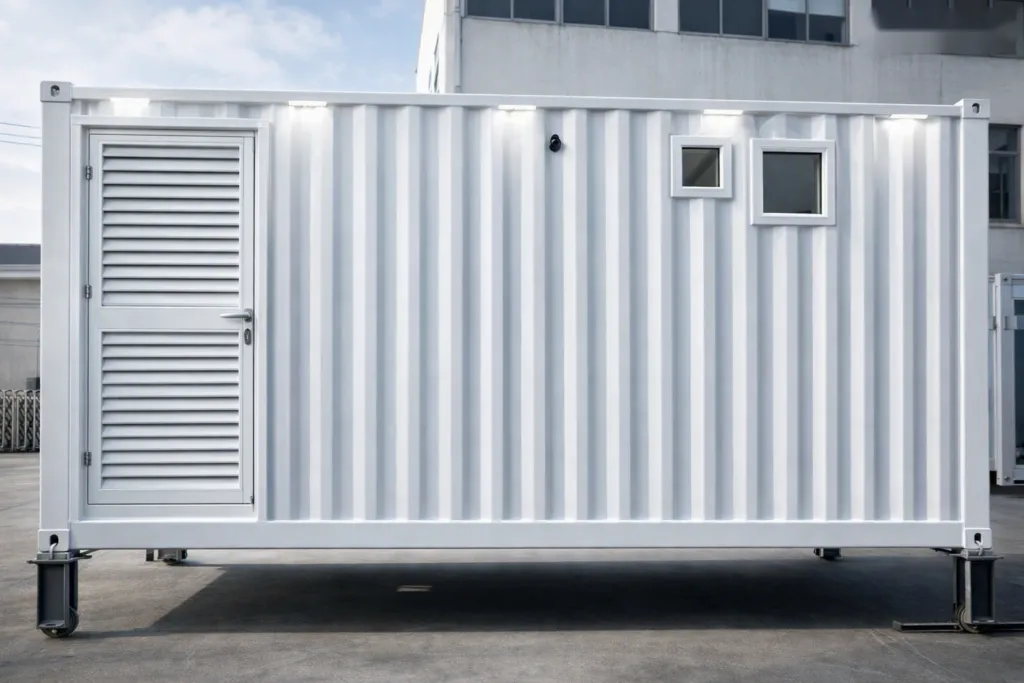
The operator purchased two 20FT walk-in mobile substations from ZN MEOX, each raised on an elevated foundation. Because the units arrived largely complete, on-site civil and electrical work was reduced by more than half compared with a conventional build, while factory-level testing and pre-commissioning maintained full system integration. ZN MEOX delivered and commissioned both units on site by early May 2025, roughly eight weeks after the order was confirmed. The raised placement also improved the units’ resistance to water intrusion and other ground-level hazards.
For the operator, the outcome was a faster path to service, a safer working environment for maintenance staff thanks to the walk-in layout, and a repeatable model — now backed by ZN MEOX as an established supplier — that can be applied to future distributed energy and grid-expansion projects.
Site Preparation Checklist Before Delivery
| Requirement | Why It Matters |
| Reinforced concrete or raised foundation | Supports unit weight and improves drainage/water resistance |
| Crane access for unloading | Needed to place the prefabricated unit safely |
| Cable trenches or duct banks | Pre-installed for MV/LV and control cable routing |
| Grid connection points confirmed | Avoids delay at the commissioning stage |
| Site drainage assessment | Reduces risk of water exposure at ground level |
Frequently Asked Questions
Q: Is a mobile substation the same thing as an eHouse?
A: They are closely related. “Mobile substation” describes the function — a relocatable, factory-built power distribution asset — while “eHouse” and “E-House” are the manufacturer’s terms for the physical enclosure that houses the switchgear, transformers, and controls. In everyday use, the two terms are often used interchangeably.
Q: How is a mobile substation different from a standard prefabricated substation?
A: The terms overlap. In practice, “mobile” usually emphasizes that the unit is designed to be relocated again in the future, often skid- or trailer-mounted, while a general prefabricated substation may be installed on a permanent pad. Both share the same core benefit: most fabrication and testing happen at the factory rather than on site.
Q: How long does it take to deploy a mobile substation?
A: The timelines differ depending on the manufacturing aspect but the factory assembly and the preparation process condense the total duration to about six to ten weeks while the conventional duration ranges from six to eighteen months.
Ready to Deploy Your Own Mobile Substation?
Whether you are planning emergency restoration capacity or a permanent mobile substation replacement, ZN MEOX can design an Electrical House solution around your voltage class, layout, and site conditions. Get in touch with our team to request a project-specific quotation.
Disclaimer
The technical data, dimensions, and specifications referenced in this article are based on ZN MEOX’s own manufactured eHouse and container products. Actual specifications, materials, and technical details may vary by project and are subject to change; please confirm exact parameters with our engineering team before finalizing a design.
To see how a Prefabricated Electrical House Solution comes together from factory to site, watch E-House | Prefabricated Electrical House Solution by ZN MEOX: