Short Answer
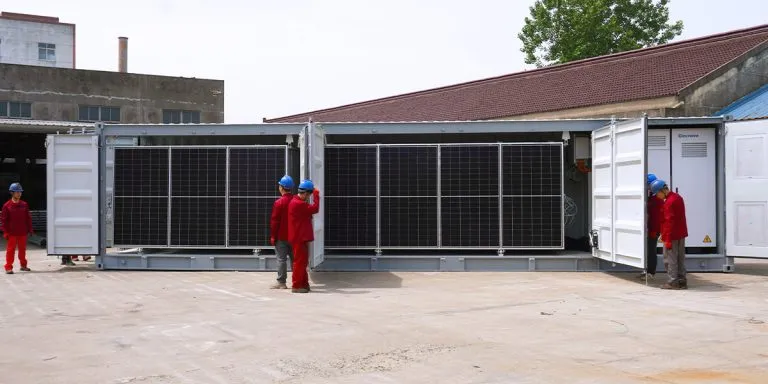
A double door container is a type of shipping container that is made of steel, and the important feature of the double door container is that there are doors on both ends of the container rather than just at one end as in the case of ordinary shipping containers. The presence of doors on both ends of the container allows a user to load or unload goods through whichever body as well as once both doors are opened, the container becomes a passageway and is thus known as tunnel container. Double door container would be good for transporting long items, for instances where access needs to be from two different ends, or where the double-door container may be used as a walking path or dividing store space.

What Is a Double Door Container?
Standard containers have one set of doors on the back and a solid wall on the front. Instead of a solid wall at the front, double door containers come equipped with a second set of doors. The company’s product page lists three models of double door containers available in the market today: 20FT, 40FT, and 40FT high cube. It states that all three of these double doors containers are ISO and CSC approved for road, marine, and rail transportation. This should be treated as an assertion rather than a conclusive statement of compliance, since the claims can only be substantiated by safety approval markings and documentation, and this checklist will help clarify this point.
The specifications in this article come from the MEOX Double Door Container product page. Where a figure is calculated rather than listed, the text says so.
How Does a Double Door Container Differ From a Standard Container?
The practical differences come down to access, structure, and upkeep. The table shows both sides, including the places where the standard box wins.
Table 1. Single-door versus double-door container
| Factor | Standard (single door) | Double door (tunnel) |
| Door positions | Rear only; solid front wall | Full doors at both ends |
| Loading access | One end; deep cargo must be pushed or pulled in | Either end; items can be loaded, passed through, or unloaded from the opposite side |
| Cargo restraint | Front wall acts as a stop for blocking and bracing | No solid end wall; bracing is needed at both ends |
| Structure | Closed end wall adds stiffness | Stiffness comes from corner posts, header and door frames, so the design must be tested as its own type |
| Weather and security points | One set of seals and locking bars | Two sets to inspect, maintain and secure |
| Cost and availability | Lower cost; widely available, new and used | Higher cost; fewer units on the market |
| Best suited to | Palletized, general cargo | Long cargo, two-sided access, passage and divided storage |
In a standard container the closed end wall helps keep the frame square. This is due to the fact that the door frame replacement frame have to act on the post and header, thus making the double door frame a separate design. ISO 1496-1 sets the basic specification and testing requirements for series 1 general-purpose freight containers intended for international exchange by road, rail and sea. Under the International Convention for Safe Containers, administered by the IMO, containers used in international transport must be safety-approved and carry a plate showing the technical data. The IMO also notes that the 1991 amendments provide for the approval of modified containers. In practice, a single-door box that has been cut and converted should be re-approved, not shipped on its original plate.
What Do the Listed Specifications Say?
The product page gives a full parameter table for the 20FT unit only. The 40FT and 40FT high cube versions are named, but no dimensions or weights are listed for them, so request those in writing.
Table 2. 20FT double door container parameters (manufacturer-listed)
| Item | Listed value |
| Frame | Side rail SPA-H/SM50A; end rail SM50A/SS41; roof SPA-H, 1.6 mm thick; panel SPA-H |
| External dimensions (L × W × H) | 6.058 m × 2.438 m × 2.591 m |
| Internal dimensions (L × W × H) | 5.898 m × 2.352 m × 2.393 m |
| Door opening (W × H) | 2.343 m × 2.28 m |
| Paint thickness | 140 μm |
| Tare weight | 2,000 kg |
| Internal volume | About 33.2 m³ (calculated from the listed internal dimensions, not stated by the manufacturer) |
Before making a purchase, three gaps need to be filled: the lack of maximum gross mass, payload information, and door gasket specification and locking bar specifications on the page. Maximum gross mass should be found on the CSC plate, while the other two should be confirmed in the quote.
Where Do Double Door Containers Make Sense?
The company focuses on long cargo-carrying cylinders pipes and coils, converting site passages on building projects, and with two compartments for storage, which are accessible from either side. Each has a real advantage and a real disadvantage.
Table 3. Use cases, fit and cautions
| Use | Why it fits | Watch-out |
| Pipes, coils and long items | Items can enter from one end and be secured or checked from the other | Internal length (5.898 m for the 20FT) still caps the cargo; double doors add access, not length |
| Construction-site passage | With both doors open the box forms a covered route between two positions | CSC covers transport safety, not permanent site use; confirm loads, openings and local rules with an engineer |
| Two-section storage | Each section is reachable independently from its own end | A divider is a modification and may need design and approval |
| Tight yards | Access from either end gives more flexibility in how units are positioned | Placing units end to end is a layout choice; check with the supplier before assuming any connection or sealing between boxes |
Illustrative Worked Example: Loading Long Pipe Bundles
The following is a planning illustration built from the 20FT figures above. It is not a record of a specific project.
Let us assume that steel pipe bundles are being shipped by a contractor. Each bundle is 5.8 m long. The inside length of a 20-foot container is 5.898 m, which gives us a slack of 98 mm. In a container with one door, the whole bundle will go into one door, and securing will take place from the opposite door where there is no access.. Working with double-door containers would allow the crew to place one bundle at one door while someone else secures it at the other end. After reaching the destination, switching between the two ends can be done as per convenience. The design of the container does not aim to give it any more length than it has, and thus, the possibility of the contractor failing in that regard is very high.
MEOX produces double door units in 20FT, 40FT and 40FT high cube versions and accepts custom configurations through its customized shipping container range. Project data from the factory, such as door frame detail or a past pipe-shipment layout, can replace this illustration if available.
What Are the Limits and Trade-Offs?
- No solid stop at either end. Cargo needs blocking and bracing at both ends. A load that would rest against the front wall of a standard box has nothing to rest against here.
- Twice the seals and locks. Every additional entrance incorporates more gaskets and latches that will have to be checked. Increased water ingress via a larger number of holes also carries along with it the higher possibility of intrusions.
- Higher cost and thinner market. Fewer double door units are built and traded than standard boxes, which affects price and lead time.
- Not a dangerous goods container by default. Regulated cargo has additional requirements; see the dangerous goods container page for that class of unit.
- Side access may suit better. If the goal is access along the long side of the cargo rather than through the ends, a side-opening container is the alternative to compare.
How Should You Choose a Double Door Container?
A short verification list reduces most purchasing risk:
- Measure the longest piece of cargo and compare it with the internal length, not the external one.
- Ask for a photo of the CSC safety approval plate and the approval certificate, and check that the maximum gross mass suits the load.
- Request the ISO 1496-1 test reference or report for the exact door configuration, not just the single-door version.
- Confirm gasket type, locking-bar specification and paint system for the climate where the box will sit.
- Decide whether the box will travel internationally or stay on site. Site-only use may relax some requirements; international shipping does not.
Frequently Asked Questions
Is a double door container the same as a tunnel container?
Yes. The names describe the same unit: a container with doors at both ends. “Tunnel” refers to the straight passage formed when both sets of doors are open.
Can a double door container be shipped internationally?
It is possible for a door designed and certified as a double door design with a proper CSC safety approval to have a valid CSC safety approval certificate, as stated by the manufacturer. It’s important to verify the ISO and CSC certification by checking the requirement plates and certification documents before transportation.
Can I use a double door container as a walkway or an office?
It is common to confuse such work with transportation. The manufacturer indicates construction passageways as a common use of the site. Once you perform additional openings, install partitions, or work on the interior itself, changes are being made and consequently, it is essential to consult the engineer and ensure compliance with local regulations.

Talk to the Manufacturer
For a 20FT, 40FT or 40FT high cube double door container, or a custom door arrangement, send your cargo dimensions and destination through the MEOX Double Door Container page to request a quotation.
Disclaimer
This information provided is just for general knowledge purposes. While specifications are derived based on data provided by the manufacturer and may be subject to modification, please verify this with your pricing information. This information is done without prejudice to the provision of legal, engineering, or shipping advice, as the product safety approval label, local regulations, or advice from a qualified engineer.
Sources
- IMO – International Convention for Safe Containers (CSC)
- IMO – Containers (CSC 1972, including 1991 amendments on modified containers)
- BSI Knowledge – ISO 1496-1: Series 1 freight containers, general cargo containers for general purposes
- MEOX – Double Door Container product page (manufacturer specifications)