Introduction
It is not very common that getting a power system to a remote site, an offshore platform, or even a fast-moving construction project can be done the same way. Traditional substations not only take a lot of time to be built but also require a lot of human resources and once installed, they are immovable. Prefabricated substations come with a totally different perspective. Also referred to as a modular electrical substation or factory-assembled substation, this solution is a combination of structural enclosure, electrical equipment, and factory testing all put together in one single transportable unit. Connection and commissioning can be carried out with no delay once the unit arrives on the site.
Electricity grid expansion and modernization will be required Much by 2030 to meet clean-energy targets, according to the International Energy Agency (IEA). They also mentioned that modular power infrastructure is one of the most efficient tools for speeding up that transition. This article discusses the operational principles of a prefabricated substation, its most effective areas, and the factors you should consider when purchasing one for your project.
What Is a Prefabricated Substation?
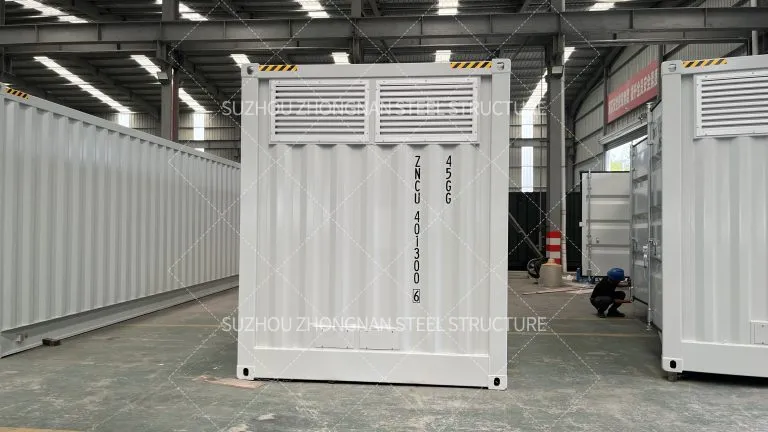
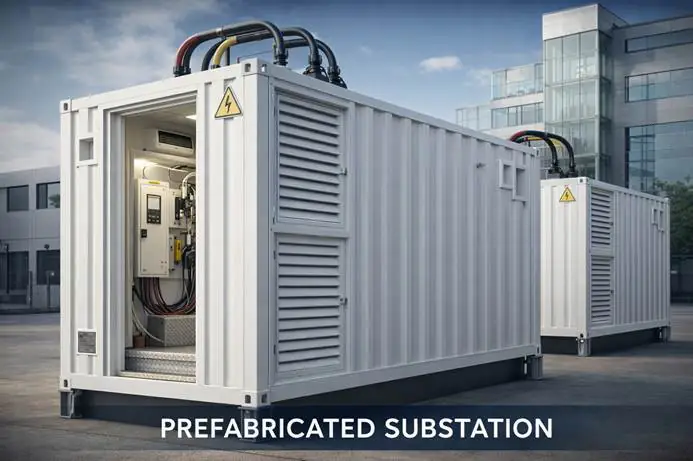
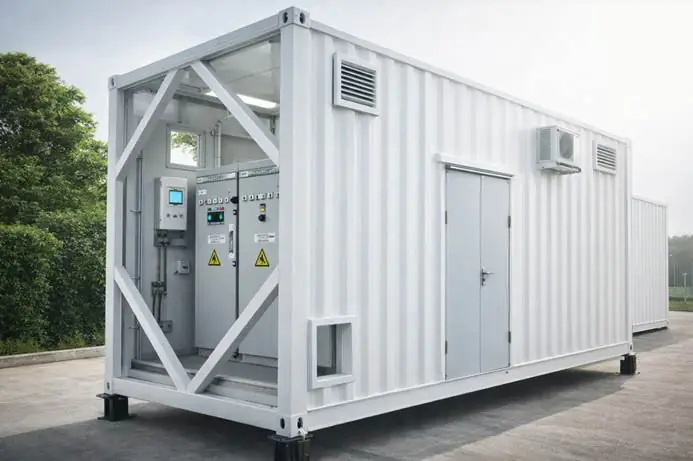
A prefabricated substation refers to a completely self-contained electrical unit that is built and tested at the factory before being sent to the site. Usually, it contains medium-voltage (MV) or low-voltage (LV) switchgear, transformers, control panels, protection relays, as well as automation equipment – all neatly packed inside a steel modular enclosure.
E-House, Electrical House, containerized substation, and plug-and-play substation are different names for the concept that is at the heart of these variations. What they all share is factory prefabrication: most of the engineering, assembly, and quality testing are done in a controlled environment rather than being exposed to open sky at a remote worksite.
Prefabricated E-House solution synergizes the benefits of modular design, equipment pre-testing, and full customizability to provide electrical infrastructure quicker and more efficiently versus traditional civil construction.
Prefabricated Substation vs Traditional Substation
The main differences between the two approaches are summarized in the table below:
| Criteria | Prefabricated Substation | Traditional Substation |
| Construction Time | Weeks (factory-built) | Months (on-site build) |
| On-Site Labour | Minimal | Extensive |
| Factory Testing | Full pre-commissioning | Limited or post-build |
| Relocation | Possible | Not practical |
| Environmental Resistance | High (customizable) | Varies by design |
| Scalability | Modular expansion | Requires new construction |
Table 1: Key differences between prefabricated and traditional substation approaches.
Key Features of a Modern Prefabricated Substation
Factory Assembled and Pre-Tested
All elements, like switchgear transformers cables, and protection relays, are not only factory-installed but also run through functional tests. This gets rid of one major source of risk at the site: wiring mistakes and equipment defects are found even before dispatch of the unit from the production area. Plus, it results in less dependency on onsite specialist trades.
Fast Installation and Plug-and-Play Commissioning
Substations that are factory assembled and are meant for remote sites are delivered as a single unit ready for connection. The positions of the equipment and interface connections are predetermined. Once the unit has been put on a foundation that is prepared, the electrical tie-in and commissioning can start within a few days instead of weeks.
Modular and Scalable Design
The modular design makes it possible for a project to begin with only one enclosure and to add additional modules later as their production capacity requirements increase. This kind of scalability is mainly useful for renewable energy projects since the capacity to produce energy is generally increased in phases in such situations.
Harsh-Environment Performance
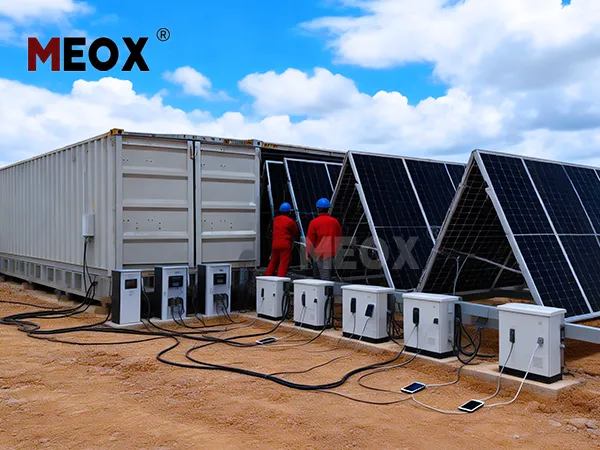
Steel modular enclosures are often equipped with anti-corrosion coatings for as long as Grade CX, high-quality insulation, good sealing against dust and moisture, and wind resistance up to Grade 10. This makes them the right choice for various locations including offshore platforms, desert solar farms, mining sites, and arctic regions.
Transportable and Relocatable
A containerised substation for renewable energy sites or temporary industrial projects can be shipped by sea or road using standard logistics. When a project ends or moves, the unit can be relocated, something a brick-and-mortar substation can never offer. Containerised substations for renewable energy sites or temporary industrial projects can be shipped by sea or road with the aid of standard logistics. When a project finishes or relocates, the containerised substation can be moved; this is a feature that a traditional substation made of concrete could never have.
E-House Technical Specifications at a Glance
| Parameter | Specification |
| Standard Size | 20FT (customizable) |
| External Dimensions (L×W×H) | 6,096 × 2,438 × 2,896 mm |
| Internal Dimensions (L×W×H) | 5,898 × 2,252 × 2,493 mm |
| Tare Weight | 5,000 kg |
| Max. Cargo Weight | 25,480 kg |
| Max. Gross Weight | 30,480 kg |
| Material | SPA-H (weather-resistant steel) |
| Corrosion Protection Grade | Up to CX |
| Wind Resistance | Up to Grade 10 |
| Certification | CSC Certificate |
| Service Life (with maintenance) | 15–25 years or more |
Table 2: Standard E-House specifications. Parameters are indicative; all dimensions and ratings can be customized.
Where Prefabricated Substations Are Used
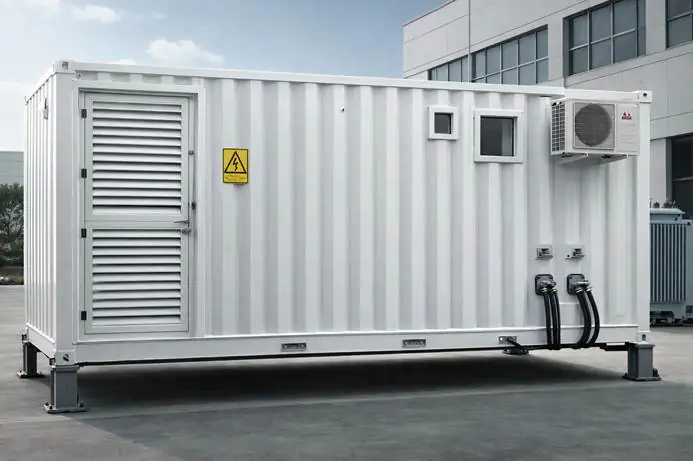
Prefabricated substation solutions cater to a wide variety of industries. The global market for prefabricated substations, as per Mordor Intelligence, is on a stable growth path as renewable energy investment and the need for quick grid connectivity in emerging economies are the main factors pushing the market.
| Industry | Application | Key Benefit |
| Renewable Energy | Solar / Wind farm substations | Fast deployment in remote sites |
| Oil & Gas | Offshore/onshore power distribution | Harsh-environment durability |
| Mining | Mobile power infrastructure | Relocatable, scalable |
| Data Centers | MV/LV switchgear housing | Compact footprint, pre-tested |
| Utilities / DSOs | Distribution network expansion | Quick grid integration |
| Construction / EPC | Temporary site power | Plug-and-play commissioning |
Table 3: Common industry applications and primary benefits of prefabricated substation deployment.
Case Study: E-House Substation for a European DSO
The Challenge
A European distribution system operator (DSO) wanted to enlarge its medium-voltage network in a crowded urban area. Doing construction work on-site was not an option: the reasons for this were the absence of enough space, very rigorous local planning restrictions, and it being necessary to keep the network live during the installation; all these factors ruled out a traditional build. And, the project demanded the unit to be ready for operation in a very short, eight-week time.
The Solution
MEOX designed and built a walk-in prefabricated E-House substation that perfectly matched the DSO’s MV/LV switchgear layout. The unit was fully assembled and tested in the factory before shipment. After it arrived, it was hoisted into its location and connected to the existing network within two days. The whole project, right from placing the order up to energisation, was completed within the eight-week window.
The Outcome
The DSO was able to achieve its target for network expansion without indulging in costly and disruptive civil works and also received a unit, which was engineered for a service life of over 15 years. The modular format also permits a second enclosure to be incorporated later without disturbing the existing operations.
What to Look for When Choosing a Prefabricated Substation
Not all pre-fab substations are equal. Here are the most important factors to consider:
- Voltage level and equipment compatibility — confirm the enclosure can house your specific MV/LV configuration.
- Customization depth — size, cable entry, cooling, fire suppression, and structural mounting options should all be adjustable.
- Factory testing scope — request documentation of pre-shipment functional tests and FAT (factory acceptance test) records.
- Environmental certification — for offshore, tropical, or arctic sites, verify the corrosion and sealing ratings.
- Transport and logistics support — a true plug-and-play substation should arrive ready to connect with minimal site preparation.
- Service life and warranty — look for manufacturers who design to IEC standards and can provide CSC-certified enclosures.
For projects combining power distribution and energy storage, the Battery Energy Storage Container and the Prefabricated Power Container are complementary solutions that can be placed together with an E-House to form a complete modular power system.
Frequently Asked Questions
What is the difference between a prefabricated substation and an E-House?
For projects combining power distribution and energy storage, the Battery Energy Storage Container and the Prefabricated Power Container are complementary solutions that can be placed together with an E-House to form a complete modular power system.
How long does it take to deploy a factory assembled substation on site?
The time to deploy is contingent on the site preparation and the complexity of the electrical integration. Since the unit is built and tested in the factory, the main jobs locally are mechanical positioning and cable connection. For sites that are well prepared, energization might take place within one to five days after the delivery. This is a very good comparison against the multiple months needed for a conventional civil substation.
Can a containerized substation be used permanently, or only for temporary projects?
Both. A modular electrical substation can be used as a temporary power solution – like during power outages or construction phases – and can also be used as a permanent installation. The steel enclosure, if it has the right anti-corrosion and insulation features, is expected to last between 15 and 25 years or even more, so it is definitely a good option for long-term use.
Conclusion
A prefabricated substation is a perfect idea for people who want to save time, get a good quality product, and reduce risks in the construction of a new electrical center. It is, in essence, a factory-made structure with integrated essential electrical components. This approach offers quality enhancement and time savings among other advantages. Modular substations will come to the fore as a tool able to support modern energy networks in the era of changing power infrastructures.
Ready to Specify Your Prefabricated Substation?
MEOX develops and produces prefabricated E-House substations based on a project’s voltage needs, the environment, and rollout time. If it’s a single modular electrical substation for a remote solar farm or a multi-module factory-assembled substation for a large industrial facility, you’ll find complete specification information and customization possibilities on the MEOX E-House product page.
Contact the team for a project-specific quotation.
Disclaimer: Technical data, dimensions, material specifications, and performance parameters mentioned in the article are taken from MEOX’s own container and E-House products. Specifications, materials, and technical details may differ based on project requirements, customization standards, and manufacturing updates. We consider every figure as only approximate and non-binding. For technical documentation tailored to your project, you should contact MEOX directly.
Want to see a prefabricated electrical substation in action? Watch the following video on the ‘Prefabricated Electrical House Solution by MEOX’ to see how these modular substations are engineered and deployed in real-world projects: