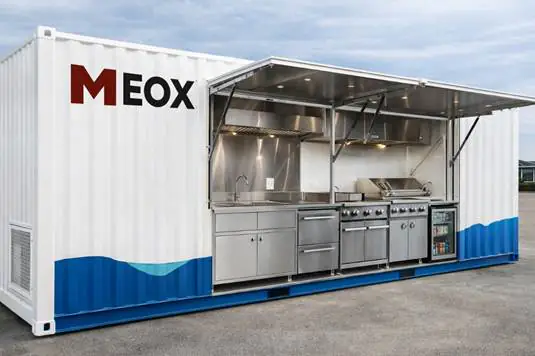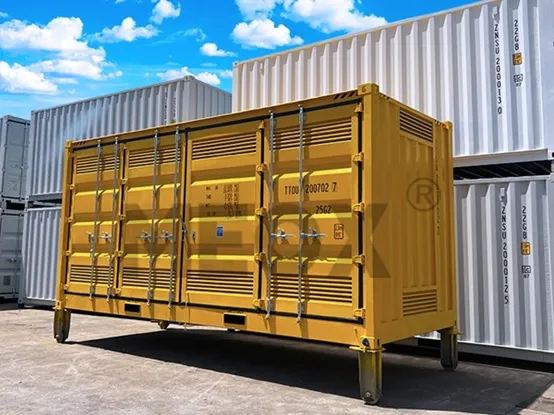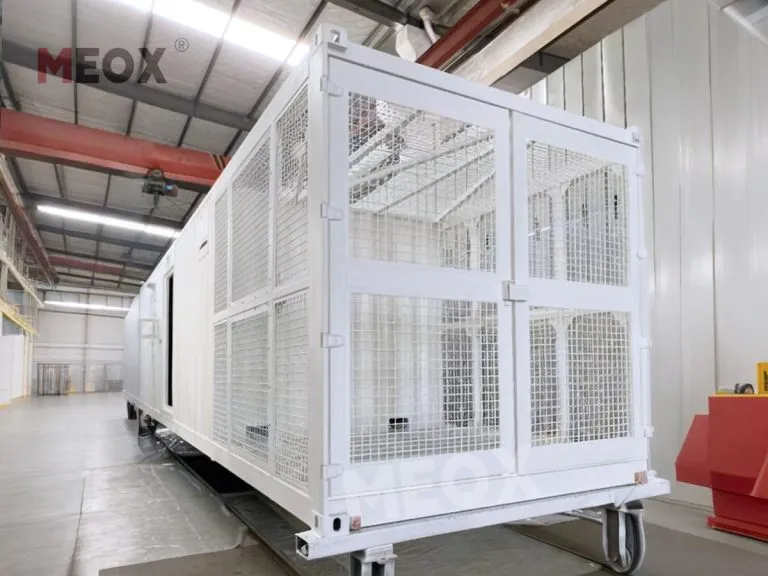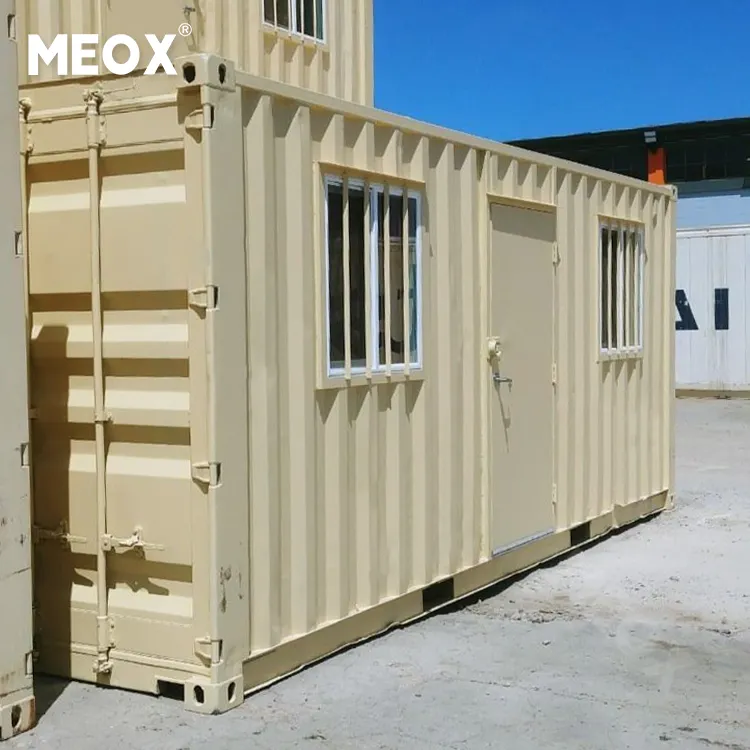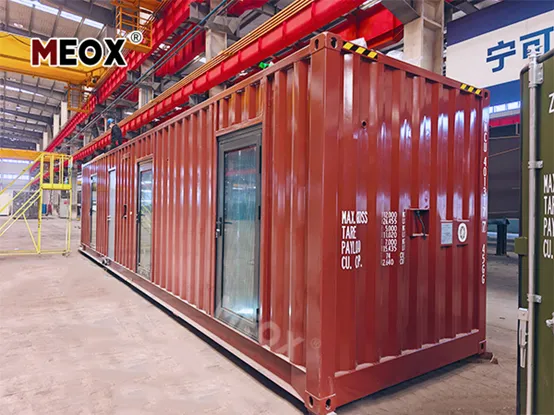
Increasingly, companies use a shipping container office as a smart alternative to traditional construction. The reasons are simple: quicker delivery, less expense, and the option to move when a project is over. Containerized workspaces are demonstrating their usefulness globally, be they mining sites in remote Australia or town construction zones in Southeast Asia.
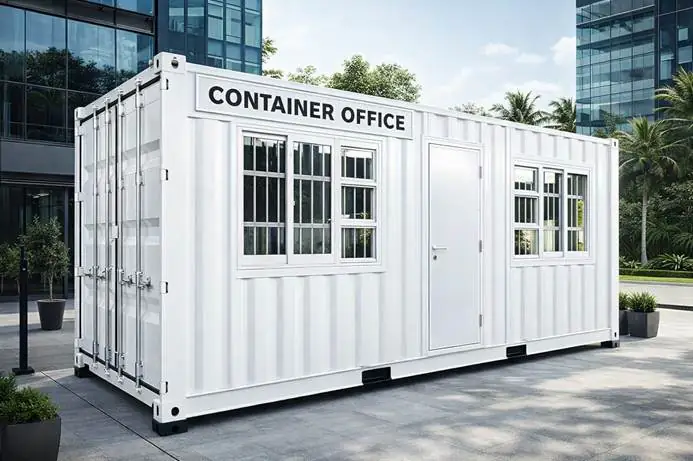
In this article, the author explains how a container office operates, what the specs and modifications look like, and the benefits of this type of office that have led it to be adopted by many sectors.
What Is a Shipping Container Office?
Shipping container offices are actual ISO steel shipping containers that have been transformed and equipped for a working place. The original steel structure of the container is kept, then it is changed with the addition of windows, doors, insulation, wiring for electricity, and interior decor.
Versus prefab flat-pack offices, a container office comes as one, fully assembled unit. Most of the time, only the connection of water and electricity is required before personnel can occupy the place. Such plug-and-play character is what makes it highly convenient on construction sites, disaster recovery operations, and industrial locations with changing schedules.
The overall modular construction market had an approximate value of $84.5 billion in 2023, which is projected to grow at a compound annual growth rate of approximately 6.5% through to 2032, partly due to an increased demand for quicker and more versatile workspace solutions. (Source: Grand View Research, Modular Construction Market Report)
Standard Specifications at a Glance
The following table illustrates typical sizes for 20ft and 40ft shipping container offices.
Precise dimensions depend on the manufacturer and configuration.
| Specification | 20FT Container Office | 40FT Container Office |
| External Length | 6,058 mm | 12,192 mm |
| External Width | 2,438 mm | 2,438 mm |
| External Height | 2,591 mm (std) / 2,896 mm (HC) | 2,591 mm (std) / 2,896 mm (HC) |
| Internal Floor Area | ~14 m² | ~28 m² |
| Top Load Capacity | 2 tons | 2 tons |
| Bottom Load Capacity | 4–10 tons | 4–10 tons |
| Structural Lifespan | Up to 30 years | Up to 30 years |
| Frame Material | 6mm Q235-B steel | 6mm Q235-B steel |
Key Features and Construction Details
Understanding the difference between a purpose-built container office and a mere conversion is crucial when making the decision on what is best for you.
Frame and Welding
The base frame is made of 6mm Q235-B high-strength steel which is a much stronger material than the 2.3mm galvanized steel normally used for container houses that can be disassembled. The whole set of the frame has been fully welded that is a continuous welding process which leaves no weak points like the ones in the assemblies that are joined with bolts.
Interior Finish
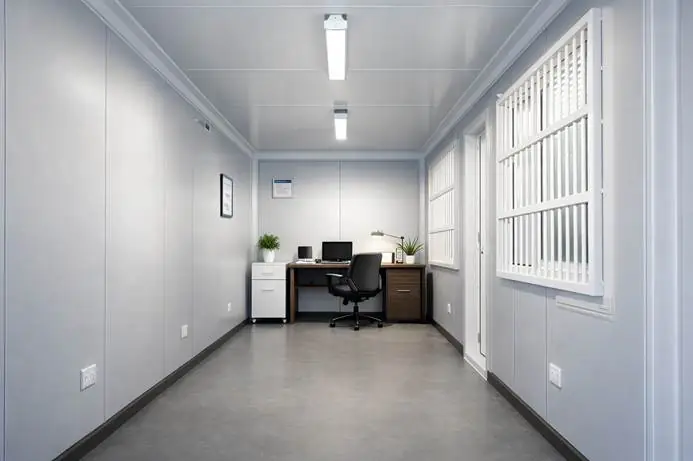
Most wall panels are made with rock wool sandwich panels that bring thermal insulation, fire resistance, and soundproofing to the table. Floors comprise high-strength cement fiber board. Usually, we have pre-wired plumbing rough-ins as a standard feature.
Doors and Windows
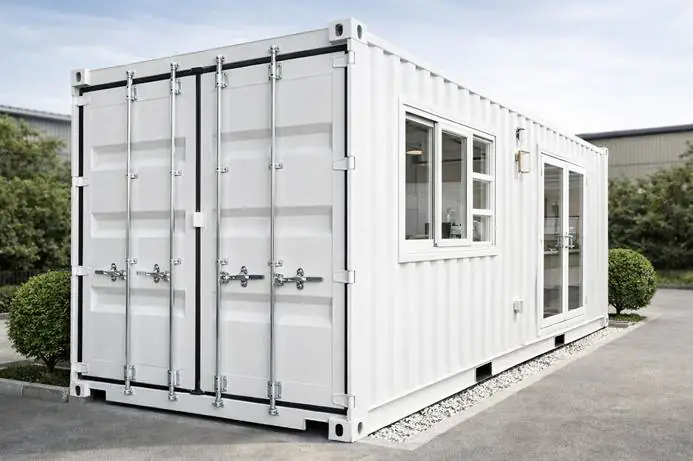
Usually, a standard side steel door is installed for everyday movement, and to retain the original end doors for the large equipment moving in and out. Anti-theft reinforcement is used for the windows. Container office buildings have factory-fitted options, like air conditioning units, LED lighting, and network cabling.
Portable Site Office Containers for Construction and Remote Projects
Portable site office containers are a big portion of the construction site demand. Imagine a construction project running 18 to 36 months in one place where there is no permanent infrastructure. The portable site office container can be airlifted on site on day one, connected to a temporary generator and water supply, and used as the project management center right away.
Also, since the unit can be transported intact by flatbed truck, rail, or sea, relocation from one site to another will not require disassembly. This not only lowers labor costs but also shortens the time from when one site is decommissioned to the other site is commissioned. Being hurricane and seismic-resistant is one of the top reasons people talk about it. Container offices are structurally designed to ISO standards. This gives them a very high level of rigidity, which is something that purpose-built temporary structures often do not have.
Typical Industries and Applications
| Industry | Typical Use | Key Advantage |
| Construction | Site management, document control | Fast setup, easy relocation |
| Mining & Oil/Gas | Remote field offices, supervision hubs | Structural durability in harsh climates |
| Disaster Response | Emergency coordination centers | Rapid deployment, self-contained |
| Events & Exhibitions | Ticketing, VIP lounges, media centers | Customizable exterior branding |
| Education | Temporary classrooms, administration | Short construction period |
| Retail & Hospitality | Pop-up retail, kiosk offices | Aesthetic flexibility |
Customizing a Modular Container Office Building
Multi-unit stacking and side-by-side configuration give a modular container office building the ability to expand from a single workstation room to a multi-story complex. Two or three containers can be linked side by side to form open-plan spaces, or arranged one on top of the other to get the most out of a limited area.
Another major advantage of factory prefabrication turning out to be an important factor is that, because the fit-out is done in a controlled factory environment which is controlled rather than on the open site, quality is kept at the same level and there are no weather-related delays. Exterior colour, logo application, cladding materials, and window placement could all be changed during the design phase.
Certification is another aspect you should consider. Masked for shipping or offshore deployment units should bear the classification society certification that is relevant: ABS, BV, GL, or CCS.
Case Study: Mining Camp Office Complex, Western Australia
The Challenge
A mining company from Western Australia, of medium scale, was looking to set up a project administration centre at a mining site situated at a distance of approximately 400 km from the nearest town. There was a very limited period for them to accomplish this task, as they had to have the site ready and operational within six weeks after contract award. They considered the conventional method of construction but had to discard it because of the permitting timelines, remoteness, and nature of the operation being temporary (site life envisaged: four years).
The Solution
The client hired MEOX to provide a 2-level container office building made up of four 40ft high-cube units. These units were factory-equipped with rock wool insulated wall panels, complete electrical and data wiring, air conditioning, and security glazing. The two-storey setup allowed maximum use of the footprint without increasing the ground disturbance area of the site.
All four units were delivered in the conventional ISO configuration, lifted by crane and placed on the prepared concrete pad, then connected to the site’s power and water supply within 48 hours of their arrival. The complex was up and running on the third day.
The Outcome
The project managed to use less money than a modular prefab alternative would have cost, and the units after that were moved to a second site when the first project was done – giving extra value beyond the initial implementation.
Research in the field confirms the financial benefits of this method. McKinsey Global Institute estimates that modular and prefabricated construction can shorten project completion times by 20-50% and reduce costs by up to 20% over traditional methods. (Source: McKinsey Global Institute, Modular Construction Report)
Container Office vs. Traditional Temporary Office: Quick Comparison
| Factor | Shipping Container Office | Traditional Temporary Structure |
| Setup Time | 1–3 days | 2–6 weeks |
| Relocatability | High – ships intact | Low – requires disassembly |
| Structural Lifespan | Up to 30 years | 5–10 years (typical) |
| Weather Resistance | Hurricane & seismic rated | Variable |
| Customization | Factory-controlled, precise | Limited, site-dependent |
| Environmental Impact | Recyclable steel structure | Mixed materials, harder to recycle |
Frequently Asked Questions
How long does it take to receive and set up a shipping container office?
The production period for a factory-built container office typically varies anywhere from 15 to 30 working days based on the specifications and quantity ordered. The main work after delivery is the connection to utilities. Almost all units may be ready for use within 24 to 72 hours post their arrival on site.
Can container offices be stacked or joined to create larger spaces?
Yes. Container offices are made to hold up to the same structural standards as ISO shipping containers. They can be stacked for two or three stories, and side by side can produce a larger floor area. For multi-story configurations, it is always best to consult a structural engineer to make sure that your foundation and connection details meet local regulations.
Are container offices suitable for permanent use, or only temporary deployment?
Container offices are capable of serving both functions. The 6mm Q235-B steel frame and full welding make up the structure to last for 30 years of service time. Several operators turn to these for their temporary project needs and then shift to a new site; that’s why spreading the capital expenditure over several deployments. Some even make them permanent with external cladding and landscaping.
Conclusion: Securing a Scalable Corporate Asset
Construction techniques to establish commercial field spaces have largely been replaced by faster, more efficient, and more durable options. By purchasing a heavy-duty, factory-finished workspace, businesses can ensure the safety of their staff and well-protected equipment even under the harshest conditions on Earth.
Whether a single 20-foot mobile office for a quickly changing construction site or a huge, multi-story administration building that can be extended, modern engineering has facilitated the provision of a customized solution to your requirements without the time lost in traditional building methods.
Ready to Configure Your Container Office?
MEOX designs and manufactures custom shipping container offices for construction sites, mining operations, industrial projects, and beyond.
Contact MEOX for a free quote and get your project moving.
Disclaimer: Information about the technology and materials mentioned in this article pertains to the MEOX product containers that are made by itself. The specifications, materials, and technical aspects are subject to change given the setup, the needs of the project, and the regional standards in use. In any case, a qualified engineer should always be consulted if you make the final decision on your design.
To see a live example in action, watch the following video on ‘2 Story Prefabricated Steel Container Office Building by MEOX.’